JSTOR Global Plants Home
  • Home
  • Browse
  • About
  • Access
  • Account
    • Saved Items
    • Profile
  • Log in

Global Plants

Skip to Main Content
  • JSTOR Global Plants Home
  • Global Plants

    • Browse
    • About
    • Access
    • Account
      • Saved Items
      • Profile
Log in
  • Browse
  • About
  • Access
  • Account
    • Saved Items
    • Profile
Advanced Search

Compilation
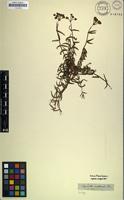
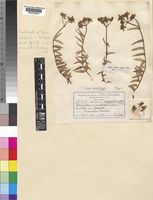
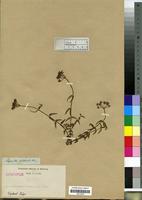
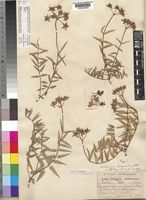
Gomphocarpus multicaulis

5 Images see all

Isosyntype of Lagarinthus multicaulis E.Mey. [family APOCYNACEAE]
Asclepias disparilis N.E.Br. [family ASCLEPIADACEAE]
Syntype of Gomphocarpus multicaulis (E. Meyer) D. Dietr. [family ASCLEPIADACEAE]
Asclepias flexuosa (E.Mey.) Schltr. [family ASCLEPIADACEAE]
Type of Asclepias disparilis N.E.Br. [family ASCLEPIADACEAE]
Previous
Next

Name

Identification
Gomphocarpus multicaulis (E. Meyer) D. Dietr. [family ASCLEPIADACEAE ] (stored under name); Verified by Not on sheet, Lagarinthus multicaulis E. Meyer [family ASCLEPIADACEAE ] Verified by Not on sheet,
Related name
  • Asclepias flexuosa
  • Lagarinthus flexuosus
  • Gomphocarpus multicaulis
  • Asclepias disparilis
  • Lagarinthus multicaulis

Flora

Entry for ASCLEPIAS multicaulis Schlechter [family ASCLEPIADACEAE]
Herbarium
Royal Botanic Gardens, Kew (K)
Collection
Flora Capensis
Resource Type
Reference Sources
Entry From
Flora Capensis, Vol 4, page 518, (1909) Author: By N. E. BROWN.
Names
ASCLEPIAS multicaulis Schlechter [family ASCLEPIADACEAE], in Engl. Jahrb. xxi. Beibl. 54, 8;—Schlechter in Journ. Bot. 1896, 453.
Lagarinthus multicaulis E. Meyer [family ASCLEPIADACEAE], Comm. 205.
Gomphocarpus multicaulis Dietr. [family ASCLEPIADACEAE], Syn. Pl. ii. 901; Decne in DC. Prodr. viii. 559; Schlechter in Engl. Jahrb. xviii. Beibl. 45, 8; xx. Beibl. 51, 34.
Information
plant 4–6 in. high, branching at the base; stems often numerous, decumbent-spreading, bifariously pubescent, or sometimes thinly and rather harshly pubescent all round; leaves secund-spreading; petiole 1/2– 3/4 lin. long; blade 2 1/2–10 lin. long, 1 1/2–3 1/2 lin. broad at the truncate, subsagittate or subhastate base, thence tapering to a very acute apex, glabrous above, slightly scabrous on the margins and subhispid on the midrib beneath; umbels solitary, rarely 2 to a stem, terminal, pedunculate, 6–9-flowered; peduncle 1/4–1 3/4 in. long, pubescent, chiefly on one side; bracts 1–2 lin. long, subulate, pubescent; pedicels unequal, 2–6 lin. long, so that the umbel is flat-topped, pubescent or puberulous; sepals 1–1 1/2 lin. long, 1/2– 3/4 lin. broad, ovate-lanceolate, very acute, pubescent; corolla-lobes reflexed, 2 lin. long, 1 1/4–1 1/2 lin. broad, ovate, subacute, glabrous on both sides, but the inner face with a very minutely papillose surface, sometimes minutely ciliate on one margin; corona-lobes arising at the base of the staminal column and shortly overtopping it, 1–1 1/2 lin. long, erect, cucullate, but dorsally flattened, so that the inflexed sides are pressed against the inner face of the lobe and end in deltoid acute contiguous teeth, which incurve upon the back of the anther appendages, but do not exceed them, and are much shorter than the ovate obtuse apical part of the lobe; staminal column 3/4–1 lin. long; anther-appendages subreniform or transversely elliptic, very obtuse, erect, not inflexed over the pentagonal style-apex; follicles solitary, fusiform, tapering into a beak, smooth and glabrous, only an immature example seen. null
Distribution
CENTRAL REGION Aliwal North Div.; on the Witteberg Range, Drège (ex E. Meyer).COAST REGION Queenstown Div.; by the Klipplaat River, near Shiloh, Drège, 3437!EASTERN REGION Transkei; Kreilis Country, Bowker, 213! Natal; Greenwich Farm, Riet Vlei, Fry in Herb. Galpin, 2740!KALAHARI REGION Basutoland, or Orange River Colony, Cooper, 935! Orange River Colony; Bethlehem, Richardson! Harrismith, Sankey, 183! Transvaal; Witkleifontein, Burtt Davy, 3128!

Related Materials

  • Terms and Conditions
  • Privacy Policy
  • Cookie Policy
  • Cookie Settings
  • Accessibility
  • Help
  • Contact Us
  • Facebook
  • Twitter
ITHAKA

JSTOR is part of ITHAKA, a not-for-profit organization helping the academic community use digital technologies to preserve the scholarly record and to advance research and teaching in sustainable ways.

©2000-2026 ITHAKA. All Rights Reserved. JSTOR®, the JSTOR logo, JPASS®, Aluka®, and ITHAKA® are registered trademarks of ITHAKA.

╳