JSTOR Global Plants Home
  • Home
  • Browse
  • About
  • Access
  • Account
    • Saved Items
    • Profile
  • Log in

Global Plants

Skip to Main Content
  • JSTOR Global Plants Home
  • Global Plants

    • Browse
    • About
    • Access
    • Account
      • Saved Items
      • Profile
Log in
  • Browse
  • About
  • Access
  • Account
    • Saved Items
    • Profile
Advanced Search

Compilation
Gomphocarpus linearis

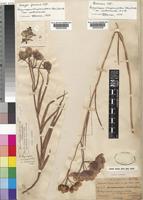
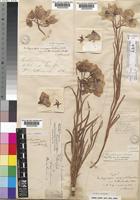
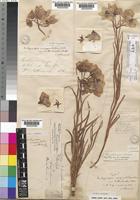
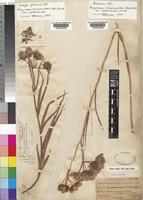
4 Images see all

Pachycarpus campanulatus (Harv.) N.E.Br. var. sutherlandii N.E.Br. [family ASCLEPIADACEAE]
Isotype of Pachycarpus campanulatus (Harv.) N.E.Br. var. sutherlandii N.E.Br. [family ASCLEPIADACEAE]
Previous
Next

Name

Identification
Gomphocarpus linearis (E.Mey.) D.Dietr. [family ASCLEPIADACEAE ] Isotype of Pachycarpus campanulatus (Harv.) N.E.Br. [family ASCLEPIADACEAE ] (stored under name); Verified by Brown, N.E.,
Related name
  • Gomphocarpus linearis
  • Pachycarpus campanulatus

Flora

Entry for PACHYCARPUS linearis N. E. Br. [family ASCLEPIADACEAE]
Herbarium
Royal Botanic Gardens, Kew (K)
Collection
Flora Capensis
Resource Type
Reference Sources
Entry From
Flora Capensis, Vol 4, page 518, (1909) Author: By N. E. BROWN.
Names
PACHYCARPUS linearis N. E. Br. [family ASCLEPIADACEAE]
Lagarinthus linearis E. Meyer [family ASCLEPIADACEAE], Comm. 207.
Gomphocarpus linearis Dietr. [family ASCLEPIADACEAE], Syn. Pl. ii. 901; Decne in DC. Prodr. viii. 562, not of Schlechter.
Gomphocarpus asper Decne [family ASCLEPIADACEAE], in DC. Prodr. viii. 561.
Asclepias tenuiflora Schlechter [family ASCLEPIADACEAE], in Engl. Jahrb. xxi. Beibl. 54, 9, partly.
Asclepias tenuifolia Schlechter [family ASCLEPIADACEAE], ex Ind. Kew. Suppl. ii. 19, partly.
Asclepias linearis Schlechter [family ASCLEPIADACEAE], in Journ Bot. 1896, 453, partly.
Information
stem 1–1 1/4 ft. high, simple, scabrous; leaves erect, shortly petiolate, 3–5 in. long, 1–2 1/2 lin. broad, linear, acute, with revolute margins, scabrous above and on the midrib beneath; umbel solitary, terminal, nodding, 3–5-flowered; peduncle 3/4–1 1/2 in. long, recurved at the apex, subscabrous; bracts not seen; pedicels 2/3–1 in. long, subscabrous; sepals 3 1/2–4 1/2 lin. long, 1–1 1/4 lin. broad, lanceolate, acuminate, pubescent; corolla probably subglobose and about 9–10 lin. in diam., but when dried often appearing broadly cup-shaped and 1 1/4–1 1/2 in. in diam., lobed to 2/3– 3/4 of the way down, coarsely pubescent outside, glabrous within, “yellowish-green, brownish outside at the base” (Baur), “purple and buff” (Bowker); tube 1/4 in. long; lobes 8–9 lin. long, 5–6 lin. broad, elliptic-ovate or ovate-oblong, obtuse; corona-lobes spreading at the basal part then much incurved or incurved-erect, 5–7 lin. long, linear, often lanceolately dilated below the acute apex, with 2 keels extending to beyond the middle, rising at the base to the level of the top of the anther-wings (1 1/2–2 lin. high) and there wing-like and toothed on the inner margin; staminal column 4 1/2–5 lin. long, of which length the anther-appendages take up more than half, being 3–3 1/2 lin. long, 2 lin. broad, ovate-lanceolate or subhastate-lanceolate when flattened out, subacute, replicate, much exceeding and loosely curved over the large excavated style-apex, which has a very thick crenate rim. null
Distribution
EASTERN REGION Transkei; near Tsomo on the Tsomo River, Mrs. Barber. 826! Bowker, 343! 359! Tembuland; hill-sides here and there near Bazeia and Tabase, 2000–3000 ft., Baur, 381!SOUTH AFRICA without locality, Drège, 4969!
Notes
The type specimen (Drège, 4969) in E. Meyer's Herbarium has no locality upon the label; Drège and E. Meyer, however, record it from between Zaandplaat and Komgha, in Komgha Div., and between the Bashee River and Morley in Tembuland. Dr. Schlechter has confused this very distinct species with P. campanulatus and a small-flowered variety of that plant, from which and from all other species it is at once distinguished by the very different corona-lobes and remarkable anther-appendages.

Related Materials

  • Terms and Conditions
  • Privacy Policy
  • Cookie Policy
  • Cookie Settings
  • Accessibility
  • Help
  • Contact Us
  • Facebook
  • Twitter
ITHAKA

JSTOR is part of ITHAKA, a not-for-profit organization helping the academic community use digital technologies to preserve the scholarly record and to advance research and teaching in sustainable ways.

©2000-2026 ITHAKA. All Rights Reserved. JSTOR®, the JSTOR logo, JPASS®, Aluka®, and ITHAKA® are registered trademarks of ITHAKA.

╳