JSTOR Global Plants Home
  • Home
  • Browse
  • About
  • Access
  • Account
    • Saved Items
    • Profile
  • Log in

Global Plants

Skip to Main Content
  • JSTOR Global Plants Home
  • Global Plants

    • Browse
    • About
    • Access
    • Account
      • Saved Items
      • Profile
Log in
  • Browse
  • About
  • Access
  • Account
    • Saved Items
    • Profile
Advanced Search

Compilation
Gomphocarpus fragrans

3 Images see all

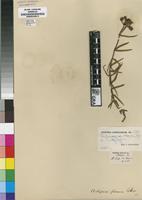
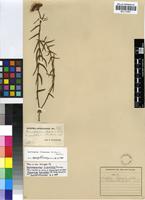
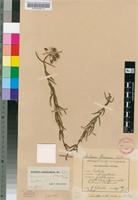
Isotype of Gomphocarpus fragrans Schltr. [family APOCYNACEAE]
Previous
Next

Name

Identification
Isotype of Gomphocarpus fragrans Schltr. [family APOCYNACEAE ] Verified by Not on sheet, Asclepias flexuosa (E.Mey.) Schltr. [family APOCYNACEAE ] (stored under name); Verified by Nicholas, A., 1987
Related name
  • Asclepias flexuosa
  • Gomphocarpus fragrans

Flora

Entry for ASCLEPIAS flexuosa Schlechter [family ASCLEPIADACEAE]
Herbarium
Royal Botanic Gardens, Kew (K)
Collection
Flora Capensis
Resource Type
Reference Sources
Entry From
Flora Capensis, Vol 4, page 518, (1909) Author: By N. E. BROWN.
Names
ASCLEPIAS flexuosa Schlechter [family ASCLEPIADACEAE], in Journ. Bot. 1896, 453
Lagarinthus flexuosus E. Meyer [family ASCLEPIADACEAE], Comm. 207; Meisn. in Hook. Lond. Journ. Bot. ii. 1843, 544 (by error 444); Krauss in Flora, 1844, 826.
Gomphocarpus flexuosus Dietr. [family ASCLEPIADACEAE], Syn. Pl. ii. 901; Decne in DC. Prodr. viii. 559.
Gomphocarpus fragrans Schlechter [family ASCLEPIADACEAE], in Engl. Jahrb. xx. Beibl. 51, 30.
Information
plant 1/2–1 (rarely up to 2) ft. high, branching at the base; stems probably decumbent at the base, ascending or erect, more or less flattened, unifariously or bifariously puberulous; leaves very spreading or deflexed, very shortly petiolate, 1/2–2 1/4 in. long, 3/4–2 lin. broad, linear, acute, slightly hastate or cordate at the base, somewhat scabrous-pubescent on the midrib beneath, otherwise glabrous, coriaceous; umbels solitary, very rarely 2, terminal, 3/4–1 1/3 in. in diam., 6–14-flowered; peduncle 1/2–1 1/2 (rarely up to 3) in. long; bracts 1–3 lin. long, subulate; pedicels 3–7 lin. long, puberulous on one side; sepals 3/4–2 lin. long, 1/2– 2/3 lin. broad, lanceolate or ovate-lanceolate, acute, thinly pubescent; corolla-lobes reflexed or reflexed-spreading, 1 3/4–2 1/2 lin. long, 1–1 1/2 lin. broad, oblong-ovate to elliptic-ovate, subobtuse, glabrous on the back, minutely papillate-puberulous on the inner face; corona-lobes arising at the base of and nearly twice as long as the staminal column, erect or ascending, 1 1/4–2 lin. long; basal half cucullate, dorsally rounded into the column withΛ-shaped keels on the back, inflexed sides produced at the apex into short acute teeth resting on the anther-appendages, with a narrow wing descending obliquely from them nearly to the base, no tooth or process within; apical half lanceolate-oblong or elongate-deltoid-oblong, obtuse, concave, apparently marked with a dark mid-line; staminal column 3/4–1 1/4 lin. long; anther-appendages transversely oblong, emarginate or slightly bilobed, erect, not exceeding the margin of the truncate style-apex; follicles solitary, erect from a recurved pedicel, 2 3/4–3 1/2 in. long, 1/4 in. thick, terete-fusiform, tapering into a beak, smooth, glabrous; seeds about 2 1/2 lin. long, 1 1/2 lin. broad, ovate, rather broadly margined, with minute tubercles and short linear ridges on both sides, brown. null
Distribution
EASTERN REGION Natal; between Umzimkulu River and Umkomaas River, Drège, 4965! near Durban, Gerrard, 514! Sanderson, 258! Peddie! near Umlaas River, Krauss, 343! Inanda, Wood, 280! near Howick, Wood, 5378! Clairmont, Wood, 8269! between Pietermaritzburg and Greytown, Wilms, 2139! hills near Pinetown, Schlechter, 3168, and without precise locality (in fruit only), Gerrard, 1292! Zululand; Ungoya, Ungoya, Wylie in Herb. Wood, 5680! and without precise locality, Mrs. McKenzie!
Notes
By different collectors the flowers are stated to be “pale purple and white or brown and white,” “lilac and white or pinkish-white,” “lilac-grey or brownish-grey,” all mentioning 2 colours as if they were variable, and they are said to be fragrant. I have not seen the type of Gomphocarpus fragrans, but the specimens so named by Dr. Schlechter which I have examined, do not differ in any way from Asclepias flexuosa.

Related Materials

  • Terms and Conditions
  • Privacy Policy
  • Cookie Policy
  • Cookie Settings
  • Accessibility
  • Help
  • Contact Us
  • Facebook
  • Twitter
ITHAKA

JSTOR is part of ITHAKA, a not-for-profit organization helping the academic community use digital technologies to preserve the scholarly record and to advance research and teaching in sustainable ways.

©2000-2026 ITHAKA. All Rights Reserved. JSTOR®, the JSTOR logo, JPASS®, Aluka®, and ITHAKA® are registered trademarks of ITHAKA.

╳