JSTOR Global Plants Home
  • Home
  • Browse
  • About
  • Access
  • Account
    • Saved Items
    • Profile
  • Log in

Global Plants

Skip to Main Content
  • JSTOR Global Plants Home
  • Global Plants

    • Browse
    • About
    • Access
    • Account
      • Saved Items
      • Profile
Log in
  • Browse
  • About
  • Access
  • Account
    • Saved Items
    • Profile
Advanced Search

Compilation
Gnaphalium confine

7 Images see all

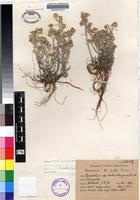
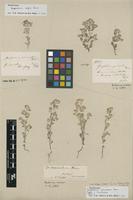
Lectotype of Gnaphalium confine Harv. [family ASTERACEAE]
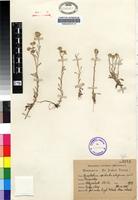
Syntype of Gnaphalium confine Harv. [family ASTERACEAE]
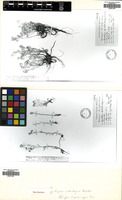
Type of Gnaphalium drakensbergense Markötter [family COMPOSITAE]
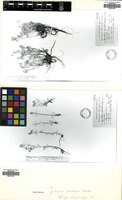
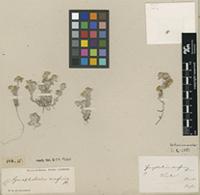
Holotype of Gnaphalium confine Harv. [family ASTERACEAE]
Filed as Gnaphalium parvulum Harv. [family ASTERACEAE]
Type of Gnaphalium drakensbergense Markötter [family COMPOSITAE]
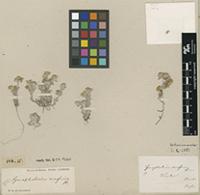
Filed as Gnaphalium confine Harv. [family ASTERACEAE]
Previous
Next

Name

Identification
Gnaphalium confine Harv. [family ASTERACEAE ] (stored under name); Verified by Hilliard,O.M.,
Related name
  • Gnaphalium parvulum
  • Gnaphalium micranthum
  • Gnaphalium confine

Flora

Entry for GNAPHALIUM confine Harv. [family COMPOSITAE]
Herbarium
Royal Botanic Gardens, Kew (K)
Collection
Flora Capensis
Resource Type
Reference Sources
Entry From
Flora Capensis, Vol 3, page 44, (1894) Author: (By W. H. HARVEY).
Names
GNAPHALIUM confine Harv. [family COMPOSITAE]
Information
annual, slender, erect, many stemmed, branching, loosely white-woolly; branches corymbose upwards; leaves scattered, spathulate-obovate, tapering much at base, acute, mucronulate; heads tufted at the ends of the branches, or axillary, 40–50-fl.; inv. spreading, the scales pluriseriate, loosely imbricate, horn-coloured, hyaline, lanceolate, acute; fem. fl. numerous. Very like G. parvulum, but with different inv. scales and more flowers in the head. Stems 2–3 inches high, divided near the base, ramulous near the summit. Heads copious. Leaves 4–6 lines long, 1–2 lines wide.
Distribution
SOUTH AFRICA Linde, Zeyher! (Herb. Sond.)

Related Materials

  • Terms and Conditions
  • Privacy Policy
  • Cookie Policy
  • Cookie Settings
  • Accessibility
  • Help
  • Contact Us
  • Facebook
  • Twitter
ITHAKA

JSTOR is part of ITHAKA, a not-for-profit organization helping the academic community use digital technologies to preserve the scholarly record and to advance research and teaching in sustainable ways.

©2000-2026 ITHAKA. All Rights Reserved. JSTOR®, the JSTOR logo, JPASS®, Aluka®, and ITHAKA® are registered trademarks of ITHAKA.

╳