JSTOR Global Plants Home
  • Home
  • Browse
  • About
  • Access
  • Account
    • Saved Items
    • Profile
  • Log in

Global Plants

Skip to Main Content
  • JSTOR Global Plants Home
  • Global Plants

    • Browse
    • About
    • Access
    • Account
      • Saved Items
      • Profile
Log in
  • Browse
  • About
  • Access
  • Account
    • Saved Items
    • Profile
Advanced Search

Compilation
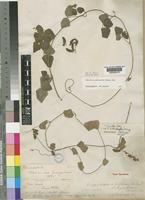
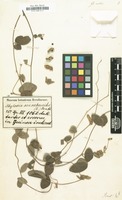
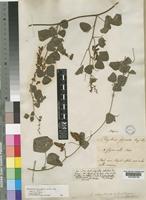
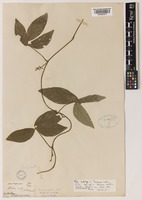
Glycine mollis

11 Images see all

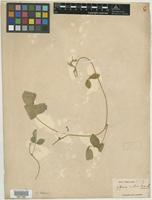
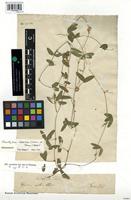
Type? of Glycine mollis Wight & Arn. [family FABACEAE]
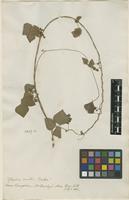
Syntype of Glycine mollis Wight & Arn. [family LEGUMINOSAE]
Filed as Glycine mollis Willd. [family FABACEAE]
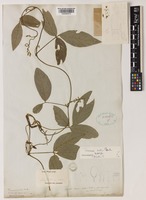
Isotype of Glycine biflora Schumach. & Thonn. [family FABACEAE]
Isosyntype of Glycine mollis Wight & Arn. [family LEGUMINOSAE]
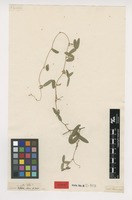
Lectotype of Teramnus mollis (Wight & Arn.) Benth. [family LEGUMINOSAE-PAPILIONOIDEAE]
Rhynchosia malacophylla (Spreng.) Boj. [family LEGUMINOSAE-PAPILIONOIDEAE]
Filed as Glycine mollis [family LEGUMINOSAE-PAPILIONOIDEAE]
Rhynchosia malacophylla (Spreng.) Boj. [family LEGUMINOSAE-PAPILIONOIDEAE]
Lectotype of Teramnus mollis (Wight & Arn.) Benth. [family LEGUMINOSAE-PAPILIONOIDEAE]
Lectotype of Glycine biflora Schumach. and Thonn. [family FABACEAE]
Previous
Next

Name

Identification
Macrotyloma biflorum (Schumach. and Thonn.) Hepper [family FABACEAE ] (stored under name); Verified by F.N. Hepper, 1970 Glycine biflora Schumach. and Thonn. [family FABACEAE ] Verified by Not on Sheet, Glycine mollis Willd. [family FABACEAE ] Verified by Not on Sheet,
Related name
  • Macrotyloma biflorum
  • Teramnus labialis
  • Glycine mollis
  • Rhynchosia malacophylla
  • Rhynchosia glycinoides
  • Rhynchosia mollis
  • Glycine not on sheet
  • Glycine biflora

Flora

Entry for Rhynchosia malacophylla Spreng. Bojer [family LEGUMINOSAE]
Herbarium
Royal Botanic Gardens, Kew (K)
Collection
Flora Zambesiaca
Resource Type
Reference Sources
Entry From
FZ, Vol 3, Part 5, (2001) Author: B. Mackinder, R. Pasquet, R. Polhill and B. Verdcourt
Names
Rhynchosia malacophylla Spreng. Bojer [family LEGUMINOSAE], Hortus Maurit.: 104 (1837). —Meikle in Kew Bull. 6: 179, fig. 5 (1951). —Verdcourt in Kew Bull. 25: 111 (1971); in F.T.E.A., Leguminosae, Pap.: 753, fig. 109/38 (1971). —Lock, Leg. Afr. Check-list: 431 (1989). —Thulin in Fl. Somalia 1: 444 (1993). TAB. 3.5.39, fig. 8. Type material cultivated in England from seeds collected in Zanzibar.
Glycine mollis Hook. [family LEGUMINOSAE], Exot. Flora: t. 201 (1826), non Willd., nom. illegit. Type as for R. malacophylla.
Glycine malacophylla Spreng. [family LEGUMINOSAE], Syst. Veg., cur. post.: 270 (1827).
Rhynchosia hookeri G. Don [family LEGUMINOSAE], Gen. Syst. Gard. Bot. 2: 347 (1832) nom. superfl. Type as for Rhynchosia malacophylla.
Rhynchosia sennaarensis Schweinf. [family LEGUMINOSAE], in Verh. K. K. Zool.-Bot. Ges. Wien 18: 655 (1868). Types from Sudan, Eritrea and Ethiopia.
Rhynchosia sennaarensis var. flavissima Schweinf. [family LEGUMINOSAE], in Verh. K. K. Zool.-Bot. Ges. Wien 18: 656 (1868). Types from Ethiopia and Sudan.
Rhynchosia flavissima Baker [family LEGUMINOSAE], in F.T.A. 2: 219 (1871). —E.G. Baker, Legum. Trop. Africa: 475 (1929). Type from Ethiopia.
Rhynchosia caribaea [family LEGUMINOSAE], sensu J.G.Baker in F.T.A. 2: 230 (1871) pro parte. —sensu E.G. Baker, Legum. Trop. Africa: 474 (1929) pro parte, non (Jacq.) DC.
Information
Perennial trailing or climbing herb 0.3–3 m long from a woody rootstock. Stems woody at the base, ridged, glabrous or pubescent. Leaflets 3, 0.6–4.6(6.5) × 0.6–5.5 cm, ovate, rhombic or rounded, the laterals oblique, rounded to mostly acuminate at the apex, cuneate, rounded or truncate at the base, glabrous to finely puberulous on both surfaces, the margins often densely silky, densely gland-dotted beneath; petiole 0.7–6.5 cm long; rhachis 2–12 mm long; petiolules 1–2.5 mm long; stipules 4–5 × 1 mm, lanceolate, puberulous. Inflorescences axillary, lax or rather dense; rhachis 4–16 cm long; peduncle 1.5–7 cm long; pedicels 1.5–2.5 mm long; bracts subpersistent, 1.5–2 × 0.5 mm, lanceolate. Calyx puberulous and gland-dotted; tube 1.5–3 mm long; lobes 2–5 mm long, triangular, the lowest the longest, the upper pair joined for ± three-quarters of their length. Standard mostly clear yellow but sometimes with crimson veins, 8–14 × 5–9.5 mm, obovate or almost round, puberulous and glandular. Pods (12)15–20 × 4.5–5.5 mm, oblong-falcate, narrowed at the base, finely to densely puberulous and glandular. Seeds greyish with dark and light mottling, 4.5 × 3 × 2 mm, rounded-reniform, slightly keeled.
Habitat
Mopane–Grewia–Combretum–Commiphora woodland on basalt
Range
widespread in East Africa
Altitude range
555 m.
555
555
Distribution
Zimbabwe S Mwenezi Distr., Mateke Ranch, fl. 5.xii.1974, Cleghorn 3002 (K; SRGH).
Distribution (external)
Sudan
Somali Republic
Ethiopia
Notes
This species is not otherwise known south of central Tanzania and there must remain a suspicion that it has been introduced although two specimens have been collected apparently wild, Cleghorn 3002 cited above, said to be “common on red clay” and R.M. Davies 2316 (Zimbabwe, Gwanda, Special Native area “G”, fl. 15.xii.1956) from which the habitat data have been taken. E.G. Baker (loc. cit.: 475) gives “Nyasaland” in his distribution but I have seen no material. Unfortunately no fruiting material has been seen from the Flora Zambesiaca area but the ovary indumentum suggests the fruit indumentum is correct.The closely related Rhynchosia verdcourtii Thulin has been cultivated at the Grassland Research Station, Marondera in Zimbabwe, fl. 22.i.1968, Corby 1961 (K; SRGH) where it was grown from seed originating in Tanzania. It differs in the stems having longer glandular hairs as well as fine pubescence and the pod with long hairs, short pubescence and gland dots rather than a uniform very short pubescence. It has been included in the key.

Related Materials

  • Terms and Conditions
  • Privacy Policy
  • Cookie Policy
  • Cookie Settings
  • Accessibility
  • Help
  • Contact Us
  • Facebook
  • Twitter
ITHAKA

JSTOR is part of ITHAKA, a not-for-profit organization helping the academic community use digital technologies to preserve the scholarly record and to advance research and teaching in sustainable ways.

©2000-2026 ITHAKA. All Rights Reserved. JSTOR®, the JSTOR logo, JPASS®, Aluka®, and ITHAKA® are registered trademarks of ITHAKA.

╳