JSTOR Global Plants Home
  • Home
  • Browse
  • About
  • Access
  • Account
    • Saved Items
    • Profile
  • Log in

Global Plants

Skip to Main Content
  • JSTOR Global Plants Home
  • Global Plants

    • Browse
    • About
    • Access
    • Account
      • Saved Items
      • Profile
Log in
  • Browse
  • About
  • Access
  • Account
    • Saved Items
    • Profile
Advanced Search

Compilation
Glinus dictamnoides

19 Images see all

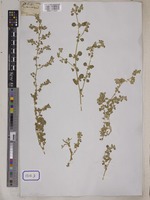
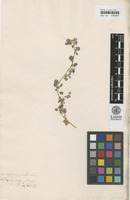
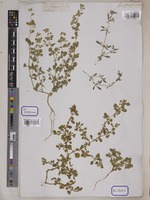
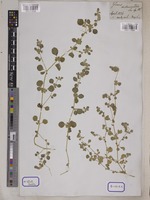
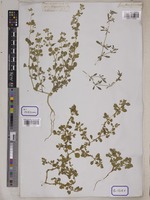
Glinus dictamnoides L. [family MOLLUGINACEAE]
Filed as Glinus dictamnoides [family MOLLUGINACEAE]
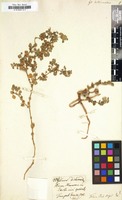
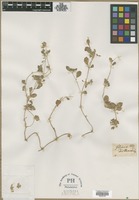
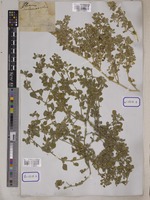
Glinus dictamnoides L. [family MOLLUGINACEAE]
Filed as Glinus lotoides L. [family MOLLUGINACEAE]
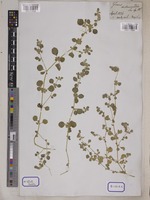
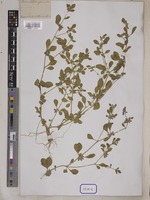
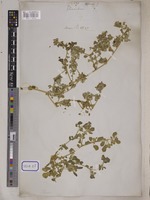
Filed as Glinus dictamnoides [family MOLLUGINACEAE]
Glinus dictamnoides Burm.f. [family AIZOACEAE]
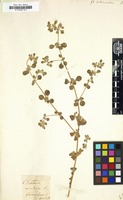
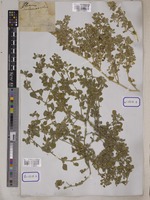
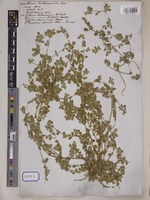
Filed as Glinus dictamnoides Burm.f. [family MOLLUGINACEAE]
Glinus dictamnoides L. [family MOLLUGINACEAE]
Type of Pharnaceum pentagynum Roxb. [family MOLLUGINACEAE]
Glinus dictamnoides L. [family MOLLUGINACEAE]
Filed as Glinus lotoides L. [family MOLLUGINACEAE]
Filed as Glinus dictamnoides Burm.f. [family MOLLUGINACEAE]
Glinus lotoides L. [family MOLLUGINACEAE]
Glinus dictamnoides L. [family MOLLUGINACEAE]
Previous
Next

Name

Identification
Pharnaceum pentagynum Roxb. [family MOLLUGINACEAE ] Verified by Not on sheet, Glinus dictamnoides Burm.f. [family AIZOACEAE ] Verified by Not on sheet, Glinus lotoides L. [family AIZOACEAE ] (stored under name); Verified by Not on sheet,
Related name
  • Glinus dictamnoides
  • Glinus not on sheet
  • Mollugo hirta
  • Glinus lotoides
  • Pharnaceum pentagynum
  • Frankenia not on sheet
Common name
  • Damascisa, Flora of North America Vol. 4

Flora

Entry for Glinus lotoides Linnaeus [family MOLLUGINACEAE]
Herbarium
Flora of North America (FNA)
Collection
Flora of North America
Resource Type
Reference Sources
Entry From
Flora of North America, Vol 4,
Names
Glinus lotoides Linnaeus [family MOLLUGINACEAE], Sp. Pl., 1: 463. 1753
Glinus dictamnoides Burman f. [family MOLLUGINACEAE]
Mollugo glinus A. Richard [family MOLLUGINACEAE]
Mollugo hirta Thunberg [family MOLLUGINACEAE]
Information
Stems 0.5–3.5 dm. Leaves whor-led; petiole 1–7 mm; blade obovate or orbiculate to broadly spatulate, 5–25 × 0.4–17 mm, base cuneate, apex broadly rounded to acute. Flowers in clusters of 3–15; sepals lanceolate, 3.5–4.1 × 0.4–2 mm, stellate-pubescent abaxially, glabrous adaxially, apex rounded to acute or slightly mucronate; stamens 3–5. Capsules ellipsoid, 3.6–4.5 × 1.8–2 mm. Seeds 10–25 per locule, orange-brown, 0.4–0.6 × 0.3–0.4 mm, papillate, somewhat glossy or dull; papillae sometimes black. 2n = 36.
Phenology
jun-aug (summer), sep-nov (fall)
Altitude range
0–1300 m;
Distribution
MexicoWest IndiesSouth AmericaEurasiaAfricaAustralia.USA Ark.USA Calif.USA Kans.USA La.USA Mo.USA Okla.USA Tex.
Discussion
Glinus lotoides is native to Eurasia and Africa and has become widespread in tropical, subtropical, and warm-temperate areas worldwide. Several varieties have been described, but their delimitations are unclear and need further investigation. The vernacular name “damascisa” is applied to this species, as well as several other plants, which are used in Africa for treatment of diabetes and skin ailments (A. El-Hamidi et al. 1967). In India, the species is used as treatment for diarrhea, boils, and abdominal diseases, as well as weakness in children (K. R. Kirtikar and B. D. Basu 1935). Antihelmintic properties are reported for G. lotoides from several African studies (B. Abegaz and B. Tecle 1980; G. Broberg 1980).
Native/Introduced
introduced;

Related Materials

  • Terms and Conditions
  • Privacy Policy
  • Cookie Policy
  • Cookie Settings
  • Accessibility
  • Help
  • Contact Us
  • Facebook
  • Twitter
ITHAKA

JSTOR is part of ITHAKA, a not-for-profit organization helping the academic community use digital technologies to preserve the scholarly record and to advance research and teaching in sustainable ways.

©2000-2026 ITHAKA. All Rights Reserved. JSTOR®, the JSTOR logo, JPASS®, Aluka®, and ITHAKA® are registered trademarks of ITHAKA.

╳