JSTOR Global Plants Home
  • Home
  • Browse
  • About
  • Access
  • Account
    • Saved Items
    • Profile
  • Log in

Global Plants

Skip to Main Content
  • JSTOR Global Plants Home
  • Global Plants

    • Browse
    • About
    • Access
    • Account
      • Saved Items
      • Profile
Log in
  • Browse
  • About
  • Access
  • Account
    • Saved Items
    • Profile
Advanced Search

Compilation
Gladiolus zimbabweensis

2 Images see all

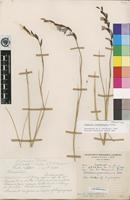
Holotype of Gladiolus zimbabweensis Goldblatt [family IRIDACEAE]
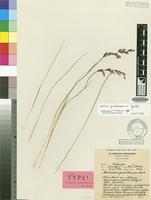
Isotype of Gladiolus zimbabweensis Goldblatt [family IRIDACEAE]
Previous
Next

Name

Identification
Gladiolus zimbabweensis Goldblatt [family IRIDACEAE ] (stored under name);
Related name
  • Gladiolus zimbabweensis

Flora

Entry for Gladiolus zimbabweensis Goldblatt [family IRIDACEAE]
Herbarium
Royal Botanic Gardens, Kew (K)
Collection
Flora Zambesiaca
Resource Type
Reference Sources
Entry From
FZ, Vol 12, Part 4, (1993) Author: P. Goldblatt
Names
Gladiolus zimbabweensis Goldblatt [family IRIDACEAE], sp. nov. Planate 20–35 cm altae, foliis 4–5, omnibus laminatis, inferioribus grandioribus, laminis subteretibus 4-sulcatis, vaginibus saepe pubescentibus, spica (4)8–12-floris, floribus caeruleis vel roseis vel malvinis atrorosei- vel atropurpurei-notatis, tepalis inaequalibus, superioribus grandioribus, filamentis 8–9 mm exsertis, antheris c. 6 mm longis. TAB. 21 fig. A. Typus: Zimbabwe, Nyanga Distr., slopes of Mt. Inyangani, c. 2100 m, 16.ii.1964, Chase 8123 (SRGH, holotypus; K; UPS; WAG).
Information
Plants 20–35 cm high. Corms 9–12 mm in diameter; tunics of fine pale netted fibres, sometimes extending upward in a neck. Foliage leaves 4–5, the lower 2 basal, reaching to about the base of the spike, 1–1.5 mm wide, linear, the margins and midrib strongly thickened and raised, thus arching over the surface, edges of the raised parts ciliate to pubescent; the upper leaves cauline and progressively shorter, the uppermost sheathing for half of its length; sheaths, especially of the lower leaves, lightly pubescent, distinctly ribbed when dry. Stem erect, rarely branched, flexed at or slightly above the middle. Spike 4–8(12)-flowered, inclined toward the ground; bracts green to purplish especially above, 10–15 mm long, the inner somewhat shorter than the outer. Flowers pale grey-blue or purple to pink, the lower lateral tepals each with a pale transverse band outlined in purple across the lower part of the limb; perianth tube 7–10 mm long, curving outward between the bracts, widening gradually toward the mouth; tepals unequal, the uppermost 14–19 × c. 10 mm, larger than the others, arched to hooded over the stamens, the upper lateral tepals smaller, directed forward and curving outward near the apices, the lower 3 tepals c. 10 × c. 4 mm, straight, inclined, joined to the upper laterals for 2–4 mm, usually slightly exceeding the uppermost when viewed in profile, fairly abruptly expanded in the upper half, the lower lateral tepals channelled below. Filaments 12–14 mm long, exserted for 8–9 mm; anthers c. 6 mm long, with an apiculum 0.3–0.5 mm long. Style dividing opposite the lower third of the anthers; style branches c. 2 mm long, entwined with the anthers. Capsules 12–15 mm long, obovoid.
Habitat
In rocky, well watered, montane grassland.
Range
Restricted to the highlands of eastern Zimbabwe and neighbouring Mozambique
Distribution
Zimbabwe E Mt. Engwa, c. 1980 m, 8.ii.1955, Exell, Mendonça & Wild 294 (BM; LISC; SRGH).Mozambique MS Tsetserra, 2140 m, 7.ii.1955, Exell, Mendonça & Wild 246 (BM; LISC; SRGH).
Notes
Flowering in mid January to April.This species may be distinguished by its very small flowers, together with its linear leaves heavily thickened on the margins and midribs, and the light pubescence on the leaf sheaths.

Related Materials

  • Terms and Conditions
  • Privacy Policy
  • Cookie Policy
  • Cookie Settings
  • Accessibility
  • Help
  • Contact Us
  • Facebook
  • Twitter
ITHAKA

JSTOR is part of ITHAKA, a not-for-profit organization helping the academic community use digital technologies to preserve the scholarly record and to advance research and teaching in sustainable ways.

©2000-2026 ITHAKA. All Rights Reserved. JSTOR®, the JSTOR logo, JPASS®, Aluka®, and ITHAKA® are registered trademarks of ITHAKA.

╳