JSTOR Global Plants Home
  • Home
  • Browse
  • About
  • Access
  • Account
    • Saved Items
    • Profile
  • Log in

Global Plants

Skip to Main Content
  • JSTOR Global Plants Home
  • Global Plants

    • Browse
    • About
    • Access
    • Account
      • Saved Items
      • Profile
Log in
  • Browse
  • About
  • Access
  • Account
    • Saved Items
    • Profile
Advanced Search

Compilation
Gladiolus microspicatus

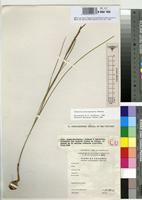
3 Images see all

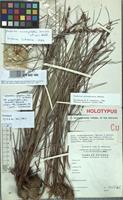
Holotype of Gladiolus microspicatus P.Duvign. & Van Bockstal ex Cordova [family IRIDACEAE]
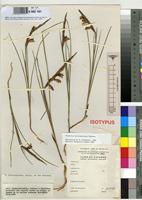
Isotype of Gladiolus microspicatus P.Duvign. & Van Bockstal ex Cordova [family IRIDACEAE]
Previous
Next

Name

Identification
Isotype of Gladiolus microspicatus P.Duvign. & Van Bockstal ex Cordova [family IRIDACEAE ] Verified by Not on sheet, Gladiolus gregarius Welw. ex Baker [family IRIDACEAE ] (stored under name); Verified by Not on sheet,
Related name
  • Gladiolus gregarius
  • Gladiolus microspicatus

Flora

Entry for GLADIOLUS microspicatus Còrdova [family IRIDACEAE]
Herbarium
Royal Botanic Gardens, Kew (K)
Collection
Flora of Tropical East Africa
Resource Type
Reference Sources
Entry From
Flora of Tropical East Africa, page 1, (1996) Author: Peter Goldblatt
Names
GLADIOLUS microspicatus Còrdova [family IRIDACEAE], in B.J.B.B. 60: 326 (1990); Goldblatt in F.Z. 12(4): 80 (1993) & Gladiolus Trop. Afr.: 138 (1996). Lectotype, chosen by Goldblatt (1993): Zaire, Shaba, Tenke-Kwatebala, rocky summit of cupriferous hill, Duvigneaud “ 5053G1”, i.e. 5033G1 (BRLU, lecto.! BR, BRLU, isolecto.!)
GLADIOLUS klattianus Van Bockstal subsp. angustifolius [family IRIDACEAE], in B.S.B.B. 96: 126 (1963). Lectotype, chosen by Goldblatt (1996): Zaire, Shaba, Kasompi East, rocks on summit of metaliferous hill, Duvigneaud 5468 (BRLU, lecto.!, BRLU, iso.!)
Information
Plants 24-35 cm. high. Corm 1-2 cm. in diameter, tunics of fine to coarse yellow brown to grey fibres, usually accumulating in a dense mass, often extending upward and with the dry cataphylls forming a thick neck. Foliage leaves (3-)4-5, the lower (2-)3-4 ± basal, linear (rarely lanceolate), reaching to at least the base of the spike or sometimes the lower shortly exceeding it, 1.5-3(-7) mm. wide, the margins not thickened, decreasing in size above, the uppermost usually cauline. Stem erect, unbranched. spike 4-10-flowered, inflexed at the base, straight, sheathed by the bracts; bracts 1.8-2.5 cm. long, green, or becoming dry and brown apically, firm and erect, clasping the stem, usually imbricate, 1-2 internodes long, the inner ± 2/3 as long as the outer. Flowers light to dark purple fading to cream in the throat and tube, the lower tepals each with a yellow median streak in the upper third; perianth-tube 1-1.2 cm. long, curving outward and widening above; tepals unequal, the dorsal ± 1.8 × 1-1.2 cm., arched over the stamens, the lower 3 united with the upper laterals for ± 4.5 mm. and to each other for ± 2 mm., narrowed below into claws, horizontal or the limbs flexed downward distally, in profile usually shortly exceeding the dorsal or ± as long. Filaments 1-1.2 cm. long, exserted 5-6 mm. from the tube; anthers 5-6 mm. long, usually purple, pollen yellow. Style dividing opposite the lower third of the anthers, branches 1-1.5 mm. long. Capsules 1-1.2 cm. long, narrowly elliptic, hard, ± woody.
Range
DISTR. T 4;
Altitude range
1600-2200 m.
Distribution
TANZANIA Ufipa District Sumbawanga, Kalambo Falls, 11 Feb. 1965, Richards 19645!
Distribution (external)
Burundi
Zaire
Zambia
Notes
Resembling a diminutive G. gregarius, but with shorter bracts, fewer flowers per spike, firm narrow leaves rarely more than 3-4 mm. wide, a neck of coarse fibres around the base and, at least where known, wingless seeds. Some plants from Burundi have uniformly dark purple flowers and bracts sometimes less that 2 internodes long.

Related Materials

  • Terms and Conditions
  • Privacy Policy
  • Cookie Policy
  • Cookie Settings
  • Accessibility
  • Help
  • Contact Us
  • Facebook
  • Twitter
ITHAKA

JSTOR is part of ITHAKA, a not-for-profit organization helping the academic community use digital technologies to preserve the scholarly record and to advance research and teaching in sustainable ways.

©2000-2026 ITHAKA. All Rights Reserved. JSTOR®, the JSTOR logo, JPASS®, Aluka®, and ITHAKA® are registered trademarks of ITHAKA.

╳