JSTOR Global Plants Home
  • Home
  • Browse
  • About
  • Access
  • Account
    • Saved Items
    • Profile
  • Log in

Global Plants

Skip to Main Content
  • JSTOR Global Plants Home
  • Global Plants

    • Browse
    • About
    • Access
    • Account
      • Saved Items
      • Profile
Log in
  • Browse
  • About
  • Access
  • Account
    • Saved Items
    • Profile
Advanced Search

Compilation
Gladiolus dieterlenii

10 Images see all

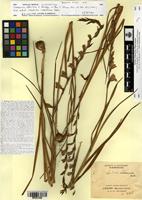
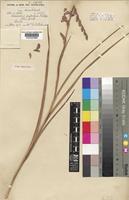
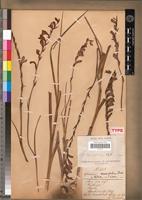
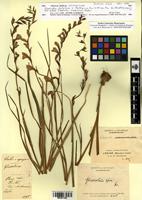
Isosyntype of Gladiolus dieterlenii E. Phillips [family IRIDACEAE]
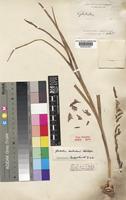
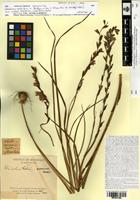
Type of Gladiolus dieterlenii Phillips [family IRIDACEAE]
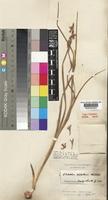
Isosyntype of Gladiolus dieterlenii E. Phillips [family IRIDACEAE]
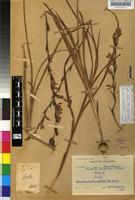
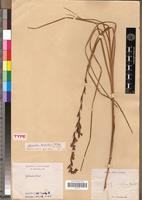
Type of Gladiolus dieterlenii E.Phillips [family IRIDACEAE]
Type of Gladiolus dieterlenii Phillips [family IRIDACEAE]
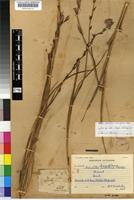
Type of Gladiolus dieterlenii Phill. [family IRIDACEAE]
Isosyntype of Gladiolus dieterlenii E. Phillips [family IRIDACEAE]
Previous
Next

Name

Identification
Gladiolus dieterlenii Phillips [family IRIDACEAE ] Gladiolus crassifolius Baker [family IRIDACEAE ] (stored under name);
Related name
  • Gladiolus dieterlenii
  • Gladiolus crassifolius

Flora

Entry for GLADIOLUS crassifolius Baker [family IRIDACEAE]
Herbarium
Royal Botanic Gardens, Kew (K)
Collection
Flora of Tropical East Africa
Resource Type
Reference Sources
Entry From
Flora of Tropical East Africa, page 1, (1996) Author: Peter Goldblatt
Names
GLADIOLUS crassifolius Baker [family IRIDACEAE], in J.B. 14: 334 (1876) & in Fl. Cap. 6: 150 (1896); G.J. Lewis et al. in Journ. S. Afr. Bot., Suppl. 10: 60 (1972); Goldblatt in F.Z. 12(4): 68 (1993) & Gladiolus Trop. Afr.: 94 (1996). Lectotype, chosen by G.J. Lewis et al. (1972): South Africa, Orange Free State, Cooper 3185 (K, lecto.!, PRE, isolecto.!)
GLADIOLUS thomsonii Baker [family IRIDACEAE], Handb. Irid.: 223 (1892) & in F.T.A. 7: 372 (1898). Type: Tanzania, high plateau north of Lake Nyasa, 1880, Thomson (K, holo.!)
GLADIOLUS masukuensis Baker [family IRIDACEAE], in K.B. 1897: 283 (1897) & in F.T.A. 7: 365 (1898). Lectotype, chosen by Goldblatt (1993): Malawi, Masuku Plateau [Mesuku Mts. on label], cultivated in Zomba, Whyte (K, lecto.!, K, isolecto.!)
GLADIOLUS mosambicensis Baker [family IRIDACEAE], in F.T.A. 7: 576 (1898). Type: Mozambique, Beira, Braga 117 (B, holo.!)
GLADIOLUS tritoniiformis Kuntze [family IRIDACEAE], Rev. Gen. Pl. 3(3): 308 (1898). Type: South Africa, Kwazulu-Natal, Estcourt District, Highlands Station, Kuntze (NY, holo.!, K, Z, iso.!)
GLADIOLUS junodii Baker [family IRIDACEAE], in Bull. Herb. Boiss., sér. 2, 1: 866 (1901). Type: South Africa, Kwazulu-Natal, Lions R. District, Howick, Junod 320 (Z, holo.!)
GLADIOLUS conrathii Baker [family IRIDACEAE], in Bull. Herb. Boiss., sér 2, 4: 1005 (1904). Type: South Africa, Gauteng [Transvaal], Modderfontein, Conrath 582 (Z, holo.!, PRE, photo.!, GZU, iso.)
GLADIOLUS gazensis Rendle [family IRIDACEAE], in J.L.S. 40: 210 (1911). Lectotype, chosen by Goldblatt (1993): Zimbabwe, Chimanimani [Melsetter], Swynnerton 779 (BM, lecto.!, K, isolecto.!)
GLADIOLUS dieterlenii E. Phillips [family IRIDACEAE], in Ann. S. Afr. Mus. 16: 282 (1917). Type: Lesotho, Leribe, Dieterlen 445 (SAM, holo.!, GRA, K, P, PRE, iso.!)
Information
Plants 40-90(-120) cm. high, sometimes with up to 5 stems per corm. Corm 2-3 cm. in diameter, tunics coriaceous to coarsely fibrous. Foliage leaves 4-8, either few and emergent at flowering time, then the stem bearing only 1-2 cauline and sheathing leaves and 2 laminate basal leaves, or with several basal laminate leaves and 2-3 cauline leaves, these with progressively shorter blades and the upper sometimes entirely sheathing, blades narrowly lanceolate to linear, exceeding the spike in short-stemmed plants, or reaching to ± the base of the spike in tall, 5-12 mm. wide, the midrib and margins hyaline and moderately thickened. Stem simple or 1-3(-5) branched. spike with the main axis (6-)12-22-flowered, the branches with fewer flowers; bracts 12-18 mm. long, usually pale green or flushed purple, soft-textured initially, becoming dry and membranous above (in fruit often translucent light red-brown), ± obtuse to subacute, usually apiculate, the inner slightly shorter than the outer and 2-apiculate. Flowers pale to deep pink or purple, the lower lateral and sometimes the lowermost tepals each with a dark band of colour across the lower half of the limbs, sometimes the dark band edged with cream; perianth-tube curved and funnel-shaped, cylindric below, widening and curving outward above, ± 8 mm. long; tepals unequal, the dorsal 2-2.2 cm. long, ± 8 mm. wide, (often less when dry), largest, arched over the stamens, the upper laterals 1.8-2.2 cm. long, directed forward and curving outward in the upper half, the lower 3 ± straight and directed downward, united basally for 2-3 mm., narrowed into channelled claws below, the laterals 1.2-1.5 cm., the lowermost 1.6-2 cm. long. Filaments ± 1.2 cm. long, exserted for 6 mm.; anthers 7-8 mm. long. Style usually dividing opposite the lower half of the anthers, the branches ± 2 mm. long. Capsules obovoid, 9-12(-14) mm. long.
Range
DISTR. T 7;
Altitude range
usually above 1800 m. (coastal in South Africa and Mozambique)
Distribution
TANZANIA Iringa District between Uhafiwa and Ihangana, 10 June 1989, Lovett, Congdon, & Kayombo 3276!;TANZANIA Rungwe District Kyimbila, Stolz 2166!;TANZANIA Njombe District Lupembe district, upper Ruhudji [Ruhudje], May 1931, Schlieben 940!
Distribution (external)
Angola
Malawi
Mozambique
Zimbabwe
South Africa
Swaziland
Lesotho

Related Materials

  • Terms and Conditions
  • Privacy Policy
  • Cookie Policy
  • Cookie Settings
  • Accessibility
  • Help
  • Contact Us
  • Facebook
  • Twitter
ITHAKA

JSTOR is part of ITHAKA, a not-for-profit organization helping the academic community use digital technologies to preserve the scholarly record and to advance research and teaching in sustainable ways.

©2000-2026 ITHAKA. All Rights Reserved. JSTOR®, the JSTOR logo, JPASS®, Aluka®, and ITHAKA® are registered trademarks of ITHAKA.

╳