JSTOR Global Plants Home
  • Home
  • Browse
  • About
  • Access
  • Account
    • Saved Items
    • Profile
  • Log in

Global Plants

Skip to Main Content
  • JSTOR Global Plants Home
  • Global Plants

    • Browse
    • About
    • Access
    • Account
      • Saved Items
      • Profile
Log in
  • Browse
  • About
  • Access
  • Account
    • Saved Items
    • Profile
Advanced Search

Compilation
Gerbera plantaginea

7 Images see all

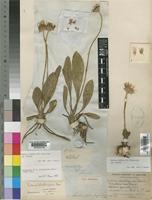
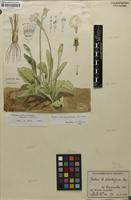
Gerbera viridifolia (DC.) Sch.Bip. subsp. viridifolia [family COMPOSITAE]
Isotype of Gerbera viridifolia (DC.) Sch.Bip. [family ASTERACEAE]
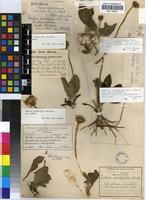
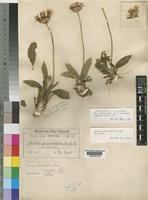
Paratype of Gerbera plantaginea Harv. [family ASTERACEAE]
Gerbera plantaginea Harv.
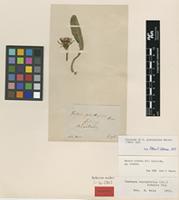
Filed as Gerbera piloselloides (L.) Cass. [family ASTERACEAE]
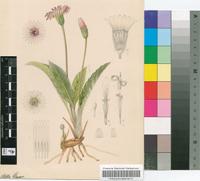
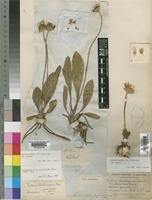
Isolectotype of Gerbera viridifolia (DC.) Sch.Bip. var. ? conrathii Thellung [family COMPOSITAE]
Lectotype of Gerbera plantaginea Harv. [family COMPOSITAE]
Previous
Next

Name

Identification
Gerbera plantaginea Harv. [family ASTERACEAE ]
Related name
  • Gerbera plantaginea

Flora

Entry for GERBERA plantaginea Harv. [family COMPOSITAE]
Herbarium
Royal Botanic Gardens, Kew (K)
Collection
Flora Capensis
Resource Type
Reference Sources
Entry From
Flora Capensis, Vol 3, page 44, (1894) Author: (By W. H. HARVEY).
Names
GERBERA plantaginea Harv. [family COMPOSITAE]
Information
leaves obovate-oblong, subacute, tapering much at base into a variable petiole, entire, glabrous above, at first cobwebbed, then thinly pubescent beneath, on both sides green; inv. scales villous; marg. ovaries hispid, of disc thinly pubescent; pappus fulvous. Crown of root not copiously silky. Petioles 1–3 in. long; lamina 2–5 in. long, 1–1 1/2 in. wide. Near G. viridifolia, but differing in aspect, with much longer lvs. It differs from G. discolor in having both sides of leaf green.
Distribution
SOUTH AFRICA Magalisberg, Burke & Zeyher! (Herb. Hk., Sd.)

Related Materials

  • Terms and Conditions
  • Privacy Policy
  • Cookie Policy
  • Cookie Settings
  • Accessibility
  • Help
  • Contact Us
  • Facebook
  • Twitter
ITHAKA

JSTOR is part of ITHAKA, a not-for-profit organization helping the academic community use digital technologies to preserve the scholarly record and to advance research and teaching in sustainable ways.

©2000-2026 ITHAKA. All Rights Reserved. JSTOR®, the JSTOR logo, JPASS®, Aluka®, and ITHAKA® are registered trademarks of ITHAKA.

╳