JSTOR Global Plants Home
  • Home
  • Browse
  • About
  • Access
  • Account
    • Saved Items
    • Profile
  • Log in

Global Plants

Skip to Main Content
  • JSTOR Global Plants Home
  • Global Plants

    • Browse
    • About
    • Access
    • Account
      • Saved Items
      • Profile
Log in
  • Browse
  • About
  • Access
  • Account
    • Saved Items
    • Profile
Advanced Search

Compilation
Gelonium procerum

6 Images see all

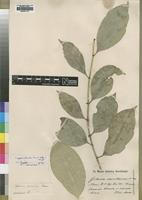
Type of Gelonium procerum Prain [family EUPHORBIACEAE]
Suregada procera (Prain) Croizat [family EUPHORBIACEAE]
Type of Gelonium procerum Prain [family EUPHORBIACEAE]
Lectotype of Gelonium sansibariense M.Arg. [family EUPHORBIACEAE]
Suregada procera (Prain) Croizat [family EUPHORBIACEAE]
Previous
Next

Name

Identification
Gelonium sansibariense M.Arg. [family EUPHORBIACEAE ] Suregada lithoxyla (Pax&K.Hoffm.) Croizat [family EUPHORBIACEAE ] (stored under name); Gelonium procerum Prain [family EUPHORBIACEAE ]
Related name
  • Gelonium zanzibariense
  • Gelonium procerum
  • Suregada procera
  • Gelonium foliceum
  • Gelonium sansibariense
  • Suregada lithoxyla

Flora

Entry for GELONIUM procerum Prain [family EUPHORBIACEAE]
Herbarium
Royal Botanic Gardens, Kew (K)
Collection
Flora of Tropical Africa
Resource Type
Reference Sources
Entry From
Flora of Tropical Africa, Vol 6, Part 1, page 441, (1913) Author: (By J. G. Baker, with additions by C. H. Wright.)
Names
GELONIUM procerum Prain [family EUPHORBIACEAE], in Kew Bulletin, 1911, 233. —Prain ex S. Moore in Journ. Linn. Soc. xl. 201. Pax in Engl. Pflanzenr. Euphorb.-Acalyph. Chrozophor. 128.
GELONIUM lithoxylon Pax & K. Hoffm. [family EUPHORBIACEAE], in Engl. Pflanzenr. Euphorb.-Gelon. 22.
Information
Tree; twigs slightly angular, glabrous; bark fissured; “wood coarse but clean and white” (Elliot). Leaves short-petioled, subcoriaceous, ovate, subacute or obtuse, base cuneate, margin entire, 1 1/4–4 1/2 in. long, 3/4–2 1/4 in. wide, glabrous on both surfaces, shining above; nerves 4–6 pairs, with a very close distinct reticulation, each mesh enclosing a vesicular swelling distinct on both surfaces but especially beneath; petiole 2–2 1/2 lin. long. Flowers diœcious, in subsessile fasciculate few-flowered cymes opposite the petioles. Buds globose. Male: Sepals 5–6, glandular, usually unequal, the third and fourth always exceeding and often much larger than the outer and the two inner; the innermost (sixth) often very small, sometimes obsolete. Stamens 20. Female: Sepals 5, not glandular on the back, subequal. Ovary 3-celled, glabrous; styles 2-fid, lobes lanceolate. Fruit shallowly 3-sulcate, 1/3 in. wide, separating into 2-valved cocci; endocarp thinly crustaceous. Seeds subglobose; testa crustaceous not at all foveolate.
Distribution
German East Africa Mozamb. Dist. Amani, Warnecke, 380!Rhodesia Mozamb. Dist. Gazaland; Chirinda Forest, 3700–4000 ft., Swynnerton, 104! Chimanimani Mountains, 7000 ft., Swynnerton, 1115!British East Africa Nile Land Ukamba; South of Nairobi, Elliot, 178!

Related Materials

  • Terms and Conditions
  • Privacy Policy
  • Cookie Policy
  • Cookie Settings
  • Accessibility
  • Help
  • Contact Us
  • Facebook
  • Twitter
ITHAKA

JSTOR is part of ITHAKA, a not-for-profit organization helping the academic community use digital technologies to preserve the scholarly record and to advance research and teaching in sustainable ways.

©2000-2026 ITHAKA. All Rights Reserved. JSTOR®, the JSTOR logo, JPASS®, Aluka®, and ITHAKA® are registered trademarks of ITHAKA.

╳