JSTOR Global Plants Home
  • Home
  • Browse
  • About
  • Access
  • Account
    • Saved Items
    • Profile
  • Log in

Global Plants

Skip to Main Content
  • JSTOR Global Plants Home
  • Global Plants

    • Browse
    • About
    • Access
    • Account
      • Saved Items
      • Profile
Log in
  • Browse
  • About
  • Access
  • Account
    • Saved Items
    • Profile
Advanced Search

Compilation
Geissaspis kassneri

5 Images see all

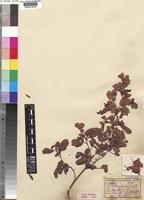
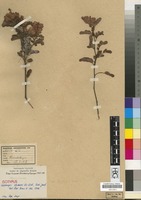
Type of Geissaspis kassneri De Wild. [family LEGUMINOSAE-PAPILIONOIDEAE]
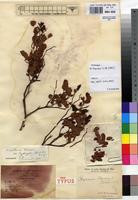
Holotype of Geissaspis vanderystii De Wild. [family FABACEAE]
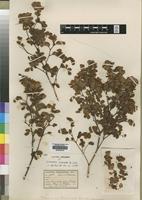
Syntype of Geissaspis kassneri DeWild. [family LEGUMINOSAE]
Humularia apiculata (De Wild.) P.A.Duvign. [family LEGUMINOSAE-PAPILIONOIDEAE]
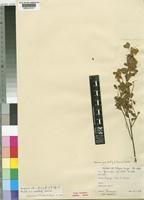
Isotype of Geissaspis kassneri De Wild. [family LEGUMINOSAE/FABACEAE]
Previous
Next

Name

Identification
Geissaspis kassneri DeWild. [family LEGUMINOSAE ] Humularia kassneri (DeWild.) Duvign. [family LEGUMINOSAE ] (stored under name);
Related name
  • Geissaspis apiculata
  • Humularia kassneri
  • Geissaspis kassneri
  • Humularia apiculata

Flora

Entry for Humularia kassneri De Wild. P.A. Duvign. [family LEGUMINOSAE]
Herbarium
Royal Botanic Gardens, Kew (K)
Collection
Flora Zambesiaca
Resource Type
Reference Sources
Entry From
FZ, Vol 3, Part 6, (2000) Author: B. Verdcourt
Names
Humularia kassneri De Wild. P.A. Duvign. [family LEGUMINOSAE], in Bull. Soc. Roy. Bot. Belgique 86: 185 (1954); in F.C.B. 5: 313 (1954). —Verdcourt in Kirkia 9: 481 (1974). —Lock, Leg. Afr. Check-list: 113 (1989). Type from Dem. Rep. Congo.
Geissaspis kassneri De Wild. [family LEGUMINOSAE], in Bull. Jard. Bot. État 4: 112 (1914). —E.G. Baker, Legum. Trop. Africa: 314 (1929).
Information
Subshrub 0.8–0.9 m tall. Stems erect, densely covered with glandular hairs. Leaves 6–14(18)-foliolate; leaflets 7–18 × 5–9 mm, obliquely elliptic, obtuse to truncate at the apex, obliquely cuneate at the base, glabrous to hairy on upper surface, hairy beneath, the hairs appressed and tubercular-based, the margins ciliate with longer but similar hairs, the main nerve oblique, with 4–5 other main basal nerves; venation reticulate; petiole 5–12 mm long; rhachis 1–6 cm long, both with similar indumentum to the stems, the rhachis prolonged beyond the terminal leaflets as a bristle 1.5 mm long; stipules 5–10 × 4–7 mm, ovate, obtuse at the apex, rounded or subcordate at the base, hairy outside and glabrous inside, long ciliate, eventually deciduous. Inflorescences mostly on branches with reduced leaves, 10–15 mm long, densely to loosely strobilate, hairy; peduncle 5 mm long, hairy; pedicels 1.5 mm long; bracts 5–7.5 × 8–14 mm, rounded, divided for about one-third to half of their length into ovate lobes, pubescent on one or both sides with tubercular-based glandular hairs, ciliate-denticulate with similar hairs; bracteoles (2)4–6 × 0.5–1.5 mm, lanceolate, ciliate. Calyx lobes 8–9 mm long, the upper broadly lanceolate, shortly but distinctly 3-fid, the lower oblong-elliptic, ± entire. Standard orange, 10–12 × 4.5–8 mm, oblong with a very slight waist. Fruit of 1 article, 5 mm long and wide, glandular and densely hairy.

Related Materials

  • Terms and Conditions
  • Privacy Policy
  • Cookie Policy
  • Cookie Settings
  • Accessibility
  • Help
  • Contact Us
  • Facebook
  • Twitter
ITHAKA

JSTOR is part of ITHAKA, a not-for-profit organization helping the academic community use digital technologies to preserve the scholarly record and to advance research and teaching in sustainable ways.

©2000-2026 ITHAKA. All Rights Reserved. JSTOR®, the JSTOR logo, JPASS®, Aluka®, and ITHAKA® are registered trademarks of ITHAKA.

╳