JSTOR Global Plants Home
  • Home
  • Browse
  • About
  • Access
  • Account
    • Saved Items
    • Profile
  • Log in

Global Plants

Skip to Main Content
  • JSTOR Global Plants Home
  • Global Plants

    • Browse
    • About
    • Access
    • Account
      • Saved Items
      • Profile
Log in
  • Browse
  • About
  • Access
  • Account
    • Saved Items
    • Profile
Advanced Search

Compilation
Gazania linearis

12 Images see all

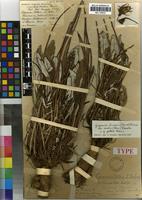
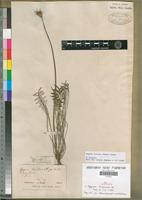
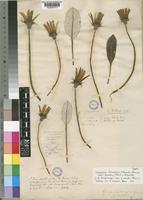
Type of Gazania pottsii L.Bolus [family ASTERACEAE]
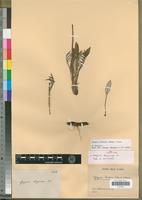
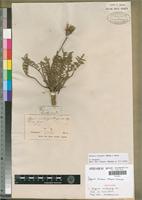
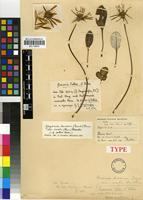
Syntype of Gazania longiscapa DC. [family ASTERACEAE]
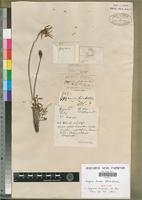
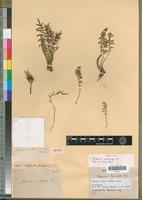
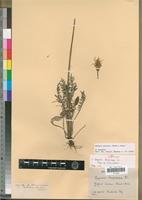
Isotype of Gazania kraussii Sch.Bip. [family ASTERACEAE]
Type of Gazania pottsii L.Bolus [family ASTERACEAE]
Syntype of Gazania longiscapa DC. [family ASTERACEAE]
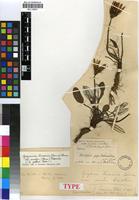
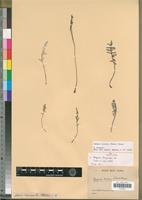
Isotype of Gazania multijuga DC. [family ASTERACEAE]
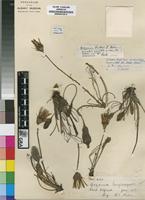
Isosyntype of Gazania pottsii L.Bolus [family ASTERACEAE]
Gazania linearis (Thunb.) Druce var. ovalis (Harv.) Roessler [family COMPOSITAE]
Type of Gazania pottsii L.Bolus [family ASTERACEAE]
Syntype of Gazania longiscapa DC. [family ASTERACEAE]
Previous
Next

Name

Identification
Gazania pottsii L.Bolus [family ASTERACEAE ] Verified by Not on sheet, Gazania linearis (Thunb.) Druce [family ASTERACEAE ] (stored under name); Verified by Roessler, H.,
Related name
  • Gazania kraussii
  • Gazania multijuga
  • Gazania linearis
  • Gazania pottsii
  • Gazania longiscapa

Flora

Entry for Gazania linearis (Thunberg) Druce [family COMPOSITAE]
Herbarium
Flora of North America (FNA)
Collection
Flora of North America
Resource Type
Reference Sources
Entry From
Flora of North America, Vol 19,
Names
Gazania linearis (Thunberg) Druce [family COMPOSITAE], Rep. Bot. Soc. Exch. Club Brit. Isles, 4: 624. 1917
Gorteria linearis Thunberg [family COMPOSITAE], Prodr. Pl. Cap., 162. 1800
Gazania longiscapa de Candolle [family COMPOSITAE]
Treatment Author(s)
Alison McKenzie Mahoney
Information
Stems sometimes proximally woody. Leaves mostly basal; blades either linear to lanceolate and not lobed, 10–20(–38) cm × 6–10 mm, or oblanceolate to oblong and pinnately lobed, 10–20 cm × 25–50 mm, or both; bases usually attenuate, margins usually entire, sometimes ± prickly, revolute, midveins prominent, abaxial faces white-villous, adaxial faces glabrate to arachnose. Heads 3.5–8 cm diam. (across rays). Peduncles scapiform, (6–)10–30(–35) cm. Phyllaries: outer lanceolate, margins prickly-ciliate; the inner with margins undulate, ciliate, with ± submarginal dark stripe, cuspidate. Ray florets 13–18; corolla laminae yellow or orange, usually each with dark abaxial stripe and adaxial basal blotch or spot, (20–)35–42 × 10 mm. Cypselae 1–2 mm; pappi of 7–8 scales 3–4 mm.
Phenology
dec-feb (winter), mar-may (spring), jun-jul (summer), oct-nov (fall)
Altitude range
0–400(–900) m;
Distribution
Africa.USA Calif.USA N.Mex.
Native/Introduced
introduced;

Related Materials

  • Terms and Conditions
  • Privacy Policy
  • Cookie Policy
  • Cookie Settings
  • Accessibility
  • Help
  • Contact Us
  • Facebook
  • Twitter
ITHAKA

JSTOR is part of ITHAKA, a not-for-profit organization helping the academic community use digital technologies to preserve the scholarly record and to advance research and teaching in sustainable ways.

©2000-2026 ITHAKA. All Rights Reserved. JSTOR®, the JSTOR logo, JPASS®, Aluka®, and ITHAKA® are registered trademarks of ITHAKA.

╳