JSTOR Global Plants Home
  • Home
  • Browse
  • About
  • Access
  • Account
    • Saved Items
    • Profile
  • Log in

Global Plants

Skip to Main Content
  • JSTOR Global Plants Home
  • Global Plants

    • Browse
    • About
    • Access
    • Account
      • Saved Items
      • Profile
Log in
  • Browse
  • About
  • Access
  • Account
    • Saved Items
    • Profile
Advanced Search

Compilation
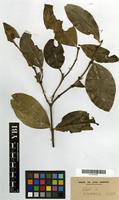
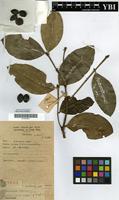
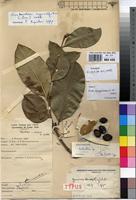
Garcinia sciura

3 Images see all

Type of Garcinia sciura Spirlet [family GUTTIFERAE]
Holotype of Garcinia sciura Spirlet [family CLUSIACEAE]
Previous
Next

Name

Identification
Garcinia sciura Spirlet [family CLUSIACEAE ] Verified by Not on sheet, Acokanthera oppositifolia (Lam.) Codd [family APOCYNACEAE ] (stored under name); Verified by Kupicha F., 1979
Related name
  • Acokanthera oppositifolia
  • Garcinia sciura

Flora

Entry for ACOKANTHERA oppositifolia (Lam.) Codd [family APOCYNACEAE]
Herbarium
Royal Botanic Gardens, Kew (K)
Collection
Flora of Tropical East Africa
Resource Type
Reference Sources
Entry From
Flora of Tropical East Africa, page 1, (2002) Author: E.A. OMINO
Names
ACOKANTHERA oppositifolia (Lam.) Codd [family APOCYNACEAE], in Bothalia 7: 448 (1961) & in F.S.A. 26: 247, t. 36/1 (1963); Kupicha in K.B. 37, 1: 53, fig. 1 (1982) & in F.Z. 7, 2: 405, t. 91 (1985); K.T.S.L.: 475 (1994). Type: Africa, Sonnerat (P-LA, holo.)
Cestrum oppositifolium Lam. [family SOLANACEAE], Tab. Encycl. 1, 1 (2): 5, t. 112, t. 2 (1792) & 2, 3 (1): 5 (1794)
Acokanthera longiflora Stapf [family APOCYNACEAE], in K.B. 1922: 28 (1922); T.T.C.L.: 47 (1949); K.T.S.: 43 (1961); Verdcourt & Trump, Comm. Poison. Pl. E. Afr.: 123, t. 8/a–d (1969). Lectotype: Tanzania, Lushoto District, Kwa Msusha, Holst 8968 (K, lecto., BM, isolecto., chosen by Kupicha)
Carissa oppositifolia (Lam.) Pichon [family APOCYNACEAE], in B.J.B.B. 22: 109 (1952)
Carissa longiflora (Stapf) Lawrence [family APOCYNACEAE], in Baileya 7: 90 (1959)
Garcinia sciura Spirlet [family GUTTIFERAE], in B.J.B.B. 29: 327 (1959). Type: Congo (Kinshasa), Shaba [Katanga], 5 km S of Lubumbashi [Elisabethville], Schmitz 1368 (BR, holo.)
Acokanthera venenata [family APOCYNACEAE], sensu T.T.C.L.: 47 (1949), non G. Don
Information
Shrub or small tree 1–7 m high; bark brown, deeply fissured; slash cream turning olive green. Leaves petiolate; petiole 2–7 mm long; blade elliptic or obovate, 4–13.5 cm long, 1.5–8.4 cm wide, acute, obtuse or rounded at the apex, with a hard spiny mucro, cuneate or rounded at the base, coriaceous, glabrous, sometimes puberulous on young leaves especially beneath on lower nerves; secondary veins prominent. Inflorescence of dense cymes; bracts ovate, 1.3 mm long, acute at the apex, ciliate; sepals ovate, 2.4–3.5 mm long, 0.9–1.6 mm wide, acuminate to acute at the apex, dorsally pubescent or glabrous, ciliate. Corolla tube pink or red, 12–19 mm long, pubescent or hispid on external surface, rarely glabrous, pilose in the upper half and wrinkled below inside; lobes broadly elliptic, 3.2–4 mm long, 2.5–4 mm wide, acute at the apex, pubescent at the base and mouth of tube, ciliate; stamens slightly exserted, inserted at 12.5–15 mm from the base; anthers ovate up to 1.3 mm long; pistil 13–18 mm long; style 11–16 mm long. Fruit purple, ellipsoid, 12–35 mm long, ± 25 mm in diameter; seeds 6.6–10 mm long. Fig. 5/1–4 (p. 16).
Range
DISTR. K 4, 7; T 2, 3, 7
Altitude range
1200–2200 m
Distribution
KENYA Kiambu District Karura Forest, 9 Dec. 1969, Perdue & Kibuwa 10181!;KENYA Machakos District 20 miles NE of Machakos, 20 Oct. 1967, Mwangangi 272!;KENYA Teita District on the road to Ngangao forest, 22 Sept. 1989, Omino 72!TANZANIA Arusha District Tengeru, Aug. 1986, van der Laan 1200!;TANZANIA Lushoto District Shume forest, Nov. 1957, Semsei 2721!;TANZANIA Mbeya District 25 miles S of Mbeya, Sept. 1959, Procter 1357!
Distribution (external)
; Congo (Kinshasa)
Zambia
Malawi
Mozambique
Zimbabwe
Swaziland
South Africa
Notes
USES. Roots and bark used in arrow poison; fruits said to be edible or poisonous. This species is also cultivated in the Nairobi Arboretum and at Amani.

Related Materials

  • Terms and Conditions
  • Privacy Policy
  • Cookie Policy
  • Cookie Settings
  • Accessibility
  • Help
  • Contact Us
  • Facebook
  • Twitter
ITHAKA

JSTOR is part of ITHAKA, a not-for-profit organization helping the academic community use digital technologies to preserve the scholarly record and to advance research and teaching in sustainable ways.

©2000-2026 ITHAKA. All Rights Reserved. JSTOR®, the JSTOR logo, JPASS®, Aluka®, and ITHAKA® are registered trademarks of ITHAKA.

╳