JSTOR Global Plants Home
  • Home
  • Browse
  • About
  • Access
  • Account
    • Saved Items
    • Profile
  • Log in

Global Plants

Skip to Main Content
  • JSTOR Global Plants Home
  • Global Plants

    • Browse
    • About
    • Access
    • Account
      • Saved Items
      • Profile
Log in
  • Browse
  • About
  • Access
  • Account
    • Saved Items
    • Profile
Advanced Search

Compilation
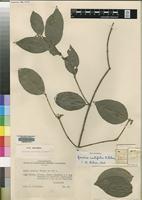
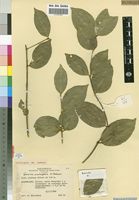
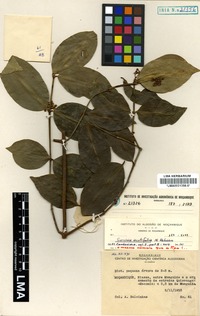
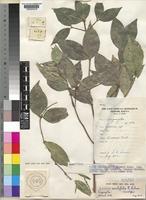
Garcinia acutifolia

5 Images see all

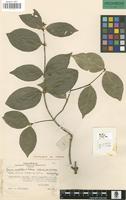
Type of Garcinia acutifolia N.Robson [family GUTTIFERAE]
Isotype of Garcinia acutifolia N.Robson [family CLUSIACEAE]
Isotype of Garcinia acutifolia N. Robson [family CLUSIACEAE]
Paratype of Garcinia acutifolia N.Robson [family GUTTIFERAE]
Isotype of Garcinia acutifolia Robson, N [family GUTTIFERAE]
Previous
Next

Name

Identification
Garcinia acutifolia N.Robson [family GUTTIFERAE ] (stored under name); Verified by Robson,N., 1960 Garcinia acutifolia N.Robson [family GUTTIFERAE ]
Related name
  • Garcinia acutifolia

Flora

Entry for Garcinia acutifolia N. Robson [family GUTTIFERAE]
Herbarium
Royal Botanic Gardens, Kew (K)
Collection
Flora Zambesiaca
Resource Type
Reference Sources
Entry From
FZ, Vol 1, Part 2, page 378, (1961) Author: N. K. B. Robson
Names
Garcinia acutifolia N. Robson [family GUTTIFERAE], in Bol. Soc. Brot., Sér. 2, 34: 95, t.1 (1960) Type: Mozambique, Niassa, 2·3 km. from Muaguide, Balsinhas 61 (BM, holotype; LMJ).
Information
Shrub or small tree, 2–3 m. high, glabrous; branches slender, narrowly 4-winged. Leaves opposite, petiolate; lamina 6–9 × c. 2·5–5 cm., chartaceous, bright green, concolorous, ovate to lanceolate or elliptic, shortly and usually very acutely acuminate at the apex, cuneate to rounded at the base, with c. 12–20 main lateral nerves (sometimes alternating with weaker ones) ± prominent on both surfaces, forming a wide angle (60°–80°) with the midrib and anastomosing loosely towards the margin, and with translucent streaks and interrupted lines ± parallel to the lateral veins, but without visible dark longitudinal glandular lines; petiole 4–6 mm. long, channelled above, yellow-green to orange; ligule inconspicuous. Inflorescences terminal or axillary; male flowers c. 5–6 mm. in diam., in few- or many-flowered pedunculate regularly biparous cymes; pedicels 1·5–4 mm. long, pale green. Sepals 4, pale green, the outer pair shorter, broadly ovate to suborbicular, cucullate, the inner pair broadly obovate to orbicular, rounded at the apex. Petals 4, 3–3·5 mm. long, yellow, oblong or oblanceolate, rounded at the apex. Male flowers with 2 antisepalous stamen-fascicles, each of 3 stamens, with filaments completely united and anthers sessile, oblong or elliptic, curved or straight, not septate; ovary-vestige c. 1 mm. in diam., flattened-obconic, with 4-lobed stigma. Female flowers and fruit as yet unknown.
Habitat
In evergreen forest
Altitude range
c. 50–500 m.
500
50
Distribution
Mozambique N between Muaguide and the Quissanga-Macomia crossroads, 2·3 km. from Muaguide, fl. 5.xi.1953, Balsinhas 61 (BM; LMJ).
Distribution (external)
north-eastern Tanganyika (Kisarawe Distr.)
Notes
G.acutifolia differs from all the other species of Garcinia in our area in having 2 antisepalous stamen-fascicles, and from all species of Sect. Tagmanthera Pierre by its regularly quadrangular young shoots. The interrupted glandular lines of the leaves also serve to distinguish it from all other species of the genus in our area except G.punctata.

Related Materials

  • Terms and Conditions
  • Privacy Policy
  • Cookie Policy
  • Cookie Settings
  • Accessibility
  • Help
  • Contact Us
  • Facebook
  • Twitter
ITHAKA

JSTOR is part of ITHAKA, a not-for-profit organization helping the academic community use digital technologies to preserve the scholarly record and to advance research and teaching in sustainable ways.

©2000-2026 ITHAKA. All Rights Reserved. JSTOR®, the JSTOR logo, JPASS®, Aluka®, and ITHAKA® are registered trademarks of ITHAKA.

╳