JSTOR Global Plants Home
  • Home
  • Browse
  • About
  • Access
  • Account
    • Saved Items
    • Profile
  • Log in

Global Plants

Skip to Main Content
  • JSTOR Global Plants Home
  • Global Plants

    • Browse
    • About
    • Access
    • Account
      • Saved Items
      • Profile
Log in
  • Browse
  • About
  • Access
  • Account
    • Saved Items
    • Profile
Advanced Search

Compilation
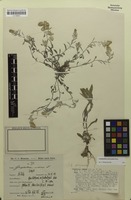
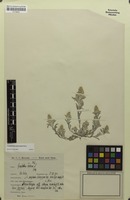
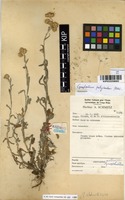
Gnaphalium polycaulon

3 Images see all

Filed as Gnaphalium polycaulon Pers. [family ASTERACEAE]
Previous
Next

Name

Identification
Gnaphalium polycaulon Pers. [family ASTERACEAE ] (stored under name); Verified by Not on Sheet,
Related name
  • Gnaphalium polycaulon
Common name
  • dìì dóó (C-G) (MALI, DOGON), Burkill, H.M. 1985. The useful plants of west tropical Africa, Vol. 1

Flora

Entry for Gnaphalium polycaulon [family ASTERACEAE]
Herbarium
South African National Biodiversity Institute, Compton Herbarium, Cape Town (SAM)
Collection
Flora of Southern Africa
Resource Type
Reference Sources
Entry From
Flora of South Africa, (2003) Author: Dr J.P. Roux
Names
Gnaphalium polycaulon [family ASTERACEAE]
Common names
G. multicaule Willd., Sp. PI. 3,3: 1888 (1803), non Lam. (1789). Type as for G. polycaulon. G. indicum sensu Humbert, Fl. Madag. 189: 382 (1962); Merxm., F.S.W.A. 139: 83 (1976), non L.
Information
Annual herb, stems branched from the base, decumbent or erect, up to c. 250 mm long, thinly white-tomentose, leafy. Leaves up to 70 x 8 mm, but often much less than half that size, spathulate or oblanceolate, apex acute to obtuse, mucronate, both surfaces thinly grey-tomentose sometimes glabrescent. Heads c. 3 x 2,5 mm, in small stalked or sessile clusters racemosely ar­ranged. Involucral bracts in 3 series, pellucid, pale buff, ageing palest brown, sometimes purplish around the stereome. Receptacle tuberculate. Flowers c. 150—225, 140-220 ("female"), 4-6 ("bisexual"), in the proportion of at least 25 : 1. Achenes 0,5 mm long with duplex hairs. Pappus bristles of ("female") flowers scabridulous, of Q flowers with more or less barbellate tips.
Habitat
Can be confused with G. confine (no. 11).
Use
13. Gnaphalium polycaulon Pers., Syn. 2: 421 (1807); Grierson in Notes R. bot. Gdn Edinb. 31: 137 (1971); Hilliard, Com-positae in Natal 126 (1977), Bot. J. Linn. Soc. 82: 289 (1981); Merxm. & Roessl. in Mitt. bot. St SammL, Munch. 15: 363 (1979). Type: India, Roxburgh in Herb. Willdenow (sheet 15500, B!).
Range
A palaeotropical weed, ranging south through Africa to S.W.A./Namibia and the environs of the Orange River, the Bushveld of the northern and eastern Transvaal, and the Mozambique coastal plain, thence reaching Tongaland in NE. Natal. Also in Madagascar. Favours muddy or sandy streamsides and similar damp places; flowering recorded in most months. Map 16.

Related Materials

  • Terms and Conditions
  • Privacy Policy
  • Cookie Policy
  • Cookie Settings
  • Accessibility
  • Help
  • Contact Us
  • Facebook
  • Twitter
ITHAKA

JSTOR is part of ITHAKA, a not-for-profit organization helping the academic community use digital technologies to preserve the scholarly record and to advance research and teaching in sustainable ways.

©2000-2026 ITHAKA. All Rights Reserved. JSTOR®, the JSTOR logo, JPASS®, Aluka®, and ITHAKA® are registered trademarks of ITHAKA.

╳