JSTOR Global Plants Home
  • Home
  • Browse
  • About
  • Access
  • Account
    • Saved Items
    • Profile
  • Log in

Global Plants

Skip to Main Content
  • JSTOR Global Plants Home
  • Global Plants

    • Browse
    • About
    • Access
    • Account
      • Saved Items
      • Profile
Log in
  • Browse
  • About
  • Access
  • Account
    • Saved Items
    • Profile
Advanced Search

Compilation
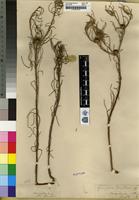
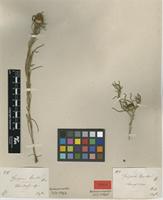
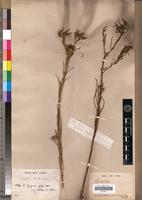
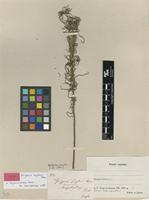
Geigeria zeyheri

5 Images see all

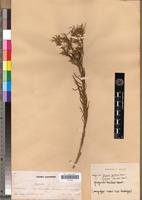
Syntype of Geigeria zeyheri Harvey [family ASTERACEAE]
Isotype of Geigeria zeyheri Harv. [family ASTERACEAE]
Type of Geigeria zeyheri Harv. [family ASTERACEAE]
Isotype of Geigeria zeyheri Harv. [family ASTERACEAE]
Previous
Next

Name

Identification
Geigeria burkei Harv. [family ASTERACEAE ] (stored under name); Isotype of Geigeria zeyheri Harv. [family ASTERACEAE ]
Related name
  • Geigeria burkei
  • Geigeria zeyheri

Flora

Entry for GEIGERIA Zeyheri Harv. [family COMPOSITAE]
Herbarium
Royal Botanic Gardens, Kew (K)
Collection
Flora Capensis
Resource Type
Reference Sources
Entry From
Flora Capensis, Vol 3, page 44, (1894) Author: (By W. H. HARVEY).
Names
GEIGERIA Zeyheri Harv. [family COMPOSITAE]
Information
stem shrubby, branched at base; branches erect, simple or cymose at the summit, rufo-tomentulose, leafy throughout; leaves alternate, sessile, linear-involute, nerve-keeled, impressdotted, glabrous; heads terminal, solitary, sessile, subtended by many leaves; fimbrils setaceous; outer inv.-scales short and broad, with short, leafy-tips, inner lanceolate, acute, spreading, subpungent; outer pappus of oblong, blunt, inner of bristle-pointed scales. Very like G. Burkei, but the leaves are involute; the fl.-heads smaller; and the inner inv.-scales broader and less acuminate. Stems 12–18 inches high; leaves 2–3–4 inches long, not 1/2 line wide. Young stems slightly tomentulose.
Distribution
SOUTH AFRICA Magalisberg, Burke & Zeyher! Zey.! 915, ex pte. (Herb. Hk., D., Sd.)

Related Materials

  • Terms and Conditions
  • Privacy Policy
  • Cookie Policy
  • Cookie Settings
  • Accessibility
  • Help
  • Contact Us
  • Facebook
  • Twitter
ITHAKA

JSTOR is part of ITHAKA, a not-for-profit organization helping the academic community use digital technologies to preserve the scholarly record and to advance research and teaching in sustainable ways.

©2000-2026 ITHAKA. All Rights Reserved. JSTOR®, the JSTOR logo, JPASS®, Aluka®, and ITHAKA® are registered trademarks of ITHAKA.

╳