JSTOR Global Plants Home
  • Home
  • Browse
  • About
  • Access
  • Account
    • Saved Items
    • Profile
  • Log in

Global Plants

Skip to Main Content
  • JSTOR Global Plants Home
  • Global Plants

    • Browse
    • About
    • Access
    • Account
      • Saved Items
      • Profile
Log in
  • Browse
  • About
  • Access
  • Account
    • Saved Items
    • Profile
Advanced Search

Compilation
Fuirena simplex

8 Images see all

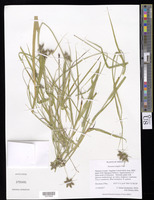
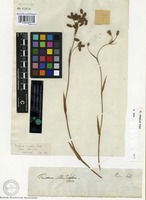
Fuirena simplex Vahl [family CYPERACEAE]
Holotype of Fuirena simplex Vahl [family CYPERACEAE]
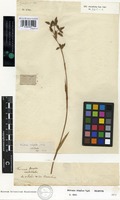
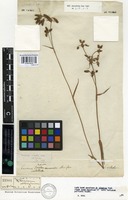
Holotype of Fuirena zacapana Bartlett [family CYPERACEAE]
Filed as Fuirena simplex Vahl [family CYPERACEAE]
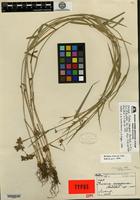
Syntype of Fuirena obtusiflora Vahl [family CYPERACEAE]
Filed as Fuirena simplex Vahl [family CYPERACEAE]
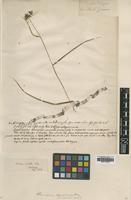
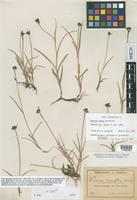
Isolectotype of Fuirena repens Boeck. [family CYPERACEAE]
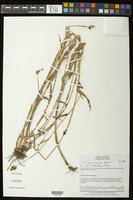
Fuirena simplex Vahl [family CYPERACEAE]
Previous
Next

Name

Identification
Fuirena simplex Vahl [family CYPERACEAE ] (stored under name); Verified by Clarke, C.B.,
Related name
  • Fuirena simplex
  • Fuirena zacapana
  • Fuirena repens

Flora

Entry for Fuirena simplex Vahl [family CYPERACEAE]
Herbarium
Flora of North America (FNA)
Collection
Flora of North America
Resource Type
Reference Sources
Entry From
Flora of North America, Vol 23,
Names
Fuirena simplex Vahl [family CYPERACEAE], Eclog. Amer., 2: 8. 1798
Fuirena cylindrica Bush [family CYPERACEAE]
Fuirena obtusiflora Vahl [family CYPERACEAE]
Fuirena primiera M. E. Jones [family CYPERACEAE]
Fuirena schiedeana Kunth [family CYPERACEAE]
Fuirena squarrosa Michaux var. macrostachya Britton [family CYPERACEAE]
Fuirena zacapana Bartlett [family CYPERACEAE]
Treatment Author(s)
Robert Kral
Information
Herbs annual or perennial, mostly cespitose; rhizomes present or absent, if present without cormose buds. Culms tufted or widely spaced, erect to leaning, culm tips hispid-hirsute, internodes glabrous proximal to inflorescence. Leaves: sheaths at culm base or apex sometimes hairy, sheaths at or toward midculm usually glabrous; principal blades linear or lance-linear, flat, 5–20 cm, hispid-ciliate, abaxially hispid, pilose, or glabrous, adaxially glabrous to pilose. Inflorescences of spikelets in clusters 1–3(–5). Spikelets ovoid, lance-ovoid, or cylindric, 8–15(–20) mm, apex acute; fertile scales obovate or oblong, 2–3.5 mm; cusp spreading-excurved, 2/3 or more length of scale; evident ribs 5–7, central 3 convergent to cusp. Flowers: florets 2–3 mm; perianth bristles reaching base of perianth blades or beyond, retrorsely barbellate (sometimes with narrow blades); perianth blades with long claw, ovate, rounded or retuse, rarely acute, apically or subapically bristled, bristle erect or incurved, short to elongate, retrorsely scabridulous; anthers 1–3, 0.5–1.2 mm. Achenes: stipe and beak nearly as long as fruit; body angles pale, faces deep glossy brown, red-brown, or yellow, 1 mm; beak tip narrow, usually papillose.
Distribution
North AmericaMexicoWest IndiesCentral American South America.

Related Materials

  • Terms and Conditions
  • Privacy Policy
  • Cookie Policy
  • Cookie Settings
  • Accessibility
  • Help
  • Contact Us
  • Facebook
  • Twitter
ITHAKA

JSTOR is part of ITHAKA, a not-for-profit organization helping the academic community use digital technologies to preserve the scholarly record and to advance research and teaching in sustainable ways.

©2000-2026 ITHAKA. All Rights Reserved. JSTOR®, the JSTOR logo, JPASS®, Aluka®, and ITHAKA® are registered trademarks of ITHAKA.

╳