JSTOR Global Plants Home
  • Home
  • Browse
  • About
  • Access
  • Account
    • Saved Items
    • Profile
  • Log in

Global Plants

Skip to Main Content
  • JSTOR Global Plants Home
  • Global Plants

    • Browse
    • About
    • Access
    • Account
      • Saved Items
      • Profile
Log in
  • Browse
  • About
  • Access
  • Account
    • Saved Items
    • Profile
Advanced Search

Compilation
Froelichia gracilis

11 Images see all

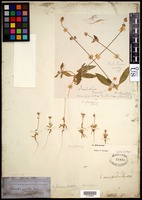
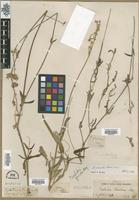
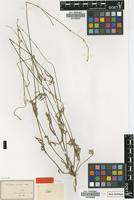
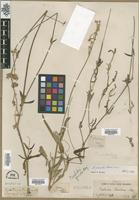
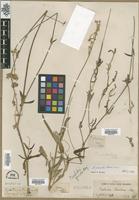
Froelichia gracilis Moq. [family AMARANTHACEAE]
Type of Froelichia gracilis Moq. [family AMARANTHACEAE]
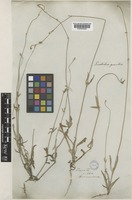
Isotype of Froelichia gracilis Moq. [family AMARANTHACEAE]
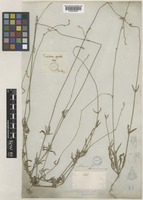
Filed as Froelichia gracilis (Hook.) Moq. [family AMARANTHACEAE]
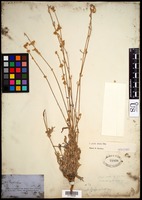
Froelichia gracilis (Hook.) Moq. [family AMARANTHACEAE]
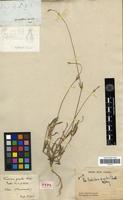
Froelichia gracilis Moq. [family AMARANTHACEAE]
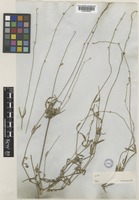
Froelichia gracilis (Hook.) Moq. [family AMARANTHACEAE]
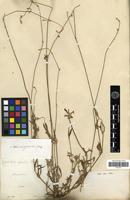
Froelichia gracilis Moq. [family AMARANTHACEAE]
Type? of Oplotheca floridana Nutt. [family AMARANTHACEAE]
Previous
Next

Name

Identification
Isotype of Froelichia gracilis Moq. [family AMARANTHACEAE ] (stored under name); Verified by Not on sheet,
Related name
  • Froelichia gracilis
  • Oplotheca floridana
Common name
  • Slender cottonweed, Flora of North America Vol. 4

Flora

Entry for Froelichia gracilis (Hooker) Moquin-Tandon [family ]
Herbarium
Flora of North America (FNA)
Collection
Flora of North America
Resource Type
Reference Sources
Entry From
Flora of North America, Vol 4,
Names
Froelichia gracilis (Hooker) Moquin-Tandon [family ], in A. P. de Candolle and A. L. P. P. de Candolle, Prodr., 13(2): 420. 1849
Oplotheca gracilis Hooker [family ], Icon Pl., 3: plate 256. 1840
Froelichia braunii Standley [family ]
Froelichia texana (A. Braun) Small 1903 [family ], not J. M. Coulter & Fisher 1892
Oplotheca texana A. Braun [family ]
Treatment Author(s)
Ross A. McCauley
Information
Plants annual or short-lived perennial; taproots narrow, enlarged when perennial, semiwoody. Stems several (rarely 1), erect or ascending, sometimes procumbent, usually much-branched from base, slender, 1–5(–10) dm, densely or sparsely villous-tomentose with grayish white hairs. Leaves predominant on proximal 1/3 of plant, often basal, sessile; blade linear to lanceolate or lance-elliptic, largest leaves 1.6–9(–13.5) × 0.2–0.9(–1.2) cm, base acuminate or attenuate, apex acute to acuminate, canescent or sericeous adaxially, sericeous-tomentose with white or gray hairs abaxially. Spikes sparsely branched, flowers arranged in 3-ranked spiral; bracteoles stramineous or blackish, glabrous. Flowers 2.4–3.8 mm; perianth lobes oblong-linear, apex acute or acutish, pubescence grayish; filament lobes stramineous or blackish, blunt. Utricles 2.5–5 × 2.7–4 mm, apex slightly oblique, with irregularly and deeply cut (“spiny”) lateral wings, both surfaces of perianth with distinct spines or tubercles. 2n = 54.
Phenology
jun-aug (summer)
Distribution
Mexico (Chihuahua)Mexico (Coahuila)Mexico (Nuevo León)Mexico (Tamaulipas)introduced in EuropeAsia (Japan).USA Ala.USA Ariz.USA Ark.USA Calif.USA Colo.USA Conn.USA Ga.USA Ill.USA Ind.USA IowaUSA Kans.USA Ky.USA La.USA Md.USA Mass.USA Mich.USA Miss.USA Mo.USA Nebr.USA N.H.USA N.J.USA N.Mex.USA N.Y.USA N.C.USA OhioUSA Okla.USA Pa.USA S.C.USA Tenn.USA Tex.USA Va.USA W.Va.USA Wis.Canada Ont.
Discussion
The current range of Froelichia gracilis is due in large part to its introduction via railroads during the past 100 years, and the majority of records for the species east of the Mississippi River occur on or near railroads. S. F. Blake (1956) discussed this eastern spread of the species. Froelichia gracilis is considered a minor invasive weed in the Northeast; its adaptation to open sandy or gravely soils will restrict its spread to open sites with poor soil.
In regions where their ranges overlap, Froelichia gracilis may hybridize with F. floridana. Plants with intermediate form from Texas and the Midwest have been noted. Suspected hybrids appear closest in habit to F. gracilis and will generally key to that species. Floral structure will be intermediate and variable; the branching will be typically less than in F. gracilis and present distal to the base.

Related Materials

  • Terms and Conditions
  • Privacy Policy
  • Cookie Policy
  • Cookie Settings
  • Accessibility
  • Help
  • Contact Us
  • Facebook
  • Twitter
ITHAKA

JSTOR is part of ITHAKA, a not-for-profit organization helping the academic community use digital technologies to preserve the scholarly record and to advance research and teaching in sustainable ways.

©2000-2026 ITHAKA. All Rights Reserved. JSTOR®, the JSTOR logo, JPASS®, Aluka®, and ITHAKA® are registered trademarks of ITHAKA.

╳