JSTOR Global Plants Home
  • Home
  • Browse
  • About
  • Access
  • Account
    • Saved Items
    • Profile
  • Log in

Global Plants

Skip to Main Content
  • JSTOR Global Plants Home
  • Global Plants

    • Browse
    • About
    • Access
    • Account
      • Saved Items
      • Profile
Log in
  • Browse
  • About
  • Access
  • Account
    • Saved Items
    • Profile
Advanced Search

Compilation
Freesia laxa

6 Images see all

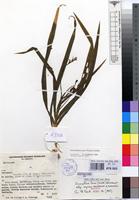
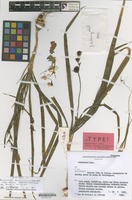
Isotype of Anomatheca laxa (Thunb.) Goldblatt subsp. azurea Goldblatt & Hutchings [family IRIDACEAE]
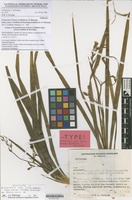
Isotype of Anomatheca laxa (Thunb.) Goldblatt subsp. azurea Goldblatt & A.Hutchings [family IRIDACEAE]
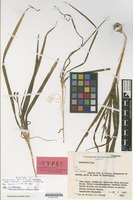
Isotype of Anomatheca laxa (Thunb.) Goldblatt subsp. azurea Goldblatt & Hutchings [family IRIDACEAE]
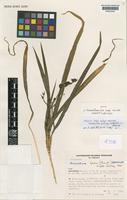
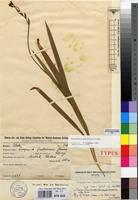
Type of Lapeirousia graebneriana Harms [family IRIDACEAE]
Previous
Next

Name

Identification
Lapeirousia graebneriana Harms [family IRIDACEAE ] Verified by Not on sheet, Freesia laxa (Thunb.) Goldblatt & J.C.Manning [family IRIDACEAE ] (stored under name); Verified by Not on sheet,
Related name
  • Freesia laxa
  • Anomatheca laxa
  • Lapeirousia graebneriana

Flora

Entry for Freesia laxa (Thunberg), Goldblatt & J. C. Manning [family IRIDACEAE]
Herbarium
Flora of North America (FNA)
Collection
Flora of North America
Resource Type
Reference Sources
Entry From
Flora of North America, Vol 26,
Names
Freesia laxa (Thunberg), Goldblatt & J. C. Manning [family IRIDACEAE], Syst. Bot., 20: 171. 1995
Gladiolus laxus Thunberg [family IRIDACEAE], Fl. Cap. ed., 2, 15. 1823
Anomatheca cruenta Lindley [family IRIDACEAE]
Anomatheca laxa (Thunberg) Goldblatt [family IRIDACEAE]
Freesia cruenta (Lindley) Klatt [family IRIDACEAE]
Lapeirousia laxa (Thunberg) N. E. Brown [family IRIDACEAE]
Treatment Author(s)
Peter Goldblatt
Information
Plants 20–35 cm. Stems erect or inclined, flexed outward below base of spike, usually branched, smooth. Leaves several, erect; blades usually shortly exceeding spike. Spike nearly horizontal, 2–6-flowered; spathes 6–8(–13) mm, outer slightly larger than inner, becoming membranous above, apex often dark brown, bifid. Flowers unscented, hypocrateriform; perianth tube cylindric, widening slightly at apex, 18–33 mm; tepals spreading at right angle to tube, pink to red [pale blue to white] with dark red [blue-violet] marks at base of lower 3 tepals, ovate to oblong, 9–13 mm; filaments exserted 1.5–2 mm from tube; anthers 3–4 mm; style branching between base and middle of anthers; branches ca. 2.5 mm, often tangled among anthers. Capsules 9–12 × 9–10 mm, sparsely papillose. Seeds 2–3 mm diam.
Phenology
apr (spring)
Distribution
se Africa.USA Fla.
Discussion
Freesia laxa has been in cultivation for nearly 200 years, although it has never been particularly popular. For years it was known by the later synonyms Lapeirousia cruenta or L. laxa. Two subspecies are recognized: subsp. azurea (Goldblatt & Hutchings) Goldblatt & J. C. Manning from Mozambique and Natal, South Africa, having white tepals with blue to violet markings; and subsp. laxa, having pink to red tepals with red markings. Only the latter is found in North America.
Native/Introduced
introduced;

Related Materials

  • Terms and Conditions
  • Privacy Policy
  • Cookie Policy
  • Cookie Settings
  • Accessibility
  • Help
  • Contact Us
  • Facebook
  • Twitter
ITHAKA

JSTOR is part of ITHAKA, a not-for-profit organization helping the academic community use digital technologies to preserve the scholarly record and to advance research and teaching in sustainable ways.

©2000-2026 ITHAKA. All Rights Reserved. JSTOR®, the JSTOR logo, JPASS®, Aluka®, and ITHAKA® are registered trademarks of ITHAKA.

╳