

Compilation
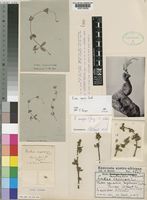
Fockea crispa
1 Images see all
Name
Identification
Fockea crispa (Jacq.) K.Schum. [family ASCLEPIADACEAE ] (stored under name); Verified by Court, G.D., Fockea capensis Endl. [family ASCLEPIADACEAE ] Verified by Bruyns, P., Fockea glabra Decne. [family ASCLEPIADACEAE ]
Related name
- Fockea crispa
- Fockea capensis
- Fockea glabra
Flora
Entry for FOCKEA capensis Endl. [family ASCLEPIADACEAE]
Herbarium
Royal Botanic Gardens, Kew (K)
Collection
Flora Capensis
Resource Type
Reference Sources
Entry From
Flora Capensis, Vol 4, page 518, (1909) Author: By N. E. BROWN.
Names
FOCKEA capensis Endl. [family ASCLEPIADACEAE], Iconogr. Gen. Pl. t. 91, and Nov. Stirp. Dec. 3, 17;—Decne in DC. Prodr. viii. 545; Wittmack in Gartenfl. xlix. 344.
FOCKEA crispa K. Schum. [family ASCLEPIADACEAE], in Engl. and Prantl, Pflanzenfam. iv. ii. 296.
FOCKEA edulis Schlechter [family ASCLEPIADACEAE], in Journ. Bot. 1898, 487, partly.
Cynanchum crispum Jacq. [family ASCLEPIADACEAE], Fragm. 31, t. 34, fig. 5.
Information
rootstock very large; stems 1–2 ft. long, tortuous or twining, puberulous or very shortly and softly pubescent; leaves very shortly petiolate, deflexed, 1/3– 7/8 in. long, 1/4– 1/2 in. broad, elliptic-oblong, obtuse, apiculate, rounded at the base, slightly folded lengthwise, undulate, shortly pubescent on both sides; flowers 3–5 together, lateral at the nodes; pedicels 1–2 lin. long, minutely tomentose, as are the 3/4–1 lin.-long lanceolate acute sepals; corolla puberulous outside and on the inner face; tube about 1 1/3 lin. (scarcely 2 lin., Endlicher) long, campanulate; lobes very spreading, 3–3 1/2 lin. long, linear-lanceolate, more or less twisted, truncate at the apex, with revolute margins, green; corona arising near the base of the corolla-tube, white, about 2 lin. long, the lower half tubular and about as long as the corolla-tube, divided above into 5 trifid segments alternating with 5 small recurving entire or bifid teeth, middle tooth of the trifid segments filiform, as long as the tube and 3–4 times as long as the lateral teeth, which are decurrent within the tube as 5 pairs of wing-like keels, between which, at the middle of the tube, arise 5 other filiform teeth in one series opposite the middle teeth and reaching to the level of the lateral teeth of the trifid segments; anther-appendages as long as or slightly exceeding the coronal tube. null
Distribution
SOUTH AFRICA without locality, cultivated specimen!
Notes
I am indebted to the courtesy of Dr. A. Zahlbruckner, Head of the Botanic Department of the Vienna Hofmuseum, for the opportunity of examining the type specimen of this very rare plant, of which only a single individual is known. This was introduced from South Africa in the latter part of the 18th century and has been in cultivation in the Imperial Garden at Schönbrunn for over 100 years and was exhibited alive at the International Botanic Congress at Vienna in 1905. Dr. Zahlbruckner states that it has never produced seeds, and all efforts to propagate it have hitherto failed; no botanical collector seems to have refound it, so that the locality whence it came is unknown. Possibly, however, it may be only an individual variation of F. glabra, since with the exception of the relative proportions in size of the coronal parts, I do not find any great difference in floral structure; the appearance and pubescence of the plant are, however, decidedly different, and there does not seem to be the same tendency to produce short leafy branches in the axils of its leaves as there is in F. glabra. I have therefore maintained them as distinct species, leaving future discoveries to prove or disprove the correctness of this view.