JSTOR Global Plants Home
  • Home
  • Browse
  • About
  • Access
  • Account
    • Saved Items
    • Profile
  • Log in

Global Plants

Skip to Main Content
  • JSTOR Global Plants Home
  • Global Plants

    • Browse
    • About
    • Access
    • Account
      • Saved Items
      • Profile
Log in
  • Browse
  • About
  • Access
  • Account
    • Saved Items
    • Profile
Advanced Search

Compilation
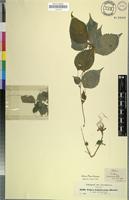
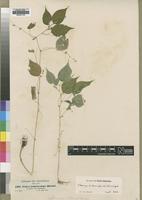
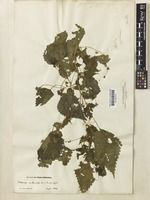
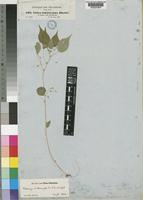
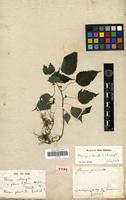
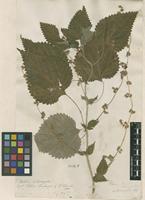
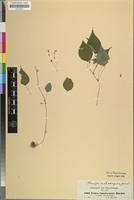
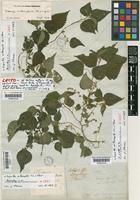
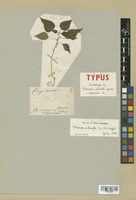
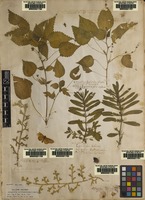
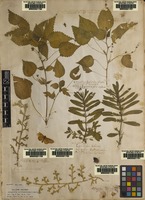
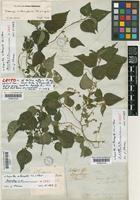
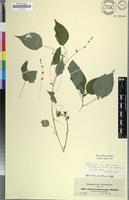
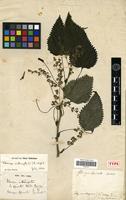
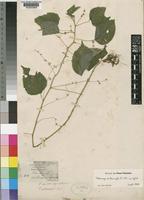
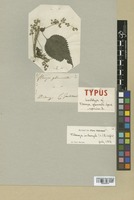
Fleurya interrupta

16 Images see all

Filed as Fleurya interrupta Gaudich. [family URTICACEAE]
Type of Urtica lomatocarpa Hochst. ex Steud. [family URTICACEAE]
Laportea interrupta (L.) Chew [family URTICACEAE]
Type of Fleurya glomerata Gaudich. [family URTICACEAE]
Filed as Boehmeria interrupta (L.) Willd. [family URTICACEAE]
Laportea interrupta (L.) Chew [family URTICACEAE]
Isotype of Urtica lomatocarpa Hochst. ex Steud. [family URTICACEAE]
Isotype of Urtica lomatocarpa Hochst. ex A.Rich. [family URTICACEAE]
Lectotype of Urtica affinis Hook. & Arn. [family URTICACEAE]
Lectotype of Fleurya spicata Gaudich. [family URTICACEAE]
Lectotype of Urtica interrupta L. [family URTICACEAE]
Type of Fleurya spicata Gaudich. [family URTICACEAE]
Laportea interrupta (L.) Chew [family URTICACEAE]
Lectotype of Fleurya glomerata Gaudich. [family URTICACEAE]
Previous
Next

Name

Identification
Urtica interrupta L. [family URTICACEAE ] (stored under name); Fleurya interrupta (L.) Gaudich. [family URTICACEAE ] Verified by Henry Trimen, Laportea interrupta (L.) Chew [family URTICACEAE ]
Related name
  • Urtica lomatocarpa
  • Urtica affinis
  • Fleurya interrupta
  • Urtica interrupta
  • Fleurya aestuans
  • Fleurya glomerata
  • Urtica iomatocarpa
  • Laportea interrupta
  • Fleurya spicata

Flora

Entry for FLEURYA interrupta Gaud. [family URTICACEAE]
Herbarium
Royal Botanic Gardens, Kew (K)
Collection
Flora of Tropical Africa
Resource Type
Reference Sources
Entry From
Flora of Tropical Africa, Vol 6, Part 2, page 240, (1917)
Names
FLEURYA interrupta Gaud. [family URTICACEAE], in Freyc. Voy. Bot. 497. —Wedd. Monogr. Urtic. 115, t. 1 A, fig. 9, and in DC. Prodr. xvi. i. 74; Wight, Ic. t. 1975; Schlechter, Westafr. Kautschuk-Exped. 286.
Urtica interrupta Linn. [family URTICACEAE], Sp. Pl. ed. i. 985.
Urtica lomatocarpa Hochst. ex Steud. [family URTICACEAE], in Flora, 1850, 260; A. Rich. Tent. Fl. Abyss. ii. 261.
Information
Stem erect, 8 in. to 3 ft. high, slender, about 1 lin. or less thick, scarcely branched, with a few stinging hairs or almost glabrous. Leaves with long slender petioles, membranous, ovate, acuminate, base broadly obtuse to somewhat truncate, margin rather broadly serrate, or crenate-serrate, 1 1/2–3 1/2 in. long, 1–2 in. wide, with a few stiffish appressed hairs on both faces especially on the veins beneath, and numerous short linear cystoliths on the lower face; petiole of varying lengths, sometimes rather shorter, sometimes longer than the leaf-blade; stipules joined to about the middle, free limb linear-subulate, ciliolate, about 1/3 in. long. Inflorescences narrow, generally longer than the leaves, bearing sessile clusters at intervals on the long slender stalk or its few short branches, clusters bisexual, male flowers few, soon falling. Male perianth 4-partite, segments hispid on the outside, “whitish or rosy with a median green nerve” (Weddell). Female perianth 4-partite, the anterior segment smaller than the other three, the lateral pair becoming ultimately largest, margin minutely ciliolate, the upper keeled and passing into the short dilated joint of the pedicel; stigma about half the length of the ovary, obscurely branched at the base. Achene deflexed, pale brown, compressed, ovate, narrowly winged, the median area depressed and more or less minutely warted, about 3/4 lin. long.
Distribution
Congo Lower Guinea near Leopoldville, Schlechter, 12537.Abyssinia Nile Land Mai-Mezano, Schimper, 1471! Hamedo, 4700 ft., and near Bellitschen, 4000 ft., Schimper, 88!British East Africa Nile Land Nyika country; Wakefield !

Related Materials

  • Terms and Conditions
  • Privacy Policy
  • Cookie Policy
  • Cookie Settings
  • Accessibility
  • Help
  • Contact Us
  • Facebook
  • Twitter
ITHAKA

JSTOR is part of ITHAKA, a not-for-profit organization helping the academic community use digital technologies to preserve the scholarly record and to advance research and teaching in sustainable ways.

©2000-2026 ITHAKA. All Rights Reserved. JSTOR®, the JSTOR logo, JPASS®, Aluka®, and ITHAKA® are registered trademarks of ITHAKA.

╳