JSTOR Global Plants Home
  • Home
  • Browse
  • About
  • Access
  • Account
    • Saved Items
    • Profile
  • Log in

Global Plants

Skip to Main Content
  • JSTOR Global Plants Home
  • Global Plants

    • Browse
    • About
    • Access
    • Account
      • Saved Items
      • Profile
Log in
  • Browse
  • About
  • Access
  • Account
    • Saved Items
    • Profile
Advanced Search

Compilation
Flagellaria guineensis

8 Images see all

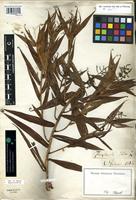
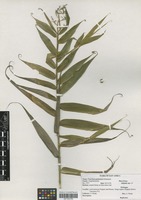
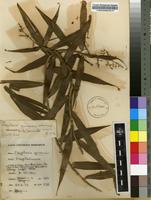
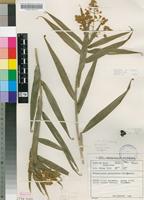
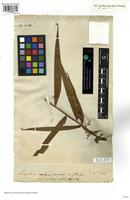
Filed as Flagellaria guineensis Schumach. [family FLAGELLARIACEAE]
Syntype of Flagellaria guineensis Schumach. [family FLAGELLARIACEAE]
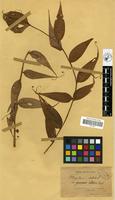
Filed as Flagellaria indica L. [family FLAGELLARIACEAE]
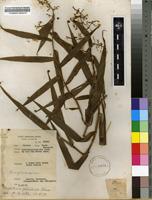
Filed as Flagellaria guineensis Schumach. [family FLAGELLARIACEAE]
Previous
Next

Name

Identification
Flagellaria guineensis Schumach. [family FLAGELLARIACEAE ] (stored under name); Verified by Not on Sheet,
Related name
  • Flagellaria indica
  • Flagellaria guineensis
Common name
  • nghafalε (FRI) (GHANA, NZEMA), Burkill, H.M. 1985. The useful plants of west tropical Africa, Vol. 2
  • kakaté (B&D) (IVORY COAST, KYAMA), Burkill, H.M. 1985. The useful plants of west tropical Africa, Vol. 2
  • gabafae (B&D) (IVORY COAST, AKAN-ASANTE), Burkill, H.M. 1985. The useful plants of west tropical Africa, Vol. 2
  • kujugbun-baté (A&AA) (IVORY COAST, AKYE), Burkill, H.M. 1985. The useful plants of west tropical Africa, Vol. 2
  • mεrεbia (FRI) (GHANA, TWI), Burkill, H.M. 1985. The useful plants of west tropical Africa, Vol. 2
  • ahõmantiaantia (FRI; E&A) (GHANA, AKAN-ASANTE), Burkill, H.M. 1985. The useful plants of west tropical Africa, Vol. 2
  • biribiε (FRI) (GHANA, FANTE), Burkill, H.M. 1985. The useful plants of west tropical Africa, Vol. 2
  • bábabìa (FRI; KD) (GHANA, GA), Burkill, H.M. 1985. The useful plants of west tropical Africa, Vol. 2

Flora

Entry for FLAGELLARIA guineensis Schumach. [family FLAGELLARIACEAE]
Herbarium
Royal Botanic Gardens, Kew (K)
Collection
Flora Capensis
Resource Type
Reference Sources
Entry From
Flora Capensis, Vol 7, page 15, (1900) Author: (By N. E. BROWN.)
Names
FLAGELLARIA guineensis Schumach. [family FLAGELLARIACEAE], in Schumach. and Thonn. Beskr. Guin. Pl. 181
FLAGELLARIA indica [family FLAGELLARIACEAE], of authors, partly, not of Linnæus.
Information
a tall climber, with a moderately stout herbaceous stem; leaves sheathing; the sheath open to the middle, with the thin membranous margins often closely overlapping but never connate to the top; the blade 4 1/2–9 in. long, 6–13 lin. broad, elongate-lanceolate, gradually tapering from about the middle into a spiral tendril at the apex, abruptly contracted into a rounded base immediately above the sheath; panicle terminal, 3–4 1/2 in. long, 2–4 in. broad, pyramidal, with ascending or spreading branches, the lower ones subtended by leafy bracts, the upper bractless; bracteoles minute, hyaline, ovate or suborbicular, obtuse or subacute; flowers subsessile along the rather slender, flexuose or zigzag ultimate branchlets of the panicle, usually with distinct internodes between them, whitish or pale yellowish; perianth campanulate; the segments 1–1 1/2 lin. long, 2/3 line broad, the 3 outer ones shorter than the inner three, oblong obtuse, subpetaloid; stamens ultimately much exserted, with filaments 2–2 1/2 lin. long, and linear-oblong anthers, sagittate at the base, 1 1/4–1 1/3 lin. long; ovary narrow, trigonous; stigmas 2/3– 3/4 line long, linear, rather stout, exserted and recurving over the tips of the perianth-segments; berries globose, 2–3 lin. in diam., bright red. null
Range
Also in Tropical Africa.
Distribution
EASTERN REGION Pondoland, Bachmann, 253! Natal; Inanda, Wood, 824! Umbilo Waterfall, Rehmann, 8090! Umzimkulu River, and Natal Bay, Drège, 4484! and without precise locality, Gerrard, 403! Peddie!
Notes
This has been confused with F. indica, L., by almost all authors, but may be at once distinguished by the split leaf-sheaths, and the usually slender, zigzag axes, along which the flowers are spaced out with distinct internodes between them; whilst in F. indica the margins of the sheaths of the leaves are connate to the top, forming a closed tubular sheath, and the flowers are usually crowded together into very short subglobose spikes or glomerules on a rather thick, straight axis, without internodes, or with extremely short ones between them.

Related Materials

  • Terms and Conditions
  • Privacy Policy
  • Cookie Policy
  • Cookie Settings
  • Accessibility
  • Help
  • Contact Us
  • Facebook
  • Twitter
ITHAKA

JSTOR is part of ITHAKA, a not-for-profit organization helping the academic community use digital technologies to preserve the scholarly record and to advance research and teaching in sustainable ways.

©2000-2026 ITHAKA. All Rights Reserved. JSTOR®, the JSTOR logo, JPASS®, Aluka®, and ITHAKA® are registered trademarks of ITHAKA.

╳