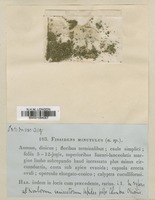
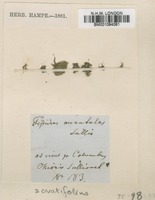
Plants to 10 × 3 mm. Stem unbranched and branched; axillary hyaline nodules absent; central strand present or absent. Leaves as many as 20 pairs, elliptic to broadly lanceolate to oblong-lingulate, acute, short-acuminate to obtuse-apiculate, to 2 × 0.5 mm; dorsal lamina narrowed proximally, ending before insertion to ± decurrent; vaginant laminae 2/3–3/4 leaf length, equal; margin ± entire but usually serrulate distally, limbate on all laminae, limbidium usually ending a few cells before apex, frequently edged by 1–2 rows of quadrate to oblong chlorophyllose cells in proximal parts of vaginant laminae, limbidial cells 1–2-stratose; costa percurrent to ending 2–5 cells before leaf, infrequently short-excurrent, bryoides-type; laminal cells 1-stratose, smooth, strongly bulging, densely chlorophyllose, ± obscure, firm-walled, irregularly quadrate to hexagonal, usually arranged in discernable rows in distal part of leaf, 6–10 µm, twice as deep as wide. Sexual condition gonioautoicous and rhizautoicous. Sporophytes 1–2 per perichaetium. Seta to 9 mm. Capsule theca exserted, inclined, bilaterally symmetric to erect, radially symmetric, to 1 mm; peristome bryoides-type; operculum 0.5 mm. Calyptra cucullate, smooth, 0.8 mm. Spores 10–16 µm.