JSTOR Global Plants Home
  • Home
  • Browse
  • About
  • Access
  • Account
    • Saved Items
    • Profile
  • Log in

Global Plants

Skip to Main Content
  • JSTOR Global Plants Home
  • Global Plants

    • Browse
    • About
    • Access
    • Account
      • Saved Items
      • Profile
Log in
  • Browse
  • About
  • Access
  • Account
    • Saved Items
    • Profile
Advanced Search

Compilation
Fissidens cristatus

10 Images see all

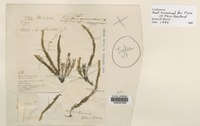
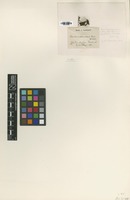
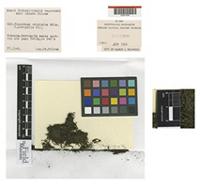
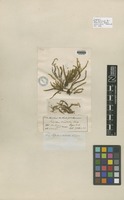
Type of Fissidens cristatus Wilson & Mitt. [family FISSIDENTACEAE]
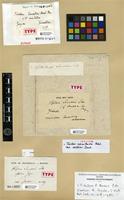
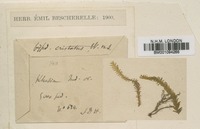
Isotype of Fissidens savatieri (Besch.) Paris [family FISSIDENTACEAE]
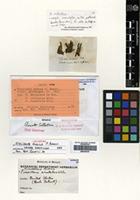
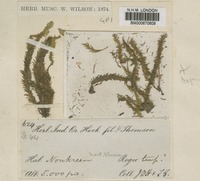
Lectotype of Fissidens dubius P.Beauv. [family FISSIDENTACEAE]
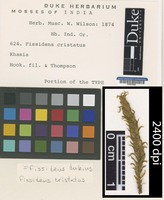
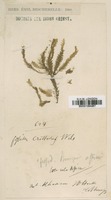
Isotype of Fissidens cristatus Wilson & Mitt. [family FISSIDENTACEAE]
Type of Fissidens cristatus Wilson & Mitt. [family FISSIDENTACEAE]
Type of Fissidens atrovirens Cardot in Dixon & P.de la Varde [family FISSIDENTACEAE]
Type of Fissidens cristatus Wilson & Mitt. [family FISSIDENTACEAE]
Type of Fissidens cristatus Wilson & Mitt. f. xerophila Pilous [family FISSIDENTACEAE]
Type of Fissidens cristatus Wilson & Mitt. [family FISSIDENTACEAE]
Previous
Next

Name

Identification
Fissidens cristatus Wilson ex Mitt. [family FISSIDENTACEAE ] Verified by Not on sheet, Fissidens dubius P.Beauv. [family FISSIDENTACEAE ] (stored under name); Verified by Not on sheet, Fissidens dubius P.Beauv. [family FISSIDENTACEAE ] Verified by Not on sheet,
Related name
  • Fissidens cristatus
  • Fissidens adianthoides
  • Fissidens savatieri
  • Fissidens dubius

Flora

Entry for Fissidens dubius P. Beauvois [family ]
Herbarium
Flora of North America (FNA)
Collection
Flora of North America
Resource Type
Reference Sources
Entry From
Flora of North America, Vol 27,
Names
Fissidens dubius P. Beauvois [family ], Prodr. Aethéogam., 57. 1805,
Fissidens adianthoides var. semicristatus Grout [family ]
Fissidens cristatus Mitten [family ]
Fissidens cristatus var. winonensis (Renauld & Cardot) Grout [family ]
Fissidens decipiens var. winonensis Renauld & Cardot [family ]
Fissidens floridanus Lesquereux & James [family ]
Information
Plants to 25 × 3.5 mm. Stem usually branched; axillary hyaline nodules absent; central strand present. Leaves as many as 25 pairs, often undulate, oblong to lanceolate, obtuse to acute, often apiculate, to 3.5 × 0.7 mm; dorsal lamina truncate-rounded proximally, ending at insertion, not decurrent; vaginant laminae 2/3 the leaf length, ± unequal, minor lamina ending near margin; margin crenulate to crenulate-serrulate but unevenly serrate at leaf apex, elimbate; costa ending a few cells before apex to percurrent, taxifolius-type; laminal cells irregularly 2-stratose in dorsal and ventral laminae, ± obscure, smooth, bulging, firm-walled, rounded-hexagonal, 7–10 µm, 3–4 rows of marginal cells thinner, walls slightly thicker, forming a pale marginal band. Sexual condition dioicous; perigonia on short axillary branches and elongate stems; perichaetia on short axillary branches, mostly near proximal ends of stems. Sporophytes 1 per perchaetium. Seta to 11 mm. Capsule theca slightly inclined, slightly arcuate, bilaterally symmetric, to 1.8 mm; peristome taxifolius-type; operculum 1–1.4 mm. Calyptra cucullate, smooth, 1.8 mm. Spores 13–20 µm.
Distribution
Neb.MexicoWest IndiesCentral AmericaEuropeAsiaUSA Ala.USA AlaskaUSA Ariz.USA Ark.USA Calif.USA Conn.USA Del.USA Fla.USA Ga.USA Ill.USA Ind.USA IowaUSA Kans.USA Ky.USA MaineUSA Mass.USA Mich.USA Minn.USA Miss.USA Mo.USA N.H.USA N.Y.USA N.C.USA Okla.USA Pa.USA S.C.USA Tenn.USA Tex.USA Vt.USA Va.USA W.Va.USA Wis.USA Pacific Islands.Canada N.B.Canada Nfld. and Labr. (Nfld.)Canada N.S.Canada Ont.Canada Que.
Discussion
In contrast to Fissidens adianthoides, F. dubius has smaller, irregularly 2-stratose, obscure laminal cells. Subterranean, irregularly globose, multicellular rhizoidal gemmae have been reported for F. dubius as well as F. osmundioides and F. taxifolius in Europe and Japan. Z. Iwatsuki and T. Suzuki (1982) cited the occurrence of dwarf male plants (small perigonial stems located on the leaves of perichaetial plants) in Japanese specimens.

Related Materials

  • Terms and Conditions
  • Privacy Policy
  • Cookie Policy
  • Cookie Settings
  • Accessibility
  • Help
  • Contact Us
  • Facebook
  • Twitter
ITHAKA

JSTOR is part of ITHAKA, a not-for-profit organization helping the academic community use digital technologies to preserve the scholarly record and to advance research and teaching in sustainable ways.

©2000-2026 ITHAKA. All Rights Reserved. JSTOR®, the JSTOR logo, JPASS®, Aluka®, and ITHAKA® are registered trademarks of ITHAKA.

╳