JSTOR Global Plants Home
  • Home
  • Browse
  • About
  • Access
  • Account
    • Saved Items
    • Profile
  • Log in

Global Plants

Skip to Main Content
  • JSTOR Global Plants Home
  • Global Plants

    • Browse
    • About
    • Access
    • Account
      • Saved Items
      • Profile
Log in
  • Browse
  • About
  • Access
  • Account
    • Saved Items
    • Profile
Advanced Search

Compilation
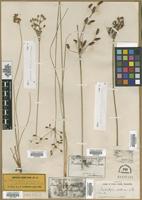
Fimbristylis caroliniana

2 Images see all

Type of Fimbristylis puberula (Michaux) Vahl f. eucycla Fernald [family CYPERACEAE]
Filed as Fimbristylis sp. [family CYPERACEAE]
Previous
Next

Name

Identification
Fimbristylis caroliniana (Lamarck) Fernald [family CYPERACEAE ] (stored under name); Verified by R. Kral, Fimbristylis puberula (Michaux) Vahl [family CYPERACEAE ] Verified by Fernald, 1935
Related name
  • Fimbristylis puberula
  • Fimbristylis sp.
  • Fimbristylis caroliniana
  • Scirpus sp.

Flora

Entry for Fimbristylis caroliniana (Lamarck) Fernald [family CYPERACEAE]
Herbarium
Flora of North America (FNA)
Collection
Flora of North America
Resource Type
Reference Sources
Entry From
Flora of North America, Vol 23,
Names
Fimbristylis caroliniana (Lamarck) Fernald [family CYPERACEAE], Rhodora, 42: 246. 1940
Scirpus carolinianus Lamarck [family CYPERACEAE], in J. Lamarck and J. Poiret, Tabl. Encycl., 1: 142. 1791
Fimbristylis harperi Britton ex Small [family CYPERACEAE]
Information
Plants perennial, to 150(–200) cm, cespitose or not; rhizomes scaly, slender, elongate. Culms wand-like, at least 50 cm. Leaves nearly distichous, spreading to ascending, 1/2 length of culms, sheath margins ciliolate at junction with blade, backs smooth to pubescent; ligule present, usually complete; blades linear, 2–5 mm wide, flat to involute, margins scabridulous, surfaces mostly glabrous. Inflorescences: anthelae compound, dense or diffuse, mostly longer than broad; scapes wandlike, broadly linear, distally usually compressed, marginal ribs scabrid distally; longest primary involucral bract exceeding or shorter than anthela. Spikelets pale brown or red-brown, broadly ovoid, ellipsoid, or lanceoloid, 5–15 mm; fertile scales ovate, 3–4 mm, apex rounded, often puberulent distally, midrib excurrent as scabrid mucro or short cusp. Flowers: stamens 3; styles 2-fid, flat, fimbriolate. Achenes pale to deep brown, lenticular-obovoid, 1 mm, finely but definitely cancellate with 14–15 horizontally oriented lattices per side. 2n = 20, 30, 60.
Phenology Fruiting
summer
jun
jul
aug
fall
sep
oct
nov
Altitude range
0–100 m;
Distribution
MexicoWest Indies.USA Ala.USA Del.USA Fla.USA Ga.USA La.USA Md.USA Miss.USA N.J.USA N.C.USA S.C.USA Tex.USA Va.
Discussion
The tallest, coarsest plants of Fimbristylis caroliniana, formerly referred to as F. harperi Britton ex Small, are the most clonal of North American Fimbristyloids, some clones literally covering acres of sandy swale or beach.

Related Materials

  • Terms and Conditions
  • Privacy Policy
  • Cookie Policy
  • Cookie Settings
  • Accessibility
  • Help
  • Contact Us
  • Facebook
  • Twitter
ITHAKA

JSTOR is part of ITHAKA, a not-for-profit organization helping the academic community use digital technologies to preserve the scholarly record and to advance research and teaching in sustainable ways.

©2000-2026 ITHAKA. All Rights Reserved. JSTOR®, the JSTOR logo, JPASS®, Aluka®, and ITHAKA® are registered trademarks of ITHAKA.

╳