JSTOR Global Plants Home
  • Home
  • Browse
  • About
  • Access
  • Account
    • Saved Items
    • Profile
  • Log in

Global Plants

Skip to Main Content
  • JSTOR Global Plants Home
  • Global Plants

    • Browse
    • About
    • Access
    • Account
      • Saved Items
      • Profile
Log in
  • Browse
  • About
  • Access
  • Account
    • Saved Items
    • Profile
Advanced Search

Compilation
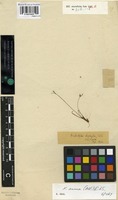
Fimbristylis baldwiniana

5 Images see all

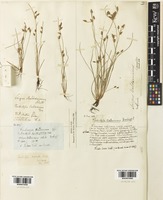
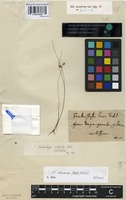
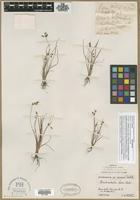
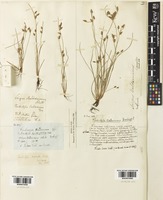
Fimbristylis dichotoma (L.) Vahl [family CYPERACEAE]
Type? of Fimbristylis hirtella Vahl [family CYPERACEAE]
Isotype of Fimbristylis darlingtoniana Pennell [family CYPERACEAE]
Fimbristylis dichotoma (L.) Vahl [family CYPERACEAE]
Holotype of Fimbristylis serrulata Vahl [family CYPERACEAE]
Previous
Next

Name

Identification
Isotype of Fimbristylis darlingtoniana Pennell [family CYPERACEAE ] (stored under name); Verified by Lendemer, J.C., 2002 Fimbristylis laxa Vahl. [family CYPERACEAE ] Verified by Not on Sheet, Fimbristylis baldwiniana Torr. [family CYPERACEAE ] Verified by Stone, B.C.,
Related name
  • Fimbristylis laxa
  • Fimbristylis baldwiniana
  • Fimbristylis darlingtoniana

Flora

Entry for Fimbristylis annua (Allioni) Roemer & Schultes [family CYPERACEAE]
Herbarium
Flora of North America (FNA)
Collection
Flora of North America
Resource Type
Reference Sources
Entry From
Flora of North America, Vol 23,
Names
Fimbristylis annua (Allioni) Roemer & Schultes [family CYPERACEAE], in J. J. Roemer et al., Syst. Veg., 2: 95. 1817
Scirpus annuus Allioni [family CYPERACEAE], Fl. Pedem., 2: 277, plate 88, fig. 5. 1785
Fimbristylis alamosana Fernald [family CYPERACEAE]
Fimbristylis arenicola Wiggins [family CYPERACEAE]
Fimbristylis baldwiniana (Schultes) Torrey [family CYPERACEAE]
Fimbristylis darlingtoniana Pennell [family CYPERACEAE]
Fimbristylis diphylla (Retzius) Vahl var. tomentosa Barros [family CYPERACEAE], 1945. not (Vahl) Bentham 1861
Fimbristylis hirtella Vahl [family CYPERACEAE]
Fimbristylis holwayana Fernald [family CYPERACEAE]
Fimbristylis serratula Vahl [family CYPERACEAE]
Fimbristylis verrucosa C. Presl [family CYPERACEAE]
Scirpus baldwinianus Schultes [family CYPERACEAE]
Scirpus depauperatus Muhlenberg [family CYPERACEAE]
Scirpus elliottii Sprengel [family CYPERACEAE]
Scirpus sulcatus Elliott [family CYPERACEAE], 1816. not A. Thouars 1808
Information
Plants annual, cespitose, 5–50 cm, base soft; rhizomes absent. Leaves nearly distichous, 1/2 to equal length of culms; sheaths bristlyciliate apically, backs glabrous or hirtellous; ligule present, complete; blades narrowly linear, 1–1.5(–2) mm wide, flat to shallowly involute, margins ciliate-scabrid, adaxial and abaxial surfaces glabrous or pubescent. Inflorescences: anthelae simple or compound, mostly open, diffuse, ascending-branched, longer than broad; scapes slender, 1 mm thick, angular; proximalmost involucral bract longer or shorter than anthela. Spikelets tan to brown or redbrown, ovoid to lance-ovoid, 3–8 mm; fertile scales broadly oblong to ovate, 2 mm, acute to obtuse-angled, smooth, midrib reaching apex or excurrent as mucro. Flowers: stamens 1(–2); styles 2-fid, flat, fimbriate. Achenes white to brown, often iridescent, lenticular or obovoid to pyriform-obovoid, 1 mm, cancellate, with 5–12 longitudinal ribs per side, alternating with as many rows of horizontally rectangular pits; warts of achene more usually distributed, or achene (rarely) smooth. 2n = 30.
Phenology Fruiting
summer
jun
jul
aug
fall
sep
oct
nov
all year southward
Altitude range
0–1000 m;
Distribution
MexicoWest IndiesBermudaCentral AmericaSouth AmericaEurasiaAfricaAtlantic IslandsIndian Ocean IslandsPacific IslandsAustralia.USA Ala.USA Ariz.USA Ark.USA Del.USA D.C.USA Fla.USA Ga.USA Ill.USA Ind.USA Kans.USA Ky.USA La.USA Md.USA Mich.USA Miss.USA Mo.USA N.J.USA N.Y.USA N.C.USA OhioUSA Okla.USA Pa.USA S.C.USA Tenn.USA Tex.USA Va.
Discussion
The extensive, yet incomplete, synonymy above partly illustrates the polymorphic nature of Fimbristylis annua, there being many “stabilized” morphs in specialized habitats and much exchange of achenes mixed with grass seeds (particularly rice).

Related Materials

  • Terms and Conditions
  • Privacy Policy
  • Cookie Policy
  • Cookie Settings
  • Accessibility
  • Help
  • Contact Us
  • Facebook
  • Twitter
ITHAKA

JSTOR is part of ITHAKA, a not-for-profit organization helping the academic community use digital technologies to preserve the scholarly record and to advance research and teaching in sustainable ways.

©2000-2026 ITHAKA. All Rights Reserved. JSTOR®, the JSTOR logo, JPASS®, Aluka®, and ITHAKA® are registered trademarks of ITHAKA.

╳