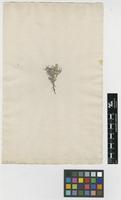
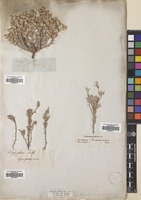
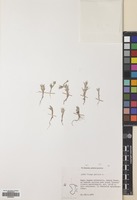
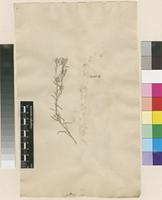
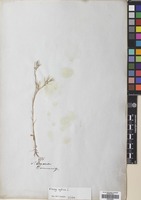
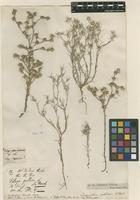
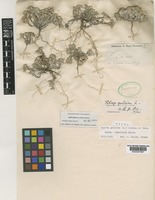
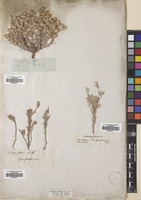
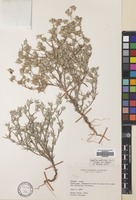
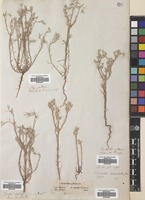
Plants 2–50[–30] cm. Stems 1–5, ± erect; branches ± leafy between proximal forks, remaining grayish to greenish, arachnoid-sericeous. Leaves mostly subulate, largest 20–30(–40) × 1–1.5(–2) mm, ± stiff; longest capitular leaves 2–5 times head heights, acute or subspinose. Heads in glomerules of (2–)3–10(–14) in strictly dichasiiform arrays, narrowly ampulliform, largest (3–)3.5–4.5 × 2–3 mm. Phyllaries usually 5, equal, unlike paleae (hyaline, obovate). Receptacles fungiform to obovoid, 0.7–0.9 mm, heights 0.8–1.1 times diams. Pistillate paleae (except innermost) 9–12 in 2 series, ± vertically ranked, tightly saccate, inflexed 70–90° proximally, gibbous, ± galeate, longest 3.3–4.1 mm, distal 15–30% of lengths glabrous abaxially; bodies ± bony, ± terete; wings prominent. Innermost paleae ± 5, spreading in 1 series, pistillate. Pistillate florets: outer 9–12 epappose, inner 8–14(–30) pappose. Bisexual florets [2–]3–5; corollas 2.2–3 mm, lobes mostly 4, brownish to yellowish. Cypselae: outer incurved, proximally ± horizontal, distally erect, compressed, [0.8–]0.9–1 mm; inner ± sparsely papillate; pappi of 18–28+ bristles falling in complete or partial rings, 2.2–3 mm. 2n = 28 (former USSR, Portugal).