JSTOR Global Plants Home
  • Home
  • Browse
  • About
  • Access
  • Account
    • Saved Items
    • Profile
  • Log in

Global Plants

Skip to Main Content
  • JSTOR Global Plants Home
  • Global Plants

    • Browse
    • About
    • Access
    • Account
      • Saved Items
      • Profile
Log in
  • Browse
  • About
  • Access
  • Account
    • Saved Items
    • Profile
Advanced Search

Compilation
Ficus soldanella

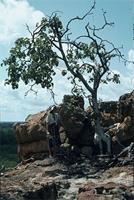
7 Images see all

Ficus soldanella Warb.
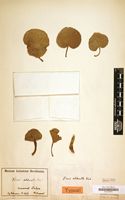
Type of Ficus soldanella Warb. [family MORACEAE]
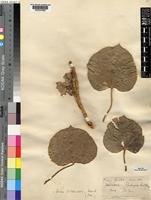
Ficus abutilifolia (Miq.) Miq. [family MORACEAE]
Previous
Next

Name

Identification
Ficus soldanella Warb. [family MORACEAE ]
Related name
  • Ficus soldanella

Flora

Entry for FICUS soldanella Warb. [family MORACEAE]
Herbarium
Royal Botanic Gardens, Kew (K)
Collection
Flora Capensis
Resource Type
Reference Sources
Entry From
Flora Capensis, Vol 5, Part 2, page 522, (1925) Author: (By N. E. BROWN and J. HUTCHINSON.)
Names
FICUS soldanella Warb. [family MORACEAE], in Schinz, Viertelj. Naturforsch. Ges. Zürich, li. 136;—Hutchinson in Prain, Fl. Trop. Afr. vi. ii. 176.
FICUS abutilifolia Miq. [family MORACEAE], Ann. Mus. Bot. Lugd.-Bat. iii. 288, partly.
FICUS picta Sim [family MORACEAE], For. Fl. Port. E. Afr. 99, t. xciv. fig. B.
Urostigma abutilifolium Miq. [family MORACEAE], in Hook. Lond. Journ. Bot. vi. 551, partly.
Information
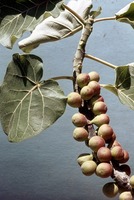
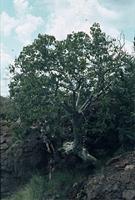
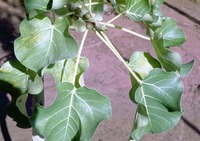
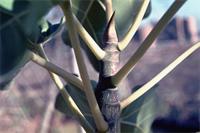
a much-branched more or less globose bush; branchlets stout, subterete, about 4 1/2 lin. in diam. near the apex, glabrous; leaf-scars oblong-orbicular or horse-shoe-shaped, 5–6 lin. long, 3–4 lin. broad; stipular scars very broad; leaves suborbicular, very shortly and obtusely acuminate, deeply cordate at the base, 4–6 1/2 in. long, 3 1/2–6 1/2 in. broad, entire, chartaceous or subcoriaceous, glabrous and dull on both surfaces or sparingly pubescent below, 9-nerved at the base; midrib slightly raised above, prominent below, about 1 lin. broad at the base, gradually narrowed to and finally reaching the apex of the blade; lateral nerves (excluding the basal ones) 4–5 on each side, diverging from the midrib at an angle of 45°, prominent on both surfaces, bifurcate 1/4– 3/4 in. from the margin; tertiary nerves lax and wavy, somewhat prominent below; veins close and distinct below; petiole 1 1/2–3 1/2 in. long, narrowly grooved on the upper surface, glabrous; stipules caducous, not seen; receptacles axillary, probably solitary, sessile or nearly so, depressed, globose, with a very slightly prominent ostiole, slightly stipitate and slightly 7-ribbed at the base, 6–7 lin. in diam., very minutely puberulous; basal bracts 4, ovate, rounded at the apex, about 1 lin. long and broad, coriaceous, reddish-brown when dry, glabrous; ostiolar bracts all descending vertically into the receptacle, lanceolate, subacute, 3/4–1 1/2 lin. long, reddish, with rather narrowly membranous margins, glabrous; male flowers very few near the ostiolar bracts, shortly pedicellate; perianth enclosing the solitary subsessile anther; female flowers sessile, scattered amongst the gall flowers; perianth-segments 4, linear, subacute, about 1 lin. long, hyaline; achene ellipsoid; style lateral, longer than the achene; stigma bifid; gall-flowers pedicellate; pedicel stout, 1 1/2 lin. long, glabrous; ovary as in female flowers, but with a larger subsessile stigma; scales of the receptacle subulate, acute, 3/4 lin. long, with very narrowly membranous margins. null
Range
Occurs also in Tropical Africa.
Distribution
KALAHARI REGION Transvaal; Magaliesberg Range, Burke, 273! Engler, 2795! Burtt-Davy, 7161! Wonderboompoort, Miss Leendertz, 449! Kudus Poort, Rehmann, 4684! 4686! Crocodile River, Burtt-Davy, 225! Singerton, near Hector Spruit, Burtt-Davy, 8007! near Nylstroom, Burtt-Davy, 2362! Breslau, Limpopo River, Legat, 5183!SOUTH AFRICA without precise locality, Zeyher, 1548! 1856!

Related Materials

  • Terms and Conditions
  • Privacy Policy
  • Cookie Policy
  • Cookie Settings
  • Accessibility
  • Help
  • Contact Us
  • Facebook
  • Twitter
ITHAKA

JSTOR is part of ITHAKA, a not-for-profit organization helping the academic community use digital technologies to preserve the scholarly record and to advance research and teaching in sustainable ways.

©2000-2026 ITHAKA. All Rights Reserved. JSTOR®, the JSTOR logo, JPASS®, Aluka®, and ITHAKA® are registered trademarks of ITHAKA.

╳