JSTOR Global Plants Home
  • Home
  • Browse
  • About
  • Access
  • Account
    • Saved Items
    • Profile
  • Log in

Global Plants

Skip to Main Content
  • JSTOR Global Plants Home
  • Global Plants

    • Browse
    • About
    • Access
    • Account
      • Saved Items
      • Profile
Log in
  • Browse
  • About
  • Access
  • Account
    • Saved Items
    • Profile
Advanced Search

Compilation
Ficus pringsheimiana

3 Images see all

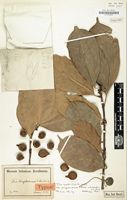
Type of Ficus pringsheimiana J.Braun&K.Schum. [family MORACEAE]
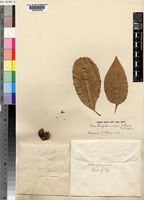
Type of Ficus pringsheimiana J., Brown & Schum. [family MORACEAE]
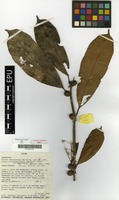
Filed as Ficus pringsheimiana J.Braun & K.Schum. [family MORACEAE]
Previous
Next

Name

Identification
Ficus pringsheimiana J.Braun&K.Schum. [family MORACEAE ] Verified by Not on sheet., Ficus cyathistipula Not on sheet. [family MORACEAE ] (stored under name); Verified by Not on sheet.,
Related name
  • Ficus pringsheimiana
  • Ficus cyathistipula

Flora

Entry for Ficus pringsheimiana J. Braun & K. Schum. [family MORACEAE]
Herbarium
Royal Botanic Gardens, Kew (K)
Collection
Flora of Tropical Africa
Resource Type
Reference Sources
Entry From
Flora of Tropical Africa, Vol 6, Part 2, page 17, (1916) Author: (By J. HUTCHINSON AND A. B. Rendle)
Names
Ficus pringsheimiana J. Braun & K. Schum. [family MORACEAE], in Mitteil. Deutsch. Schutzgeb. ii. 162. —Mildbr. & Burret in Engl. Jahrb. xlvi. 234.
Information
Branchlets rather sharply angular, somewhat slender, glabrous. Leaves elliptic or obovate-elliptic, obtusely caudate-acuminate, acumen 3/4–1 in. long, cuneate at the base, 3 1/2–6 1/2 in. long, 1 1/2–3 in. broad, entire, rigidly coriaceous, dull and glabrous on both surfaces, yellowish-brown below when dry; midrib prominent and often slightly keeled below when dry, about 1 lin. broad at the base, gradually tapered to the apex; lateral nerves 8–10 on each side of the midrib, diverging from it at a wide angle (about 75°), prominently looped, the loops forming a crenate intramarginal nerve about 1 1/2 lin. distant from the margin, prominent on the lower surface; tertiary nerves fairly prominent and flexuous on the lower surface, like the lateral nerves light-coloured; petiole comparatively short, 1/3–1 in. long, deeply grooved on the upper surface, glabrous; stipules persistent, lanceolate, subacute, about 1/2 in. long, more or less membranous, reddish-purple when dry, with narrow hyaline margins. Receptacles axillary, solitary (?), sessile below the basal bracts, obovoid-globose, stipitate at the base, with a very small wart-like ostiolar protuberance at the apex, glabrous; stipe stout, about 2 lin. long. Basal bracts 2, connate at the base, ovate, obtuse, about 1 1/4 lin. broad, thinly chartaceous, glabrous. Ostiole 2-lipped, minute, slightly protruding, with no bracts visible from the outside; orifice 1/3 lin. long; channel very narrow, 3 lin. long; bracts all descending, rather few, subulate, 1 lin. long, glabrous. Receptacular wall about 2 lin. thick, soft. Male flowers with a single stamen. Female flowers pedicellate; perianth-segments 3 or 4, linear, reddish, with hyaline margins, about 3/4 lin. long, glabrous; achene oblong-ellipsoid, pitted, shining; style slender, nearly as long as the achene.
Distribution
Cameroons Upper Guinea without precise locality, Braun, 142!
Notes
Differs from F. cyathistipula, Warb., in its more shortly cuneate leaves and sessile receptacles with very small ostioles.

Related Materials

  • Terms and Conditions
  • Privacy Policy
  • Cookie Policy
  • Cookie Settings
  • Accessibility
  • Help
  • Contact Us
  • Facebook
  • Twitter
ITHAKA

JSTOR is part of ITHAKA, a not-for-profit organization helping the academic community use digital technologies to preserve the scholarly record and to advance research and teaching in sustainable ways.

©2000-2026 ITHAKA. All Rights Reserved. JSTOR®, the JSTOR logo, JPASS®, Aluka®, and ITHAKA® are registered trademarks of ITHAKA.

╳