JSTOR Global Plants Home
  • Home
  • Browse
  • About
  • Access
  • Account
    • Saved Items
    • Profile
  • Log in

Global Plants

Skip to Main Content
  • JSTOR Global Plants Home
  • Global Plants

    • Browse
    • About
    • Access
    • Account
      • Saved Items
      • Profile
Log in
  • Browse
  • About
  • Access
  • Account
    • Saved Items
    • Profile
Advanced Search

Compilation
Ficus pendula

7 Images see all

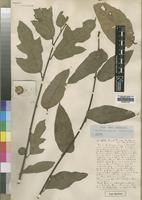
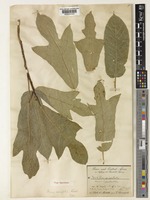
Type of Ficus pendula Welw. ex Hiern [family MORACEAE]
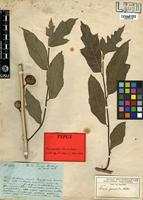
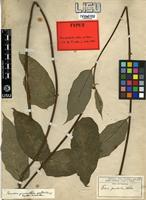
Type of Ficus pendula Welw. ex Van Tieghern [family MORACEAE]
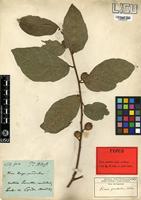
Ficus variifolia Warb. [family MORACEAE]
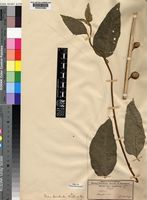
Type of Ficus variifolia Warb. [family MORACEAE]
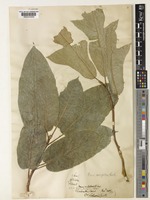
Type of Ficus pendula Welw. ex Hiern [family MORACEAE]
Previous
Next

Name

Identification
Ficus pendula Welw. ex Hiern [family MORACEAE ] (stored under name);
Related name
  • Ficus asperifolia
  • Ficus pendula
Common name
  • sutro (CHOP) (GUINEA, MANDING-MANINKA), Burkill, H.M. 1985. The useful plants of west tropical Africa, Vol. 4
  • tiãgtiãgad (JB) (SENEGAL, ‘SAFEN’), Burkill, H.M. 1985. The useful plants of west tropical Africa, Vol. 4
  • kagami (JMD) kamaami (def. -ei) (auctt.) kame (JMD) (SIERRA LEONE, MENDE), Burkill, H.M. 1985. The useful plants of west tropical Africa, Vol. 4
  • kamakor (JMD) (SIERRA LEONE, MANDING-MANDINKA), Burkill, H.M. 1985. The useful plants of west tropical Africa, Vol. 4
  • nioyeniye (CHOP) (GUINEA, SUSU), Burkill, H.M. 1985. The useful plants of west tropical Africa, Vol. 4
  • nyoin (SIERRA LEONE, SUSU), Burkill, H.M. 1985. The useful plants of west tropical Africa, Vol. 4
  • niénié (CHOP) (GUINEA, FULA-PULAAR (Guinea)), Burkill, H.M. 1985. The useful plants of west tropical Africa, Vol. 4
  • sandpaper tree., Burkill, H.M. 1985. The useful plants of west tropical Africa, Vol. 4

Flora

Entry for Ficus pendula Welw. ex Van Tiegh. [family MORACEAE]
Herbarium
Royal Botanic Gardens, Kew (K)
Collection
Flora of Tropical Africa
Resource Type
Reference Sources
Entry From
Flora of Tropical Africa, Vol 6, Part 2, page 17, (1916) Author: (By J. HUTCHINSON AND A. B. Rendle)
Names
Ficus pendula Welw. ex Van Tiegh. [family MORACEAE], in Bull. Soc. Bot. France, xli. 486, name only (pendulus); Hiern in Cat. Afr. Pl. Welw. i. 1008, description. —Mildbr. & Burret in Engl. Jahrb. xlvi. 262.
Ficus Warburgii Winkl. [family MORACEAE], in Engl. Jahrb. xli. 276, from description.
Information
Shrubby; branches very long, sarmentose, climbing high and far, pendulous; younger fruiting branchlets nodding, ashy, turning purplish in a dried state, more or less hispid with rust-coloured hairs; internodes up to 3 1/2 in. long. Leaves obliquely ovate-oblong, acutely and subcaudately acuminate, rounded to a shortly cuneate unequal-sided base, 3–6 in. long, 1–2 1/2 in. broad, thinly chartaceous or membranous, rather distantly denticulate, scabrid-punctate above, pubescent or almost tomentose with rather soft spreading hairs below especially on the nerves and veins, 3-nerved at the base, remaining lateral nerves 5–7 on each side, arcuate, diverging from the midrib at an angle of nearly 45°, slightly prominent below; tertiary nerves rather lax, subparallel, distinct below; petiole 1/4– 1/2 in. long, densely hispid; stipules caducous, linear from a broad more or less ovate base, acute, 1/4 in. long, 1-nerved, subcoriaceous, glabrous within, hispidulous outside especially on the nerve. Receptacles axillary, solitary, obovoid-globose, 3/4–1 in. long, greenish-red when ripe, setose-pubescent. Bracts very small and scattered; peduncle or stipe about 3 1/2 lin. long, hispidulous. Male flowers with a membranous 5-lobed perianth and a single stamen. Female flowers numerous; perianth membranous, 3-lobed, glabrous; style elongated.
Distribution
Angola Lower Guinea Pungo Andongo; in forests on the Calemba Islands in the River Cuanza and also about Lombe and Condo, Welwitsch, 6359!Cameroons Upper Guinea between Victoria and Bota, Winkler, 449.

Related Materials

  • Terms and Conditions
  • Privacy Policy
  • Cookie Policy
  • Cookie Settings
  • Accessibility
  • Help
  • Contact Us
  • Facebook
  • Twitter
ITHAKA

JSTOR is part of ITHAKA, a not-for-profit organization helping the academic community use digital technologies to preserve the scholarly record and to advance research and teaching in sustainable ways.

©2000-2026 ITHAKA. All Rights Reserved. JSTOR®, the JSTOR logo, JPASS®, Aluka®, and ITHAKA® are registered trademarks of ITHAKA.

╳