JSTOR Global Plants Home
  • Home
  • Browse
  • About
  • Access
  • Account
    • Saved Items
    • Profile
  • Log in

Global Plants

Skip to Main Content
  • JSTOR Global Plants Home
  • Global Plants

    • Browse
    • About
    • Access
    • Account
      • Saved Items
      • Profile
Log in
  • Browse
  • About
  • Access
  • Account
    • Saved Items
    • Profile
Advanced Search

Compilation
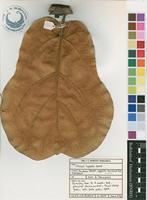
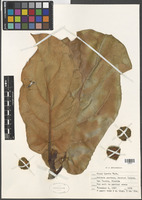
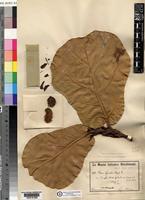
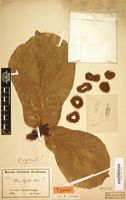
Ficus lyrata

4 Images see all

Filed as Ficus lyrata Warb. [family MORACEAE]
Ficus lyrata Warb. [family MORACEAE]
Type of Ficus lyrata Warb. [family MORACEAE]
Previous
Next

Name

Identification
Ficus lyrata Warb. [family MORACEAE ] (stored under name); Verified by Not on sheet.,
Related name
  • Ficus lyrata
Common name
  • fiddle-leaf fig (USA)., Burkill, H.M. 1985. The useful plants of west tropical Africa, Vol. 4

Flora

Entry for Ficus lyrata Warb. [family MORACEAE]
Herbarium
Royal Botanic Gardens, Kew (K)
Collection
Flora of Tropical Africa
Resource Type
Reference Sources
Entry From
Flora of Tropical Africa, Vol 6, Part 2, page 17, (1916) Author: (By J. HUTCHINSON AND A. B. Rendle)
Names
Ficus lyrata Warb. [family MORACEAE], in Engl. Jahrb. xx. 172. —Mildbr. & Burret in Engl. Jahrb. xlvi. 241; De Wild, in Bull. Soc. Bot. Belg. lii. 219.
Ficus pandurata Sander ex Watson [family MORACEAE], in Gard. Chron. 1911, l. 234, figs. 107, 108, not of Hance.
Ficus togoensis Warb. ex Mildbr. & Burret [family MORACEAE], l.c., name only.
Ficus jollyana A. Cheval. ex De Wild. [family MORACEAE], l.c.
Information
A tree up to nearly 40 ft. high; branchlets thick, longitudinally grooved when dry, very minutely puberulous or glabrous. Leaves large, pandurate, apex truncate or rounded and often broadly emarginate with sometimes a very short obtuse acumen in the middle, cordate with a narrow sinus at the base, 6–12 in. long. 5–7 in. broad across the widest part which is about a third of the whole length from the apex, entire, rigidly coriaceous, dull and glabrous on both surfaces, 9–10-nerved at the base, remaining lateral nerves 4–5 on each side, spreading from the very thick midrib at an angle of 40°, becoming longitudinally grooved on both surfaces when dry, very prominent below, looped and branched well within the margin; tertiary nerves few, arising from the lateral almost at a right angle, slightly prominent below; veins very close and distinct on the lower surface; petiole stout, 3/4–1 1/2 in. long, 2–2 1/2 lin. broad, longitudinally grooved below, channelled above, and wrinkled with transverse lines when dry, glabrous; stipules persistent, narrowly triangular, gradually and acutely acuminate, 1 3/4–2 in. long, 3/4 to nearly 1 in. broad at the base, entire, chartaceous, striate within, glabrous. Receptacles axillary, mostly in pairs, sessile, globose, about 1 3/4 in. in diam. when fresh, with walls about 2 lin. thick, finely puberulous outside; basal bracts about 3 (Warburg), triangular, adpressed to the receptacle. Ostiole subdepressed; bracts lanceolate. Receptacular wall thick, wrinkled and puberulous outside. Male perianth-segments 3, ovate-lanceolate. Stamen solitary; anther ovoid, obtuse. Female perianth-segments 3, ovate, obtuse. Style rather short; stigma short, suboblique, papillose.
Distribution
French Gaboon Lower Guinea Libreville, Klaine, 1556! and without precise locality, Thollon, 763!Liberia Upper Guinea Gola; north bank of Lofa River, Bunting !Ivory Coast Upper Guinea Keeta, Chevalier, 19351! and without precise locality, Jolly, 43!Togo Upper Guinea avenue tree at Bismarckburg, Büttner, 713!Dahomey Upper Guinea Poisson, 5!Cameroons Upper Guinea near Barombi, Preuss, 455!
Notes
Cultivated in most European Botanic Gardens; fine specimens have been observed at Berlin, Brussels and Kew.

Related Materials

  • Terms and Conditions
  • Privacy Policy
  • Cookie Policy
  • Cookie Settings
  • Accessibility
  • Help
  • Contact Us
  • Facebook
  • Twitter
ITHAKA

JSTOR is part of ITHAKA, a not-for-profit organization helping the academic community use digital technologies to preserve the scholarly record and to advance research and teaching in sustainable ways.

©2000-2026 ITHAKA. All Rights Reserved. JSTOR®, the JSTOR logo, JPASS®, Aluka®, and ITHAKA® are registered trademarks of ITHAKA.

╳