JSTOR Global Plants Home
  • Home
  • Browse
  • About
  • Access
  • Account
    • Saved Items
    • Profile
  • Log in

Global Plants

Skip to Main Content
  • JSTOR Global Plants Home
  • Global Plants

    • Browse
    • About
    • Access
    • Account
      • Saved Items
      • Profile
Log in
  • Browse
  • About
  • Access
  • Account
    • Saved Items
    • Profile
Advanced Search

Compilation
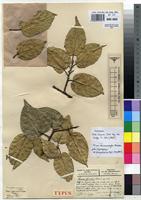
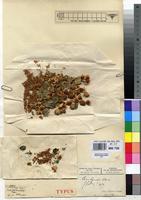
Ficus lynesii

2 Images see all

Type of Ficus lynesii Lebrun [family MORACEAE]
Previous
Next

Name

Identification
Ficus lynesii Lebrun [family MORACEAE ] Verified by Not on sheet, Ficus dicranostyla Mildbr. [family MORACEAE ] (stored under name); Verified by Not on sheet,
Related name
  • Ficus dicranostyla
  • Ficus lynesii

Flora

Entry for Ficus dicranostyla Mildbr. [family MORACEAE]
Herbarium
Royal Botanic Gardens, Kew (K)
Collection
Flora Zambesiaca
Resource Type
Reference Sources
Entry From
FZ, Vol 9, Part 6, page 13, (1991) Author: C. C. Berg
Names
Ficus lynesii Lebrun [family MORACEAE], in Bull. Séance. Inst. Roy. Col. Belge. 6: 494 (1935). —Lebrun & Boutique in F.C.B. 1: 124 (1948). Type from Zaire.
Ficus dicranostyla var. nitida Hutch. [family MORACEAE], in F.T.A. 6, 2: 120 (1916). Lectotype from Central African Republic, chosen by Berg in Fl. Gabon 26: 144 (1984).
Ficus dicranostyla Mildbr. [family MORACEAE], in Engl., Bot. Jahrb.46: 204 (1911). —Hutch. in F.T.A. 6, 2: 119 (1916). —Keay in F.W.T.A. ed. 2,1: 607 (1958). —F. White, F.F.N.R.: 30 (1962). —Aweke in Meded. Landb. Wag. 793: 18, fig. 4 (1979). —C.C. Berg et al. in Fl. Cameroun 28: 146, t. 48 (1985). —C.C. Berg in F.T.E.A., Moraceae: 59, t. 19 (1989); in Kirkia13: 258 (1990). Lectotype from Guinea, chosen by Berg in Fl. Gabon26: 144 (1984).
Information
Tree up to 6(20) m. tall, or a shrub. Leafy twigs 2–5 mm. thick, white pubescent to puberulous. Leaf lamina elliptic to oblong or subovate, (2)5–20 x (1)2–9 cm., subcoriaceous to chartaceous, apex acuminate, sometimes subacute, base cuneate to subcordate, margin subentire; superior surface scabrous, the main veins puberulous to hirtellous or pubescent, inferior surface puberulous to hirtellous or pubescent; lateral veins 5–8(9) pairs; petiole 1–3.5 cm. long, 1–2 mm. thick; stipules 5–15 mm. long, puberulous to pubescent, caducous. Figs solitary or in pairs in the leaf axils; peduncle 3–10 mm. long; basal bracts 2–2.5 mm. long, persistent. Receptacle often shortly stipitate, at least when dry, globose to obovoid, 1 -2.5 cm. in diam. when fresh, 0.5–1.5 cm. in diam. when dry, puberulous to hispidulous, yellowish to pale orange at maturity. Wall of fruiting fig c. 1.5 mm. thick when dry, firm.
Habitat
Miombo woodland, often on termite mounds in Zambia and Shaba Province of Zaire
Range
from Senegal to Ethiopia, NE. and S. Zaire (Shaba) and Uganda.
Altitude range
0–1300 m.
1300
0
Distribution
Zambia W Kitwe, 25.iii.1955, Fanshawe 2227 (K; LISC; NDO); Muchili, c. 53 km. from Ndola on road to Kapiri Mposhi, 27.xi.1982, Berg & Bingham 1436 (K; U).Zambia N Kawambwa, Bonds 829 (NDO).

Related Materials

  • Terms and Conditions
  • Privacy Policy
  • Cookie Policy
  • Cookie Settings
  • Accessibility
  • Help
  • Contact Us
  • Facebook
  • Twitter
ITHAKA

JSTOR is part of ITHAKA, a not-for-profit organization helping the academic community use digital technologies to preserve the scholarly record and to advance research and teaching in sustainable ways.

©2000-2026 ITHAKA. All Rights Reserved. JSTOR®, the JSTOR logo, JPASS®, Aluka®, and ITHAKA® are registered trademarks of ITHAKA.

╳