JSTOR Global Plants Home
  • Home
  • Browse
  • About
  • Access
  • Account
    • Saved Items
    • Profile
  • Log in

Global Plants

Skip to Main Content
  • JSTOR Global Plants Home
  • Global Plants

    • Browse
    • About
    • Access
    • Account
      • Saved Items
      • Profile
Log in
  • Browse
  • About
  • Access
  • Account
    • Saved Items
    • Profile
Advanced Search

Compilation
Ficus gilletii

2 Images see all

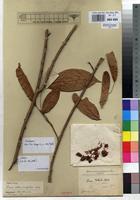
Isotype of Ficus gilletii Warb. [family MORACEAE]
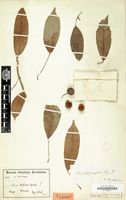
Type of Ficus gilletii Warb. [family MORACEAE]
Previous
Next

Name

Identification
Ficus ottoniaefolia Miq. [family MORACEAE ] (stored under name); Verified by Not on sheet., Ficus gilletii Warb. [family MORACEAE ] Verified by Not on sheet.,
Related name
  • Ficus gilletii
  • Ficus ottoniifolia
  • Ficus ottoniaefolia

Flora

Entry for Ficus ottoniæfolia Miq. [family MORACEAE]
Herbarium
Royal Botanic Gardens, Kew (K)
Collection
Flora of Tropical Africa
Resource Type
Reference Sources
Entry From
Flora of Tropical Africa, Vol 6, Part 2, page 17, (1916) Author: (By J. HUTCHINSON AND A. B. Rendle)
Names
Ficus ottoniæfolia Miq. [family MORACEAE], in Ann. Mus. Lugd.-Bat. iii. 288.
Urostigma ottoniæfolium Miq. [family MORACEAE], in Hook. Lond. Journ. Bot. vi. 557.
Ficus Buttneri Warb. [family MORACEAE], in Engl. Jahrb. xx. 157; Mildbr. & Burret, l.c. xlvi. 224, incl. var. globicarpa, Warb.
Ficus Gilletii Warb. [family MORACEAE], in Warb. & De Wild. Fic. Fl. Congo, 19, t. i.
Ficus cyclocarpa Warb. ex Mildbr. & Burret [family MORACEAE], l.c., names only.
Ficus cerasicarpa Warb. ex Mildbr. & Burret [family MORACEAE], l.c., names only.
Information
A tree up to 30 ft. high (Chipp); stems twiggy (Vogel); branchlets smooth, covered with glabrous straw-coloured bark. Leaves oblong or oblong-elliptic, shortly and obtusely or caudately long-acuminate, when long-acuminate then the acumen somewhat oblique (in the dried leaves), rounded or very slightly cuneate at the base, 2 1/2–6 in. long, 1–2 1/4 in. broad, thinly chartaceous or almost membranous, glabrous on both surfaces, mostly much darker coloured above, very finely reticulate below; midrib slightly impressed above, prominent but rather slender below, scarcely 3/4 lin. broad at the base, gradually tapered to and almost fading away at the apex; lateral nerves 7–10 on each side, spreading from the midrib at an angle of about 65° or almost at right angles, slender, looped, the loops forming a rather deeply crenate line about 1 lin. from the margin; veins very slender and rather close, not visible above, distinct (but only very slightly raised) below; petiole 3/4–1 3/4 in. long, glabrous, about 3/4 lin. thick; stipules very caducous, present only at the apex of the newly opened shoots, linear-lanceolate, very acutely acuminate, about 1/2 in. long, glabrous. Receptacles in axillary pairs, or perhaps sometimes also fasciculate on the older branches, pedunculate, subglobose when ripe, stipitate at the base when young, at length rounded, 1/2 in. or slightly more in diam., very finely rusty-puberulous when young, at length glabrous. Basal bracts soon falling off, connate at the base into a persistent circular plate closely applied to the receptacle. Ostiole small and 2-lipped; bracts all descending into the receptacle, subacute, glabrous. Male flowers shortly pedicellate; perianth-segments lanceolate, membranous, glabrous. Stamen solitary. Female flowers subsessile. Gall flowers shortly pedicellate, numerous.
Distribution
Congo Lower Guinea Kisantu, Gillet, 1120!Sierra Leone Upper Guinea Falaba; near Musaia, Scott Elliot, 5151! Limba; near Madina, Scott Elliot, 5568! and without precise locality, Afzelius !French Guinea Upper Guinea Konakry, Dybowski, 3! Iles de Los, Pobéguin, 1236!Gold Coast Upper Guinea Asientiem, Chipp, 292!Togo Upper Guinea Bismarckburg, Büttner, 714! Lome, Warnecke, 324!Dahomey Upper Guinea Poisson, 451!Cameroons Upper Guinea Edea, island in the River Sanaga, Krücke, 8! Bipinde, Zenker, 3652! Johann-Albrechtshöhe, Staudt, 896!Fernando Po Upper Guinea Vogel, 176! Mann, 431!

Related Materials

  • Terms and Conditions
  • Privacy Policy
  • Cookie Policy
  • Cookie Settings
  • Accessibility
  • Help
  • Contact Us
  • Facebook
  • Twitter
ITHAKA

JSTOR is part of ITHAKA, a not-for-profit organization helping the academic community use digital technologies to preserve the scholarly record and to advance research and teaching in sustainable ways.

©2000-2026 ITHAKA. All Rights Reserved. JSTOR®, the JSTOR logo, JPASS®, Aluka®, and ITHAKA® are registered trademarks of ITHAKA.

╳