JSTOR Global Plants Home
  • Home
  • Browse
  • About
  • Access
  • Account
    • Saved Items
    • Profile
  • Log in

Global Plants

Skip to Main Content
  • JSTOR Global Plants Home
  • Global Plants

    • Browse
    • About
    • Access
    • Account
      • Saved Items
      • Profile
Log in
  • Browse
  • About
  • Access
  • Account
    • Saved Items
    • Profile
Advanced Search

Compilation
Ficus dawei

4 Images see all

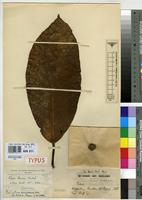
Isotype of Ficus dawei Hutch. [family MORACEAE]
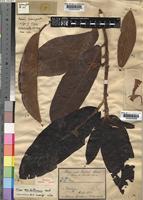
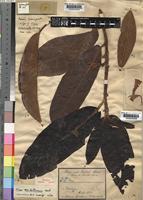
Ficus saussureana DC. [family MORACEAE]
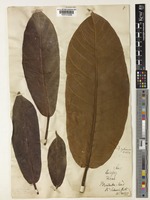
Isotype of Ficus monbuttuensis Warb. [family MORACEAE]
Previous
Next

Name

Identification
Isotype of Ficus dawei Hutch. [family MORACEAE ] Verified by Not on sheet, Ficus saussureana DC. [family MORACEAE ] (stored under name); Verified by Not on sheet,
Related name
  • Ficus unrecorded
  • Ficus dawei
  • Ficus saussureana
  • Ficus monbuttuensis
  • Ficus subealcarata

Flora

Entry for Ficus Dawei Hutchinson [family MORACEAE]
Herbarium
Royal Botanic Gardens, Kew (K)
Collection
Flora of Tropical Africa
Resource Type
Reference Sources
Entry From
Flora of Tropical Africa, Vol 6, Part 2, page 17, (1916) Author: (By J. HUTCHINSON AND A. B. Rendle)
Names
Ficus Dawei Hutchinson [family MORACEAE], in Kew Bulletin, 1915, 332, with fig.
Information
A tree up to 50 ft. high, with a spreading habit; young branchlets leafy at the apex, very stout, villous. Leaves large, elongate-elliptic or narrowly oblong-elliptic, shortly and obtusely acuminate (acumen 1/3– 1/2 in. long), rounded and emarginate at the base, 9–12 in. long, 2 1/4–6 in. broad, entire, chartaceous or thinly coriaceous, glabrous, finely reticulate and dull above, pilose chiefly on the midrib and lateral nerves below; midrib flat or slightly impressed above, very prominent beneath, 2 lin. broad at the base, closely longitudinally ribbed when dry, gradually tapered to the apex; lateral nerves 12–14 on each side of the midrib, spreading at a wide angle from the midrib, slightly arcuate, looped near the margin, distinct on both surfaces, prominent below; tertiary nerves rather lax, zig-zag; venation rather close and conspicuous on both surfaces; petiole 1–3 in. long, compressed, about 2 1/2 lin. broad, villous with reflexed hairs when young, at length becoming merely puberulous; stipules caducous, those surrounding the terminal bud ovate, long and acutely acuminate, about 3/4 in. long, submembranous, hairy towards the base outside. Receptacles crowded towards the apex of the shoots, sessile, depressed-globose, 1/2– 3/4 in. in diam., finely long-pilose. Basal bracts large, enclosing the developing receptacles for some time, long-pilose outside. Ostiole small and pore-like; bracts all descending into the receptacle, glabrous. Male flowers shortly pedicellate. Stamen solitary. Female flowers sessile; style slender. Gall flowers pedicellate.
Distribution
Uganda Nile Land Buddu, about 3900 ft., Dawe, 288!

Related Materials

  • Terms and Conditions
  • Privacy Policy
  • Cookie Policy
  • Cookie Settings
  • Accessibility
  • Help
  • Contact Us
  • Facebook
  • Twitter
ITHAKA

JSTOR is part of ITHAKA, a not-for-profit organization helping the academic community use digital technologies to preserve the scholarly record and to advance research and teaching in sustainable ways.

©2000-2026 ITHAKA. All Rights Reserved. JSTOR®, the JSTOR logo, JPASS®, Aluka®, and ITHAKA® are registered trademarks of ITHAKA.

╳