JSTOR Global Plants Home
  • Home
  • Browse
  • About
  • Access
  • Account
    • Saved Items
    • Profile
  • Log in

Global Plants

Skip to Main Content
  • JSTOR Global Plants Home
  • Global Plants

    • Browse
    • About
    • Access
    • Account
      • Saved Items
      • Profile
Log in
  • Browse
  • About
  • Access
  • Account
    • Saved Items
    • Profile
Advanced Search

Compilation
Ficus acrocarpa

11 Images see all

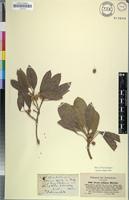
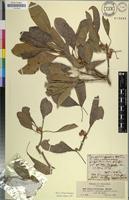
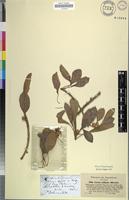
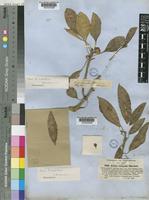
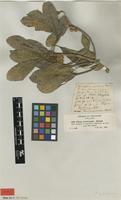
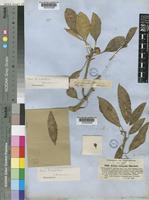
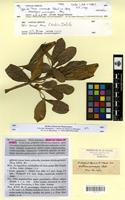
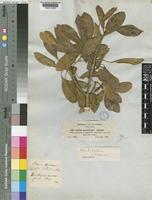
Syntype of Ficus saligna Hochst. [family MORACEAE]
Isosyntype of Urostigma acrocarpum Miq.; nom. illeg. [family MORACEAE]
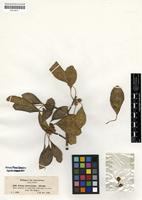
Syntype of Ficus saligna Hochst. [family MORACEAE]
Ficus thonningii Blume [family MORACEAE]
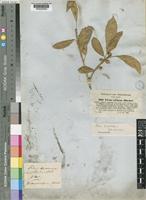
Type of Ficus acrocarpa Steud. ex Miq. [family MORACEAE]
Isosyntype of Urostigma acrocarpum Miq. [family MORACEAE]
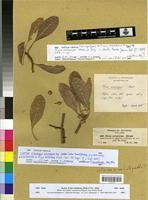
Ficus thonningii Blume [family MORACEAE]
Isotype of Ficus dekdekena A. Rich. [family MORACEAE]
Ficus thonningii Blume [family MORACEAE]
Type of Ficus acrocarpa Miq. [family MORACEAE]
Ficus thonningii Blume [family MORACEAE]
Previous
Next

Name

Identification
Ficus acrocarpa Steud. ex Miq. [family MORACEAE ] Ficus thonningii Blume [family MORACEAE ] (stored under name); Ficus saligna Hochst. [family MORACEAE ] Ficus dekdekena (Miq.) A.Rich. [family MORACEAE ] Verified by Hutchinson, J., Urostigma acrocarpa unrecorded [family MORACEAE ]
Related name
  • Urostigma acrocarpa
  • Urostigma acrocarpum
  • Ficus acrocarpa
  • Ficus saligna
  • Ficus thonningii
  • Ficus dekdekena

Flora

Entry for FICUS thonningii Blume [family MORACEAE]
Herbarium
Royal Botanic Gardens, Kew (K)
Collection
Flora Somalia
Resource Type
Reference Sources
Entry From
Flora Somalia, Vol 2, (1999) Author: by I. Friis [updated by M. Thulin 2008]
Names
FICUS thonningii Blume [family MORACEAE], (1836);
Urostigma thonningii (Blume) Miq. [family MORACEAE], (1848). [type as above]
FICUS saligna Hochst. [family MORACEAE], (1842), in exsicc. Schimper, Pl. Abyss. II 709 (1842);
FICUS acrocarpa (Hochst.) Miq. var. saligna [family MORACEAE], (1867). [type as above]
Urostigma hochstetteri Miq. [family MORACEAE], (1847);
FICUS hochstetteri (Miq.) A. Rich. [family MORACEAE], (1850). [type as above]
Urostigma schimperi Miq. [family MORACEAE], (1847);
FICUS schimperi (Miq.) A. Rich. [family MORACEAE], (1850). [type as above]
Urostigma acrocarpum Miq. [family MORACEAE], (1847);
FICUS acrocarpa (Miq.) Miq. [family MORACEAE], (1867). [type as above]
Urostigma dekdekena Miq. [family MORACEAE], (1847);
FICUS dekdekena (Miq.) A. Rich. [family MORACEAE], (1850). [type as above]
FICUS hochstetteri Miq. var. glabrior [family MORACEAE], Ann. Mus. Bot. Lugd. Batav. 3: 289 (1867).
FICUS ruspolii Warb. [family MORACEAE], (1905).
Information
Tree up to c. 12 m tall, trunk up to c. 0.5 m in diam.; bark grey, smooth, slash brownish to red; latex milky white; young branches puberulous to glabrescent, with brownish bark. Leaves alternate; petiole 1–3(–5) cm long, glabrous or glabrescent; stipules lateral, free, lanceolate, up to 0.8 cm long, pubescent, at least on the midrib; blade papery, mostly drying brownish, lanceolate, oblong, elliptic, or narrowly ovate, or obovate, generally wider above the middle, 5–11 x 2–4 cm, base cuneate to obtuse, rarely rounded or subcordate, margin entire, apex acuminate, acute, or rounded, glabrous on both sides, rarely pubescent beneath, with 12–25 pairs of lateral veins and an often poorly marked zone of glandular tissue below at the base of midnerve. Figs (1–)2 in the leaf axils, sessile or on peduncles up to 8 mm long; basal bracts 3, ovoid, fused in the persisting basal part, apical part free, caducous; receptacle subglobose to ± ovoid, 6–9(–14) mm in diam., glabrous to slightly puberulous, often with brownish to reddish spots; ostiole ± prominent, 2-lipped, small, with no bracts visible from the outside.
Range
The species is widespread in tropical Africa, west to Senegal, south to Zambia and there are closely related forms on Madagascar and the Mascarene Is.
Notes
The characters previously used to separate species in this complex (size, shape and indumentum of leaves, length of petiole, length of peduncle, size and indumentum of fig) seem all to break down when applied to the complex as a whole.

Related Materials

  • Terms and Conditions
  • Privacy Policy
  • Cookie Policy
  • Cookie Settings
  • Accessibility
  • Help
  • Contact Us
  • Facebook
  • Twitter
ITHAKA

JSTOR is part of ITHAKA, a not-for-profit organization helping the academic community use digital technologies to preserve the scholarly record and to advance research and teaching in sustainable ways.

©2000-2026 ITHAKA. All Rights Reserved. JSTOR®, the JSTOR logo, JPASS®, Aluka®, and ITHAKA® are registered trademarks of ITHAKA.

╳