JSTOR Global Plants Home
  • Home
  • Browse
  • About
  • Access
  • Account
    • Saved Items
    • Profile
  • Log in

Global Plants

Skip to Main Content
  • JSTOR Global Plants Home
  • Global Plants

    • Browse
    • About
    • Access
    • Account
      • Saved Items
      • Profile
Log in
  • Browse
  • About
  • Access
  • Account
    • Saved Items
    • Profile
Advanced Search

Compilation
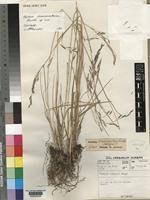
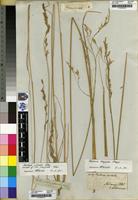
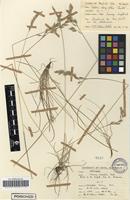
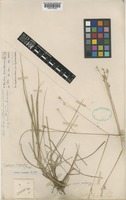
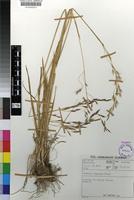
Festuca longipes

5 Images see all

Filed as Festuca longipes Stapf [family POACEAE]
Isotype of Festuca longipes Stapf. [family GRAMINAE]
Syntype of Festuca longipes Stapf [family POACEAE]
Type of Festuca dracomontana H.P.Linder [family POACEAE]
Isotype of Festuca dracomontana H.P.Linder [family POACEAE]
Previous
Next

Name

Identification
Isotype of Festuca dracomontana H.P.Linder [family POACEAE ] (stored under name); Festuca longipes Stapf [family POACEAE ]
Related name
  • Festuca dracomontana
  • Festuca costata
  • Festuca longipes

Flora

Entry for FESTUCA longipes Stapf [family POACEAE]
Herbarium
Royal Botanic Gardens, Kew (K)
Collection
Flora Capensis
Resource Type
Reference Sources
Entry From
Flora Capensis, Vol 7, page 310, (1900) Author: (By O. STAPF.)
Names
FESTUCA longipes Stapf [family POACEAE]
FESTUCA costata Nees var. fascicularis [family POACEAE], Fl. Afr. Austr. 447.
Information
tufted; innovation shoots extravaginal; culms shortly ascending, sometimes geniculate, about 1/2 ft. high (exclusive of the panicle), usually scabrid below the panicle, 1–2-noded, internodes enclosed or very shortly exserted; leaves glabrous; sheaths mostly rather loose, prominently striate, smooth or slightly rough; ligules ovate, rounded, 1–1 1/2 lin. long; blades linear, tapering to a fine point, 4–6 in. by 2–3 lin., convolute in bud, then flat, or involute when dry, green or glaucous on the upper side, smooth except on the scabrid margins or rough above, 9–13-nerved, nerves very prominent above; panicle large, subcorymbose, over 1/2 ft. long, base enclosed in uppermost sheath or very shortly exserted; rhachis straight, angular, or acutely ancipitous above, very scabrid; branches 2–3-(rarely 4-)nate, distant, 4–6 in. long, straight, at first suberect, then spreading, spinulously scabrid along the angles, with 4–1 spikelets near the tips; pedicels very unequal, very short, up to 8 lin. long; spikelets 3–5-flowered, oblong to elliptic, 4–5 lin. long, light green, erect; glumes unequal to subequal, lanceolate in profile, about 2 lin. long, acute, lower smaller, upper broader, margins scarious; valves lanceolate in profile, acute, 3 1/2 lin. long, herbaceous-chartaceous, stoutly 5-ribbed, scaberulous, at least towards the rigid tips, keels stout, scabrid; lodicules unequally 2-lobed, 1/2 lin. long; anthers 1 1/2 lin. long; ovary top puberulous. null
Distribution
COAST REGION Albany Div.; on stony slopes, near Grahamstown, 2000 ft, MacOwan, 1323! Komgha Div.; valleys near Komgha, Flanagan, 898! King Williamstown Div.; Amatola Mountains, Buchanan, 35! Stockenstrom Div.; on the Winter Berg, Ecklon.EASTERN REGION Tembuland; Bazeia, 2000 ft., Baur, 363!

Related Materials

  • Terms and Conditions
  • Privacy Policy
  • Cookie Policy
  • Cookie Settings
  • Accessibility
  • Help
  • Contact Us
  • Facebook
  • Twitter
ITHAKA

JSTOR is part of ITHAKA, a not-for-profit organization helping the academic community use digital technologies to preserve the scholarly record and to advance research and teaching in sustainable ways.

©2000-2026 ITHAKA. All Rights Reserved. JSTOR®, the JSTOR logo, JPASS®, Aluka®, and ITHAKA® are registered trademarks of ITHAKA.

╳