JSTOR Global Plants Home
  • Home
  • Browse
  • About
  • Access
  • Account
    • Saved Items
    • Profile
  • Log in

Global Plants

Skip to Main Content
  • JSTOR Global Plants Home
  • Global Plants

    • Browse
    • About
    • Access
    • Account
      • Saved Items
      • Profile
Log in
  • Browse
  • About
  • Access
  • Account
    • Saved Items
    • Profile
Advanced Search

Compilation
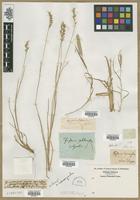
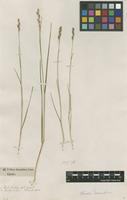
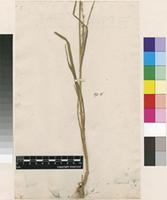
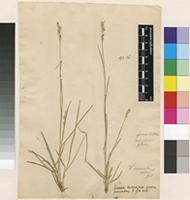
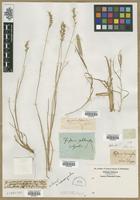
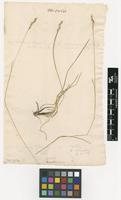
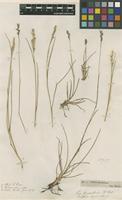
Festuca decumbens

7 Images see all

Filed as Festuca sp. [family POACEAE]
Filed as Poa indet. [family POACEAE]
Filed as Festuca decumbens L. [family POACEAE]
Lectotype of Festuca decumbens L. [family POACEAE]
Filed as Danthonia decumbens (L.) DC. [family POACEAE]
Filed as Festuca sp. [family POACEAE]
Filed as Poa decumbens (L.) Scop. [family POACEAE]
Previous
Next

Name

Identification
Festuca decumbens L. [family POACEAE ] (stored under name); Verified by Not on sheet,
Related name
  • Bromus decumbens
  • Festuca sp.
  • Danthonia sp.
  • Poa decumbens
  • Danthonia decumbens
  • Melica rigida
  • Triodia decumbens
  • Festuca decumbens
  • Sieglingia decumbens
  • Poa indet.
  • Melica decumbens

Flora

Entry for DANTHONIA decumbens DC. [family POACEAE]
Herbarium
Royal Botanic Gardens, Kew (K)
Collection
Flora Capensis
Resource Type
Reference Sources
Entry From
Flora Capensis, Vol 7, page 310, (1900) Author: (By O. STAPF.)
Names
DANTHONIA decumbens DC. [family POACEAE], Fl. Franç. iii. 33;—Trin. Gram. Gen. 67, and in Mém. Acad. Pétersb. sér. 6, i. 67; Kunth, Enum. i. 311; Suppl. 265, t. xxi. fig. 2.
Festuca decumbens Linn. [family POACEAE], Sp. Pl. 75; Fl. Dan. t. 162; Leers, Fl. Herborn. 34, t. vii. fig. 5.
Sieglingia decumbens Bernh. [family POACEAE], Syst. Verz. Erf. 20, 44.
Poa decumbens Schrad. [family POACEAE], Fl. Germ. 305; Engl. Bot. t. 792; Host, Gram. Austr. ii. t. 72; Knapp, Gram. Brit. t. 59.
Melica decumbens Weber [family POACEAE], Spicil. Goett. 3.
Melica rigida Wibel [family POACEAE], Prim. Fl. Werthem. 117.
Bromus decumbens Koel. [family ], Descr. Gram. 242.
Triodia decumbens Beauv. [family POACEAE], Agrost. 179, t. xv. fig. 9; Steud. Syn. Pl. Glum. i. 249; Durand & Schinz, Consp. Fl. Afr. v. 877.
Information
perennial, tufted; culms erect, slender, 1–2 ft. high, glabrous, smooth, about 2-noded, upper internodes exserted; leaves glabrous except for a more or less distinct beard at the mouth of the sheaths, or scantily beset with very fine stiff hairs; sheaths tight, striate, lower persistent; ligule a fringe of short hairs; blades linear, acute, 3–8 in. by 1–1 1/2 lin., flat or involute, striate, scaberulous towards the tip and along the margins; panicle usually reduced to a raceme or the lowest branches 2–3-spiculate, often scanty, linear, 1–2 in. long; rhachis and branches or pedicels filiform, angular, scabrid, the latter very unequal, 1–9 lin. long; spikelets turgid, ovoid, awnless, 4–6 lin. long, greenish or tinged with purple; florets cleistogamous, imbricate, 5–7, very close, uppermost rudimentary; glumes lanceolate in profile, acute, scarious, often tinged with purple on the sides, smooth glabrous, sub-5- to sub-7-nerved in the lower part, nerves joining and connected by a few transverse veins; valves oblong in profile, minutely 2-toothed, mucronulate from the sinus, broadly rounded on the back, 3 lin. long, rather firm, tips often purplish, otherwise light green with a distinct or obscure submarginal fringe of short hairs below the middle, otherwise glabrous, smooth; callus very short, minutely bearded; pales broad elliptic-oblong, 2 1/4 lin. long, flaps narrow, keels slightly winged, densely and rigidly ciliolate; lodicules 0; anthers ellipsoid, 1/10– 1/8 lin. long; ovary glabrous; styles short, distinct, stigmas very delicate; grain strongly dorsally compressed, ellipsoid, 1 lin. by 2/3 lin. null
Range
A native of Europe and North Africa; elsewhere introduced.
Distribution
COAST REGION King Williamstown Div.; Amatola Mountains, Buchanan, 49!

Related Materials

  • Terms and Conditions
  • Privacy Policy
  • Cookie Policy
  • Cookie Settings
  • Accessibility
  • Help
  • Contact Us
  • Facebook
  • Twitter
ITHAKA

JSTOR is part of ITHAKA, a not-for-profit organization helping the academic community use digital technologies to preserve the scholarly record and to advance research and teaching in sustainable ways.

©2000-2026 ITHAKA. All Rights Reserved. JSTOR®, the JSTOR logo, JPASS®, Aluka®, and ITHAKA® are registered trademarks of ITHAKA.

╳