JSTOR Global Plants Home
  • Home
  • Browse
  • About
  • Access
  • Account
    • Saved Items
    • Profile
  • Log in

Global Plants

Skip to Main Content
  • JSTOR Global Plants Home
  • Global Plants

    • Browse
    • About
    • Access
    • Account
      • Saved Items
      • Profile
Log in
  • Browse
  • About
  • Access
  • Account
    • Saved Items
    • Profile
Advanced Search

Compilation
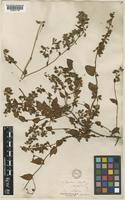
Fallopia dumetorum

9 Images see all

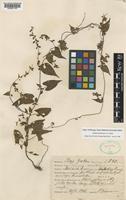
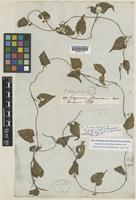
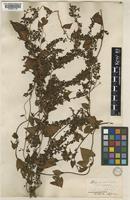
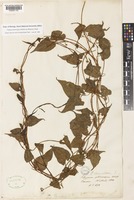
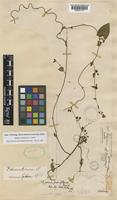
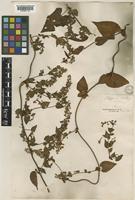
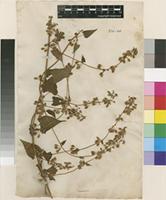
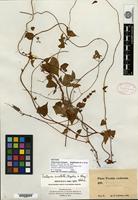
Fallopia dumetorum (L.) Holub [family POLYGONACEAE]
Fallopia pterocarpa (Wall. ex Meisn.) Holub [family POLYGONACEAE]
Fallopia scandens (L.) Holub [family POLYGONACEAE]
Fallopia pterocarpa (Wall. ex Meisn.) Holub [family POLYGONACEAE]
Fallopia dumetorum (L.) Holub [family POLYGONACEAE]
Fallopia scandens (L.) Holub [family POLYGONACEAE]
Lectotype of Polygonum dumetorum L. [family POLYGONACEAE]
Isotype of Polygonum cristatum Engelmann & A. Gray [family POLYGONACEAE]
Fallopia scandens (L.) Holub [family POLYGONACEAE]
Previous
Next

Name

Identification
Fallopia dumetorum (L.) Holub [family POLYGONACEAE ] (stored under name); Verified by Kim, S.T.; Park, C.W., Polygonum dumetorum L. [family POLYGONACEAE ] Polygonum pauciflorum Maxim. [family POLYGONACEAE ]
Related name
  • Fallopia dumetorum
  • Fallopia scandens
  • Polygonum pterocarpum
  • Polygonum dumetorum
  • Polygonum pauciflorum
  • Polygonum scandens
Common name
  • Corpse-bindweed, Flora of North America Vol. 5
  • renouée des haies, Flora of North America Vol. 5

Flora

Entry for Fallopia dumetorum (Linnaeus) Holub [family POLYGONACEAE]
Herbarium
Flora of North America (FNA)
Collection
Flora of North America
Resource Type
Reference Sources
Entry From
Flora of North America, Vol 5,
Names
Fallopia dumetorum (Linnaeus) Holub [family POLYGONACEAE], Folia Geobot. Phytotax., 6: 176. 1971
Polygonum dumetorum Linnaeus [family POLYGONACEAE], Sp. Pl. ed., 2, 1: 522. 1762
Bilderdykia scandens (Linnaeus) Greene var. dumetorum (Linnaeus) Dumortier [family POLYGONACEAE]
Polygonum scandens Linnaeus var. dumetorum (Linnaeus) Gleason [family POLYGONACEAE]
Reynoutria scandens (Linnaeus) Shinners var. dumetorum (Linnaeus) Shinners [family POLYGONACEAE]
Tiniaria dumetorum (Linnaeus) Opiz [family ]
Treatment Author(s)
Craig C. Freeman
Harold R. Hinds†
Information
Herbs, annual, not rhizomatous, to 3 m. Stems scandent or climbing, rarely prostrate, freely branched, herbaceous, glabrous to papillose or scabrid, not glaucous. Leaves: ocrea usually deciduous, tan or brown, cylindric to funnelform, 1.5–3.5 mm, margins oblique, face not fringed with reflexed hairs and slender bristles at base, otherwise glabrous or scabrid; petiole 0.3–2.5 cm, glabrous or scabrid in lines; blade triangular to hastate, 2–8 × 1–5 cm, base cordate to truncate, margins wavy, scabrid, apex acute to acuminate, abaxially and adaxially faces glabrous or papillose to scabrid, not glaucous, the abaxial rarely minutely dotted. Inflorescences axillary, erect or spreading, racemelike, 2–20 cm, axes glabrous or scabrid; peduncle 0.1–6 cm or absent, glabrous or scabrid. Pedicels ascending or spreading to deflexed, articulated distally, 4–8 mm, glabrous. Flowers bisexual, 2–6 per ocreate fascicle; perianth accrescent in fruit, greenish white or pinkish, 3.5–7 mm including stipelike base, glabrous; tepals elliptic to obovate, apex obtuse to acute, outer 3 winged; stamens 8; filaments flattened proximally, pubescent proximally; styles connate; stigmas capitate. Achenes included, black, 2–4 × 1.8–2.4 mm, shiny, smooth; fruiting perianth glabrous, wings flat or, less often, undulate or crinkled, 1.5–2 mm wide, usually truncate or attenuate-decurrent on stipelike base nearly to articulation, margins entire or rarely undulate-crenate. 2n = 20.
Phenology
jul-aug (summer), sep-oct (fall)
Altitude range
0–300 m;
Distribution
EuropeAsia.USA Ala.USA Ark.USA Conn.USA Del.USA D.C.USA Fla.USA Ga.USA Ill.USA Ind.USA IowaUSA Ky.USA La.USA MaineUSA Md.USA Mass.USA Mich.USA Miss.USA Mo.USA N.H.USA N.J.USA N.Y.USA N.C.USA OhioUSA Okla.USA Pa.USA R.I.USA S.C.USA Tenn.USA Tex.USA Vt.USA Va.USA W.Va.USA Wis.Canada Ont.Canada Que.
Discussion
Because of similarity to Fallopia scandens, specimens of F. dumetorum often are misidentified. Consequently, the range of F. dumetorum in North America is unclear; it is probably exaggerated in most floras.
Mature fruiting perianths provide the most reliable characters distinguishing Fallopia dumetorum from F. scandens. European specimens of F. dumetorum, have fruiting perianths that are consistently orbiculate in outline, with wings usually flat and abruptly contracted on the stipelike perianth bases. Fallopia scandens has fruiting perianths that are obovate in outline, with wings undulate and gradually decurrent on the stipelike perianth bases. Additional characteristics reported to distinguish F. dumetorum from F. scandens are its annual habit (F. scandens also is reported to be annual in some of the literature) and more triangular leaf blades with cordate or sagittate bases. In recognizing F. dumetorum, we follow S. T. Kim et al. (2000) and M. H. Kim et al. (2000), who concluded from limited morphological and flavonoid data that the taxa are best treated as distinct species. More detailed studies may prove the two to be conspecific.
Native/Introduced
introduced;

Related Materials

  • Terms and Conditions
  • Privacy Policy
  • Cookie Policy
  • Cookie Settings
  • Accessibility
  • Help
  • Contact Us
  • Facebook
  • Twitter
ITHAKA

JSTOR is part of ITHAKA, a not-for-profit organization helping the academic community use digital technologies to preserve the scholarly record and to advance research and teaching in sustainable ways.

©2000-2026 ITHAKA. All Rights Reserved. JSTOR®, the JSTOR logo, JPASS®, Aluka®, and ITHAKA® are registered trademarks of ITHAKA.

╳