JSTOR Global Plants Home
  • Home
  • Browse
  • About
  • Access
  • Account
    • Saved Items
    • Profile
  • Log in

Global Plants

Skip to Main Content
  • JSTOR Global Plants Home
  • Global Plants

    • Browse
    • About
    • Access
    • Account
      • Saved Items
      • Profile
Log in
  • Browse
  • About
  • Access
  • Account
    • Saved Items
    • Profile
Advanced Search

Compilation
Fadogia elskensii

4 Images see all

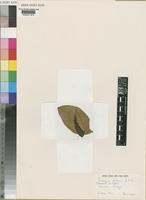
Fadogia elskensii De Wild. [family RUBIACEAE]
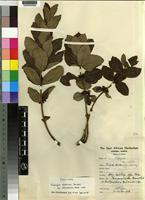
Isotype of Fadogia elskensii De Wild. var. ufipaensis [family RUBIACEAE]
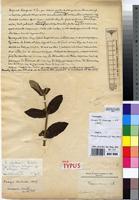
Holotype of Vangueria katangensis K.Schum. [family RUBIACEAE]
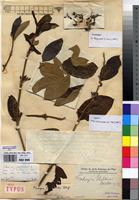
Holotype of Fadogia elskensii De Wild. var. elskensii [family RUBIACEAE]
Previous
Next

Name

Identification
Fadogia elskensii De Wild. [family RUBIACEAE ] (stored under name); Verified by De Wildeman, Fadogia cienkowskii Schweinf. [family RUBIACEAE ] Verified by Robyns W., 1925
Related name
  • Fadogia elskensii
  • Vangueria katangensis
  • Fadogia cienkowskii

Flora

Entry for Fadogia elskensii De Wild. [family RUBIACEAE]
Herbarium
Royal Botanic Gardens, Kew (K)
Collection
Flora Zambesiaca
Resource Type
Reference Sources
Entry From
FZ, Vol 5, Part 2, (1998) Author: D. Bridson
Names
Fadogia cienkowskii [family RUBIACEAE], sensu Robyns in Bull. Jard. Bot. État 11: 80 (1928), pro parte non Schweinf.
Fadogia elskensii De Wild. [family RUBIACEAE], Pl. Bequaert. 3: 201 (1925). —Verdcourt in Kew Bull. 36: 518 (1981); in F.T.E.A., Rubiaceae: 790 (1991). Type from Burundi.
Vangueria katangensis K. Schum. [family RUBIACEAE], in De Wildeman, Études Fl. Katanga [Ann. Mus. Congo, Sér. IV, Bot.] 1: 227 (1903) non Fadogia katangensis De Wild. Type from Zaire (Dem. Rep. Congo) (Shaba Prov.).
Information
Suffrutex with several unbranched stems 25–90 cm tall from a woody rootstock; stems ± 4-angled, densely hairy, particularly above.Leaves in whorls of 3–4, very discolorous; blades 4–9 × 1.2–4.6 cm, elliptic, oblong-elliptic or, less often, oblong-lanceolate, rounded to acute or even retuse at the apex, usually apiculate, rounded to broadly cuneate at the base, with venation impressed above and raised beneath, the leaf upper surface almost bullate, pubescent above but not in any way obscuring the surface, densely woolly-velvety beneath with grey, whitish, ochraceous or ± ferruginous hairs usually completely obscuring the lower surface, occasionally thinner and not obscuring it, without an understorey of papillae but with a pattern of stomata; petiole c. 2 mm long; stipules with base c. 2 mm long and with linear appendage 4–11 mm long.Inflorescences 1–5-flowered, with flowers in sessile or pedunculate fascicles; peduncles 1–5 mm long; pedicels 1–6 mm long.Calyx tube 2 mm long, glabrous to pubescent; limb-tube up to 0.5 mm long; lobes 1–2.5 mm long, ovate to linear-lanceolate.Corolla apiculate in bud; yellow, greenish-yellow or cream-coloured; tube c. 4 mm long, glabrous outside; lobes 3–5 × 1.5–2.5 mm, triangular, apiculate, ± hairy outside above, the apiculae up to 2 mm long.Style pale green, exserted 2 mm; pollen presenter whitish, 1.5 mm long, oblong or obconic.Fruit black, glossy, about 10 mm in diameter, subglobose, with up to 5 pyrenes.Pyrenes 8 mm long and 4.5 mm wide, segment-shaped, reticulate-rugose.

Related Materials

  • Terms and Conditions
  • Privacy Policy
  • Cookie Policy
  • Cookie Settings
  • Accessibility
  • Help
  • Contact Us
  • Facebook
  • Twitter
ITHAKA

JSTOR is part of ITHAKA, a not-for-profit organization helping the academic community use digital technologies to preserve the scholarly record and to advance research and teaching in sustainable ways.

©2000-2026 ITHAKA. All Rights Reserved. JSTOR®, the JSTOR logo, JPASS®, Aluka®, and ITHAKA® are registered trademarks of ITHAKA.

╳