JSTOR Global Plants Home
  • Home
  • Browse
  • About
  • Access
  • Account
    • Saved Items
    • Profile
  • Log in

Global Plants

Skip to Main Content
  • JSTOR Global Plants Home
  • Global Plants

    • Browse
    • About
    • Access
    • Account
      • Saved Items
      • Profile
Log in
  • Browse
  • About
  • Access
  • Account
    • Saved Items
    • Profile
Advanced Search

Compilation
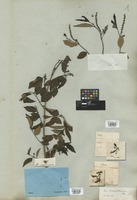
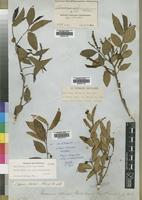
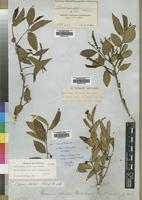
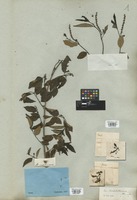
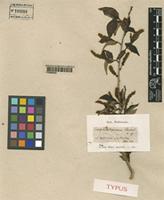
Excoecaria reticulata

5 Images see all

Filed as Excoecaria reticulata (Hochst.) Müll. Arg. [family EUPHORBIACEAE]
Sapium reticulatum (Hochst. ex C.Krauss) Pax [family EUPHORBIACEAE]
Filed as Excoecaria reticulata (Hochst.) Müll. Arg. [family EUPHORBIACEAE]
Type of Excoecaria reticulata Müll.Arg. [family EUPHORBIACEAE]
Previous
Next

Name

Identification
Excoecaria reticulata (Hochst.) Müll. Arg. [family EUPHORBIACEAE ] Sclerocroton reticulatus Hochst. [family EUPHORBIACEAE ] Sapium reticulatum (Hochst. ex C.Krauss) Pax [family EUPHORBIACEAE ] (stored under name);
Related name
  • Tragia integerrima
  • Sapium reticulatum
  • Sclerocroton reticulatus
  • Excoecaria reticulata

Flora

Entry for Sapium integerrimum Hochst. ex Krauss J. Léonard [family EUPHORBIACEAE]
Herbarium
Royal Botanic Gardens, Kew (K)
Collection
Flora Zambesiaca
Resource Type
Reference Sources
Entry From
FZ, Vol 9, Part 4, (1996) Author: A. Radcliffe-Smith
Names
Sapium integerrimum Hochst. ex Krauss J. Léonard [family EUPHORBIACEAE], in Bull. Jard. Bot. État 29, 2: 142 (1959); in Kew Bull. 14: 62 (1960). —K. Coates Palgrave, Trees Southern Africa, ed. 2, rev.: 437 (1983). Type from South Africa (KwaZulu-Natal).
Sclerocroton integerrimus Hochst. ex Krauss [family EUPHORBIACEAE], in Flora 28, 6: 85 (1845).
Tragia integerrima Hochst. ex Krauss [family EUPHORBIACEAE], in Flora 28, 6: 85 (1845), nomen tantum, pro syn.
Sclerocroton reticulatus Hochst. ex Krauss [family EUPHORBIACEAE], in Flora 28, 6: 85 (1845). Type from South Africa (KwaZulu-Natal).
Tragia natalensis Hochst. ex Krauss [family EUPHORBIACEAE], in Flora 28, 6: 85 (1845), nomen tantum, pro syn.
Stillingia integerrima Hochst. ex Krauss Baill. [family EUPHORBIACEAE], Adansonia 3: 162 (1862/3).
Excoecaria hochstetteriana Müll. Arg. [family EUPHORBIACEAE], in Linnaea 32: 122 (1863). Types as for Sclerocroton integerrimus and S. reticulatus.
Excoecaria integerrima Hochst. ex Krauss Müll. Arg. [family EUPHORBIACEAE], in De Candolle, Prodr. 15, 2: 948 (1866).
Excoecaria reticulata Hochst. ex Krauss Müll. Arg. [family EUPHORBIACEAE], in De Candolle, Prodr. 15, 2: 1213 (1866). —Shinz & Junod in Mém. Herb. Boissier, No. 10: 47 (1900). —Sim, For. Fl. Port. E. Afr.: 103 (1909), pro parte.
Sapium reticulatum Hochst. ex Krauss Pax [family EUPHORBIACEAE], in Engler, Pflanzenr. [IV, fam. 147, v] 52: 245, t. 46C, D (1912). —Prain in F.C. 5, 2: 514 (1920). —Engler, Pflanzenw. Afrikas (Veg. Erde 9) 3, 2: 142, t. 73 C, D (1921). —Mogg in Macnae & Kalk, Nat. Hist. Inhaca Isl., Moçamb., rev. ed.: 148 (1969).
Information
A shrub or small tree 2–8 m tall, glabrous, monoecious.Twigs reddish-brown and flaking at first, later becoming grey-brown and lenticellate.Leaves petiolate, the petioles 3–5 mm long, adaxially ± flattened; leaf blades (2)3–8(10) × 1–3(5) cm, ovate-lanceolate to ovate-oblong, shortly obtusely or subacutely acuminate at the apex, cuneate to rounded or subtruncate and minutely cordulate at the base, entire or shallowly serrate, usually with 1–2 glands near the base, occasionally also with 1 or 2 near the margin away from the base, but not approaching the apex, firmly chartaceous to thinly coriaceous, dark green and shiny on upper surface, paler and glaucous beneath; lateral nerves in 9–12 pairs, scarcely prominent above or beneath, tertiary nerves coarsely reticulate.Stipules 5–6 mm long, linear-lanceolate, broadened and laciniate at the base, acute, ciliate, soon deciduous.Inflorescences terminal on lateral shoots, leaf-opposed or occasionally axillary, 2–7 cm long, very shortly pedunculate to sessile, all male or with 1 female flower at the base; male bracts 1 mm long, broadly ovate, denticulate-ciliolate, with a discoid gland on each side at the base, many-flowered; female bracts tripartite, larger that the males and somewhat laciniate; bracteoles irregular.Male flowers: pedicels 1 mm long; calyx lobes 3, triangular, irregularly denticulate, yellowish; stamens 3, free, 0.5 mm long.Female flowers: pedicels 3–6 mm long, extending to 10 mm in fruit; calyx lobes 3, broadly triangular, alternating either with sessile discoid glands or lanceolate lacinulae, otherwise as in the males; ovary 2 mm in diameter, 3-lobed, each lobe bearing 2 broadly triangular appendages 1 mm long; styles 3, 7 mm long, connate at the base.Fruit 1–1.5 × 1.5–2 cm, 3-lobed, septicidally dehiscent into 3 bivalved cocci each valve bearing a shortly-conical appendage 2 mm long; exocarp becoming brownish and separating from the 2 mm thick woody endocarp.Seeds 7 × 5 mm, ovoid-ellipsoid, smooth, dull, pale greyish-brown fleckedand spotted with darker brown, ecarunculate.
Habitat
In coastal thickets and forest margins, and in wooded grassland on coastal plain with Afzelia, Sclerocarya, Terminalia, Albizia, Strychnos, Garcinia and Friesodielsia on sandy soil
Altitude range
sea-level–1500 m.
1500
0
Distribution
Mozambique M between Costa do Sol and Marracuene, fr. 13.xi.1960, Balsinhas 259 (COI; K; LISC; LUAI; SRGH).Mozambique GI Zavala, fl. x.1937, Gomes e Sousa 2047 (COI; K; LISC; MO).Mozambique Z between the beach and Maganja da Costa, fr. 27.ix.1949, Barbosa & Carvalho in Barbosa 4222 (K; LMA).
Distribution (external)
South Africa (KwaZulu-Natal)
Notes
Drummond in Kirkia 10: 253 (1975) has erroneously cited Goldsmith 5/63 as this species; this gathering is in fact referable to S. armatum.

Related Materials

  • Terms and Conditions
  • Privacy Policy
  • Cookie Policy
  • Cookie Settings
  • Accessibility
  • Help
  • Contact Us
  • Facebook
  • Twitter
ITHAKA

JSTOR is part of ITHAKA, a not-for-profit organization helping the academic community use digital technologies to preserve the scholarly record and to advance research and teaching in sustainable ways.

©2000-2026 ITHAKA. All Rights Reserved. JSTOR®, the JSTOR logo, JPASS®, Aluka®, and ITHAKA® are registered trademarks of ITHAKA.

╳