JSTOR Global Plants Home
  • Home
  • Browse
  • About
  • Access
  • Account
    • Saved Items
    • Profile
  • Log in

Global Plants

Skip to Main Content
  • JSTOR Global Plants Home
  • Global Plants

    • Browse
    • About
    • Access
    • Account
      • Saved Items
      • Profile
Log in
  • Browse
  • About
  • Access
  • Account
    • Saved Items
    • Profile
Advanced Search

Compilation
Euthamia microphylla

3 Images see all

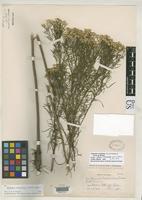
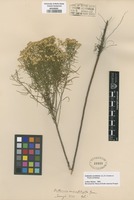
Isotype of Euthamia microphylla Greene, E.L. 1902 [family ASTERACEAE]
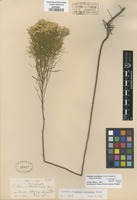
Type of Euthamia microphylla Greene [family ASTERACEAE]
Previous
Next

Name

Identification
Isotype of Euthamia microphylla Greene, E.L. 1902 [family ASTERACEAE ] (stored under name); Verified by Not on sheet,
Related name
  • Euthamia microphylla
Common name
  • Coastal plain goldentop, Flora of North America Vol. 20

Flora

Entry for Euthamia caroliniana (Linnaeus) Greene ex Porter & Britton [family COMPOSITAE]
Herbarium
Flora of North America (FNA)
Collection
Flora of North America
Resource Type
Reference Sources
Entry From
Flora of North America, Vol 20,
Names
Euthamia caroliniana (Linnaeus) Greene ex Porter & Britton [family COMPOSITAE], Mem. Torrey Bot. Club, 5: 321. 1894
Erigeron carolinianus Linnaeus [family COMPOSITAE], Sp. Pl., 2: 863. 1753 (as carolinianum)
Euthamia galetorum Greene [family COMPOSITAE]
Euthamia media Greene [family COMPOSITAE]
Euthamia microcephala Greene [family COMPOSITAE]
Euthamia microphylla Greene [family COMPOSITAE]
Euthamia remota Greene [family COMPOSITAE]
Euthamia tenuifolia (Pursh) Nuttall [family COMPOSITAE]
Solidago lanceolata Linnaeus var. minor Michaux [family COMPOSITAE]
Solidago moseleyi Fernald [family COMPOSITAE]
Solidago tenuifolia Pursh [family COMPOSITAE]
Solidago tenuifolia var. pycnocephala Fernald [family COMPOSITAE]
Treatment Author(s)
Arthur Haines
Information
Perennials, 25–100 cm. Stems (branched distal to midstems) glabrous or glabrate, not glaucous. Leaves deflexed to erect; blades 1–5-nerved, linear, 24–70 × 1–3 mm (to 6 mm wide in some Maine and Nova Scotia populations), lengths 7.7–42.2 times widths, abruptly reduced distally, lax- to firm-herbaceous, apices obtuse to long-acuminate, faces abundantly and prominently gland-dotted (34–86 dots per mm2), glabrous, glabrate, or scabro-hirtellous on midnerves. Heads pedunculate or glomerulate, usually in flat-topped or rounded arrays 10–40% of plant heights (often with multiple layers, proximal branches 0.5–1 times array heights). Involucres campanulate to turbinate, 3–4.7(–5.3) mm. Phyllaries usually green-tipped, outer ovate, inner oblong-linear, apices obtuse to acute. Ray florets 7–17(–25). Disc florets 3–22; corollas 3.3–4.8 mm. 2n = 18.
Phenology
aug (summer), sep-nov (fall), dec (winter)
Altitude range
0–100 m;
Distribution
USA Ala.USA Conn.USA Del.USA Fla.USA Ga.USA Ill.USA Ind.USA La.USA MaineUSA Md.USA Mass.USA Mich.USA Miss.USA N.H.USA N.J.USA N.Y.USA N.C.USA OhioUSA Pa.USA R.I.USA S.C.USA Va.USA W.Va.Canada N.S.
Discussion
J. L. Reveal (1991c) determined that the types of Erigeron carolinianus and Solidago tenuifolia are conspecific.
Southern forms of Euthamia caroliniana tend to have fewer florets per head and narrower, more widely spreading (or even reflexed) leaves. E. L. Greene (1902) named these geographic variants (e.g., E. microcephala, E. microphylla). Overlap occurs in all characters; taxa cannot be confidently separated.
Euthamia galetorum has been considered an endemic restricted to lake shores in Nova Scotia (H. A. Gleason and A. Cronquist 1991; D. J. Sieren 1981). It has been collected from Cape Cod, Massachusetts, and southwestern Maine. Intermediates with E. caroliniana occur, and E. galetorum plants represent the endpoint of a morphologic cline. Most characters used to distinguish the two taxa are environmentally plastic and may not be genetically distinctive.
D. J. Sieren (1981) considered Euthamia caroliniana to be restricted to the Atlantic coastal plain. It occurs disjunctly in the southern Great Lakes region. Sieren considered the disjunct populations conspecific with E. gymnospermoides. H. A. Gleason and A. Cronquist (1991) called them E. remota Greene, related to E. gymnospermoides. The short disc corollas and involucres, narrow leaves, and production of axillary fascicles in some populations show clear relationship to E. caroliniana, from which disjunct plants cannot be reliably separated.

Related Materials

  • Terms and Conditions
  • Privacy Policy
  • Cookie Policy
  • Cookie Settings
  • Accessibility
  • Help
  • Contact Us
  • Facebook
  • Twitter
ITHAKA

JSTOR is part of ITHAKA, a not-for-profit organization helping the academic community use digital technologies to preserve the scholarly record and to advance research and teaching in sustainable ways.

©2000-2026 ITHAKA. All Rights Reserved. JSTOR®, the JSTOR logo, JPASS®, Aluka®, and ITHAKA® are registered trademarks of ITHAKA.

╳