Global Plants
Skip to Main Content
Global Plants
Browse
About
Access
Account
Saved Items
Profile
Log in
Browse
About
Access
Account
Saved Items
Profile
Filter search by
Names
Names with Synonyms
Places
People
Free Text
Search
Search
Advanced Search
Compilation
Euryops empetrifolius
6 Images
see all
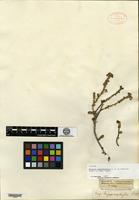
Isotype of Euryops empetrifolius de Candolle [family ASTERACEAE]
Filed as Euryops empetrifolius DC. [family ASTERACEAE]
Filed as Euryops empetrifolius DC. [family ASTERACEAE]
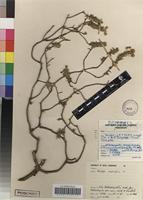
Type of Euryops empetrifolius DC. [family COMPOSITAE]
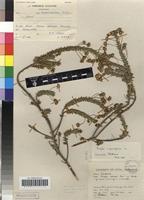
Lectotype of Euryops sulcatus (Thunb.) Harv. var. densifolius Sond. ex Harv. [family ASTERACEAE]
Filed as Euryops empetrifolius DC. [family ASTERACEAE]
Previous
Next
Name
Identification
Isotype of Euryops empetrifolius
de Candolle
[family
ASTERACEAE
] (stored under name); Verified by DC.,
1838
Related name
Euryops densifolius
Euryops empetrifolius
Euryops sulcatus
Othonna sulcata
Flora
Entry for EURYOPS empetrifolius DC. [family COMPOSITAE]
Herbarium
Royal Botanic Gardens, Kew (K)
Collection
Flora Capensis
Resource Type
Reference Sources
Entry From
Flora Capensis, Vol 3, page 44, (
1894
) Author: (By W. H. HARVEY).
Names
EURYOPS empetrifolius
DC.
[family
COMPOSITAE
], l. c. 446
Information
“glabrous; leaves (minute) sessile, thick, subcoriaceous, oval-oblong, obtuse, subtrigonous, nerveless, the younger subimbricate, the adult spreading; heads very few, subterminal, subsessile; inv. broadly 5-lobed, the rays 1–2; achenes glabrous.” DC. l. c. null
Distribution
SOUTH AFRICA Roggeveld, near Riet R., Burchell. (Leaves scarcely 2 lines long.)
Related Materials
╳