JSTOR Global Plants Home
  • Home
  • Browse
  • About
  • Access
  • Account
    • Saved Items
    • Profile
  • Log in

Global Plants

Skip to Main Content
  • JSTOR Global Plants Home
  • Global Plants

    • Browse
    • About
    • Access
    • Account
      • Saved Items
      • Profile
Log in
  • Browse
  • About
  • Access
  • Account
    • Saved Items
    • Profile
Advanced Search

Compilation
Eurybia radulina

10 Images see all

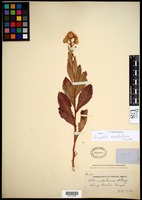
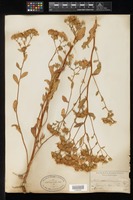
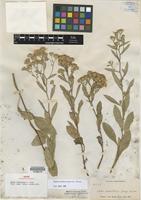
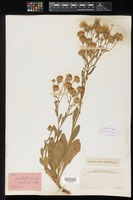
Eurybia radulina (A. Gray) G.L. Nesom [family ASTERACEAE]
Filed as Eurybia radulina (A.Gray) G.L.Nesom [family ASTERACEAE]
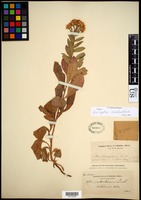
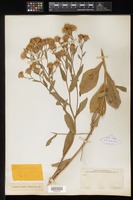
Isotype of Aster radulinus A. Gray [family ASTERACEAE]
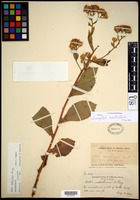
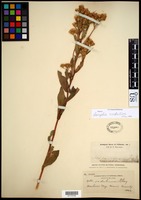
Filed as Eurybia radulina (A.Gray) G.L.Nesom [family ASTERACEAE]
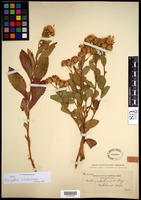
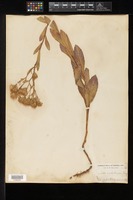
Eurybia radulina (A. Gray) G.L. Nesom [family ASTERACEAE]
Previous
Next

Name

Identification
Eurybia radulina (A. Gray) G.L. Nesom [family ASTERACEAE ] (stored under name); Verified by Not on sheet, 2009 Isotype of Aster radulinus A. Gray [family ASTERACEAE ] Verified by Not on sheet, Aster radulinus A. Gray [family ASTERACEAE ] Verified by Not on sheet,
Related name
  • Eurybia radulina
  • Aster radulinus
Common name
  • Roughleaf aster, Flora of North America Vol. 20

Flora

Entry for Eurybia radulina (A. Gray) G. L. Nesom [family ]
Herbarium
Flora of North America (FNA)
Collection
Flora of North America
Resource Type
Reference Sources
Entry From
Flora of North America, Vol 20,
Names
Eurybia radulina (A. Gray) G. L. Nesom [family ], Phytologia, 77: 261. 1995
Aster radulinus A. Gray [family COMPOSITAE], Proc. Amer. Acad. Arts, 8: 388. 1872
Aster eliasii A. Nelson [family COMPOSITAE]
Weberaster radulinus (A. Gray) A. Löve & D. Löve [family COMPOSITAE]
Treatment Author(s)
Luc Brouillet
Information
Plants 10–70 cm, laxly cespitose (grayish green), eglandular; rhizomes elongate, slender, woody. Stems 1–3, ascending to erect, often purple, simple, flexuous, proximally glabrescent or sparsely villous, distally ± densely villous. Leaves cauline, firm, margins slightly revolute, coarsely serrate or (distal) entire, scabrous to strigoso-ciliate, teeth mucronate, ± markedly veined, apices mucronate, abaxial faces scabrous, adaxial scabroso-strigose; proximal mostly withering by flowering, petioles winged, shorter than blades, bases clasping, blades elliptic to obovate 12–45+ × 7–20+ mm, smaller than mid, apices obtuse; mid narrowly winged-petiolate (petioles short with ± clasping bases), distally subpetiolate or sessile, blades ovate or elliptic to broadly oblanceolate or obovate, 32–85(–130) × 4–40 mm, gradually reduced distally, bases usually attenuate, sometimes cuneate, apices obtuse to acute; distal (arrays) oblanceolate to lanceolate, 5–28 × 1–8 mm, more sharply reduced. Heads 5–30+ in flat-topped, corymbiform arrays. Peduncles densely villous; bracts 0–1, scabroso-strigose. Involucres campanulate, 6–9 mm, shorter than pappi. Phyllaries 38–62 in 4–5 series, midnerves slightly raised (outer), oblong (outer) to lanceolate-linear or linear (inner), unequal, membranous, bases indurate, ± rounded, green zones to scarious margins in distal 1/3–1/2 (outer; seldom ± wholly foliaceous) to 1/5 or none (inner), margins often purple, hyaline, narrowly scarious, erose, densely villoso-ciliate, apices appressed, sometimes purplish-tinged, usually acute, sometimes obtuse, adaxial faces villous. Ray florets 10–15; corollas white to sometimes pale violet or purple, 8.5–11(–13) × 1.3–2.3 mm. Disc florets 30–70; corollas yellow becoming purple- or pinkish-tinged, 6–7(–8) mm, ± ampliate, tubes equaling to longer than funnelform-campanulate throats, lobes usually erect, sometimes ± spreading, lanceolate, 1–1.3 mm. Cypselae tawny, fusiform, 3–3.5 mm, slightly compressed, ribs 7–9 (brown, translucent), faces strigillose; pappi of tawny bristles 2.7–3 mm, ± equaling disc corollas. 2n = 18, 27.
Phenology
jun-aug (summer)
Altitude range
(10–)100–1600 m;
Distribution
USA Calif.USA Oreg.USA Wash.Canada B.C.
Discussion
Eurybia radulina is confined mostly west of the Cascades, from southern Vancouver Island (British Columbia) to the southern Coast Ranges, north Channel Islands, and central Sierra Nevada in California. It often is confused with E. merita in the western, coastal states where both are found, though populations are rarely if ever sympatric, the former apparently thriving at lower elevations than the latter.

Related Materials

  • Terms and Conditions
  • Privacy Policy
  • Cookie Policy
  • Cookie Settings
  • Accessibility
  • Help
  • Contact Us
  • Facebook
  • Twitter
ITHAKA

JSTOR is part of ITHAKA, a not-for-profit organization helping the academic community use digital technologies to preserve the scholarly record and to advance research and teaching in sustainable ways.

©2000-2026 ITHAKA. All Rights Reserved. JSTOR®, the JSTOR logo, JPASS®, Aluka®, and ITHAKA® are registered trademarks of ITHAKA.

╳