JSTOR Global Plants Home
  • Home
  • Browse
  • About
  • Access
  • Account
    • Saved Items
    • Profile
  • Log in

Global Plants

Skip to Main Content
  • JSTOR Global Plants Home
  • Global Plants

    • Browse
    • About
    • Access
    • Account
      • Saved Items
      • Profile
Log in
  • Browse
  • About
  • Access
  • Account
    • Saved Items
    • Profile
Advanced Search

Compilation
Eureiandra eburnea

5 Images see all

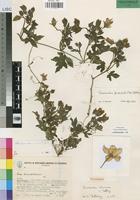
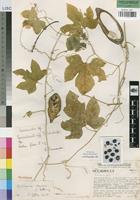
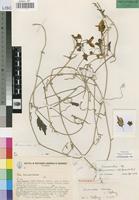
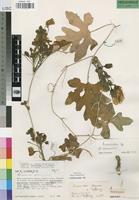
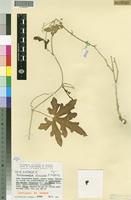
Paratype of Eureiandra eburnea C.Jeffrey [family CUCURBITACEAE]
Holotype of Eureiandra eburnea C.Jeffrey [family CUCURBITACEAE]
Isotype of Eureiandra eburnea C.Jeffrey [family CUCURBITACEAE]
Previous
Next

Name

Identification
Isotype of Eureiandra eburnea C.Jeffrey [family CUCURBITACEAE ] (stored under name); Verified by Not on sheet,
Related name
  • Eureiandra eburnea

Flora

Entry for Eureiandra eburnea C. Jeffrey [family CUCURBITACEAE]
Herbarium
Royal Botanic Gardens, Kew (K)
Collection
Flora Zambesiaca
Resource Type
Reference Sources
Entry From
FZ, Vol 4, Part 0, page 414, (1978) Author: C. Jeffrey
Names
Eureiandra eburnea C. Jeffrey [family CUCURBITACEAE], in Kew Bull. 31: 292 (1976). Type: Mozambique, Tete, Mágoè, c. 15 km. from Chicoa towards Estima, Torre & Correia 17855 (LISC, holotype).
Information
Scandent perennial herb; tuber napiform. Young stems herbaceous, shortly finely pubescent, soon becoming softly ligneous and developing a thin pallid papyraceous bark. Leaf-lamina 5·5–10·5 × 3·5–11·5 cm., ovate or broadly ovate in outline, cordate, shortly pubescent becoming scabrid-punctate above, shortly pubescent or hispid becoming asperulous or scabrid beneath, unlobed or incipiently to deeply palmately 3–5-lobed; lobes ovate, ovate-rhombic or elliptic, ± sinuate-denticulate, obtuse to acute, often shortly acuminate, apiculate, the central largest, undivided or incipiently to deeply laterally 3–5-lobulate. Petioles 1·5–5·8 cm., shortly and finely spiculate-pubescent. male flowers usually numerous in sessile racemiform fascicles, axillary or nodal on leafless stems; bracts 2–25 mm. long, elliptic to broadly ovate-cordate, stalked, lobed, when large resembling small leaves; pedicels 1–8·5 cm. long, crispate-pubescent, often villous in upper part. Receptacle-tube 5–8 mm. long, obconic, laxly villous or pubescent, lobes 6–13 × 1·2–2·2 mm., lanceolate, entire or shortly dentate in upper part, acute, pubescent or villous. Petals 2·3–3·6 × 1·4–2·6 cm., ivory-white, cream or pallid yellow, obovate, rounded, apiculate. Anther-thecae shortly and finely hairy. female flowers unknown. Fruit 6·5–9 × 2·8–4 cm., oblong-ellipsoid, rounded at the base, smooth, terete, subacute, fleshy, orange; fruit-stalk c. 2 cm. long. Seeds 7·8–9 × 6–7·2 × 4·8–5·8 mm., subpisiform, smooth, black, slightly bordered.
Habitat
Deciduous woodland, including mopane, and associated grasslands
Range
Not known from elsewhere
Altitude range
200–700 m.
700
200
Distribution
Mozambique T 20 km. from Changara towards Cuchumana, Mt. Nhampangué, fr. 22.v.1971, Torre & Correia 18560 (LISC).Zambia E Luangwa Valley Game Reserve South, fl. 8.iii.1967, Prince 343 (K).

Related Materials

  • Terms and Conditions
  • Privacy Policy
  • Cookie Policy
  • Cookie Settings
  • Accessibility
  • Help
  • Contact Us
  • Facebook
  • Twitter
ITHAKA

JSTOR is part of ITHAKA, a not-for-profit organization helping the academic community use digital technologies to preserve the scholarly record and to advance research and teaching in sustainable ways.

©2000-2026 ITHAKA. All Rights Reserved. JSTOR®, the JSTOR logo, JPASS®, Aluka®, and ITHAKA® are registered trademarks of ITHAKA.

╳