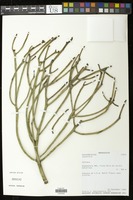
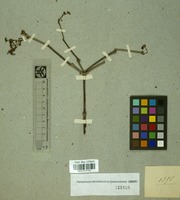
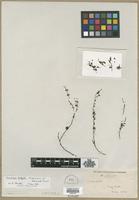
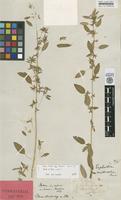
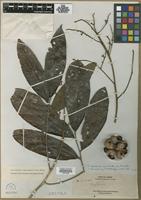
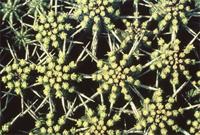
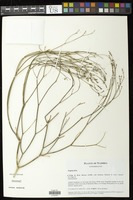
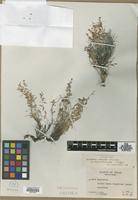
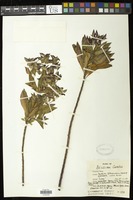
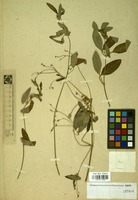
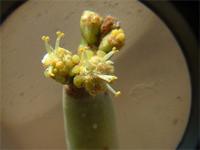
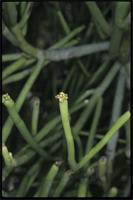
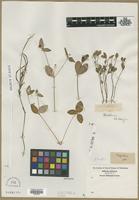
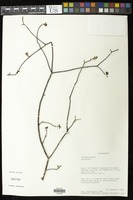
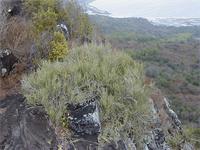
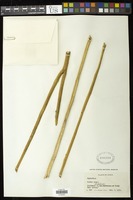
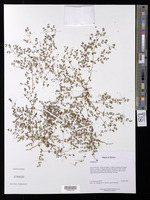
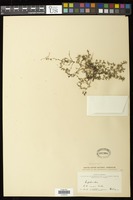
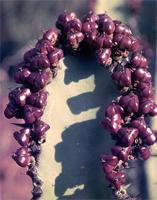
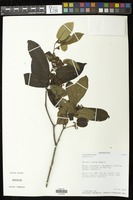
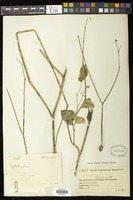
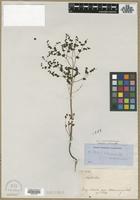
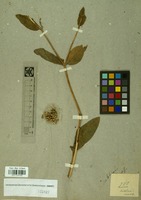
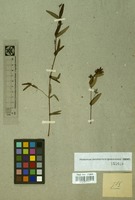
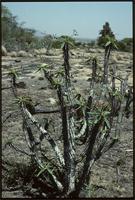
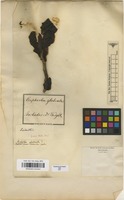
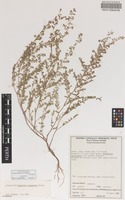
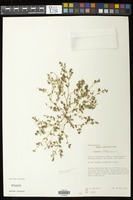
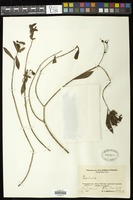
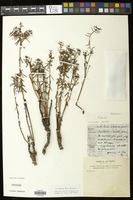
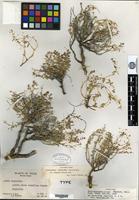
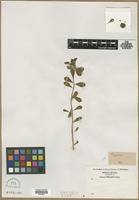
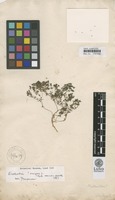
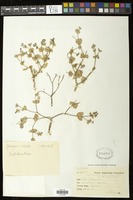
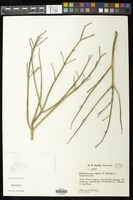
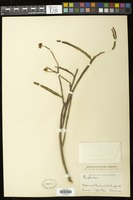
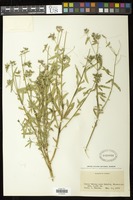
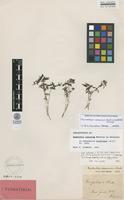
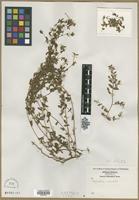
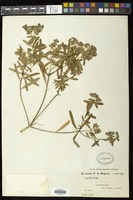
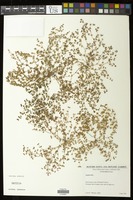
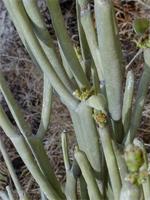
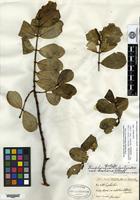
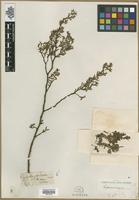
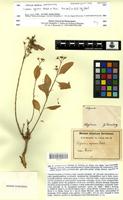
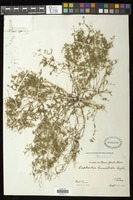
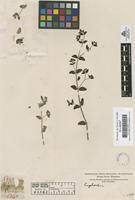
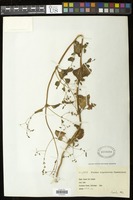
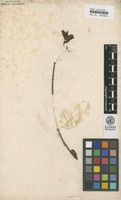
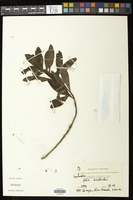
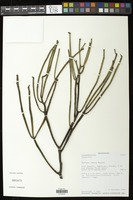
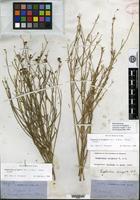
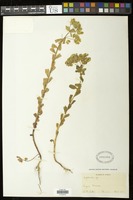
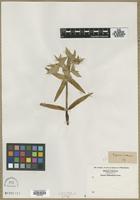
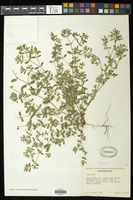
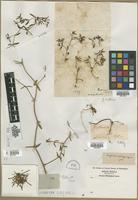
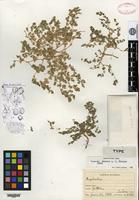
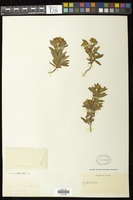
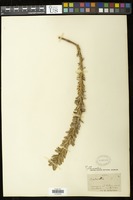
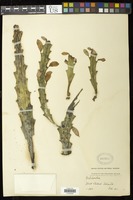
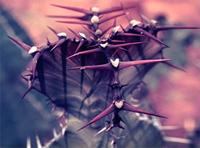
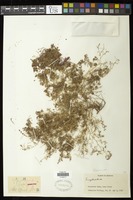
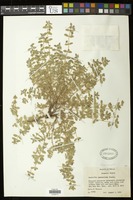
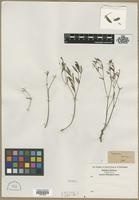
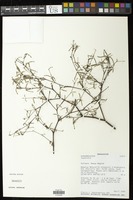
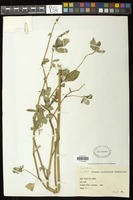
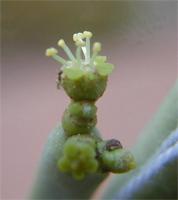
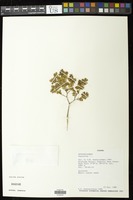
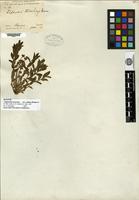
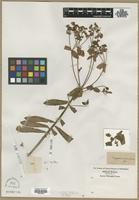
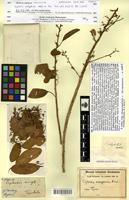
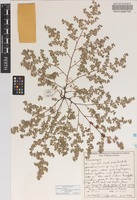
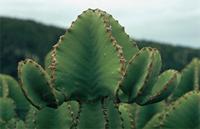
E. virosa is at present most imperfectly known, as the only specimen I have seen that I think must certainly belong to it, is a fragment about 2 in. long from the top of a stem, without flowers, collected at Viols Drift, which lies to the west of the locality where Paterson found it. The only other specimens seen, which may or may not belong to E. virosa, are:—(1) One collected by Dr. Marloth (4687) at Tsarras, in Great Namaqualand. This consists only of the marginal portion of one of the flowering scollops of an angle, accompanied by a photograph of the plant, which seems to quite agree with Paterson's figure in appearance. In this specimen 2–3 cymes are produced at each flowering-eye, on stout peduncles 1/2–1 lin. long; involucre sessile, about 3 lin. in diam., obconic-cup-shaped, glabrous outside, with 5 glands and 5 broadly rounded or transversely oblong minutely toothed lobes; glands contiguous, 1 1/4–1 1/2 lin. in their greater diam., transversely oblong, entire; ovary and capsule not seen, only the central male involucre being developed. This is the plant mentioned and figured as E. Dinteri, Marloth in Wissensch. Ergebn. Deutsch. Tiefsee-Exped. ii. iii. 52, 291, 313, Karte 8, not of Berger. (2) Two other specimens, collected by Prof. H. H. W. Pearson (8022, 8085) on the Great Karasberg Range, in Little Namaqualand, and figured by him in Annals of the Bolus Herbarium, i. 42, as E. virosa, differ from the Orange River plant in the following particulars. The stems are much more slender, being only 1 1/2 in. in diam. at the thickest part and less than 1 in. at the apex, corresponding to the apex of the Orange River plant, which measures 2 in. in diam. at the same point. The leaves are stated by Prof. Pearson in a letter to be “about 1/4– 1/3 in. long, oblong or slightly elliptic with a broad base and almost acute apex”; there are no leaves on the specimens, but this description does not agree with those on the Orange River specimen. Each flowering-eye produces only one 3-flowered cyme on a peduncle 1/2–1 lin. long; involucre sessile, about 1 3/4 lin. in diam., campanulate, glabrous outside, apparently yellow, with 5 glands and 5 broadly rounded or transversely oblong minutely toothed lobes; glands erect in the dried specimen, 3/4–1 lin. in their greater diam., transversely oblong, entire; capsule about 2 lin. long and 3 1/2 lin. in diam., subacutely triangular, glabrous, erect, exserted 2/3–1 lin. beyond the involucre; styles about 1/2 lin. long, united into a column almost to the apex, with minute spreading emarginate stigmas 1/5– 1/4 lin. long; seeds about 1 lin. long, oblong, apparently 4-angled, but immature, smooth, areolate-reticulate. From the above it will be d that both Marloth's and Pearson's plants differ in certain particulars from E. virosa, and I think it probable that they belong to two other distinct, but closely allied species. This, however, can only be decided by a careful comparison of ample material of good flowering and fruiting specimens of all three plants.