JSTOR Global Plants Home
  • Home
  • Browse
  • About
  • Access
  • Account
    • Saved Items
    • Profile
  • Log in

Global Plants

Skip to Main Content
  • JSTOR Global Plants Home
  • Global Plants

    • Browse
    • About
    • Access
    • Account
      • Saved Items
      • Profile
Log in
  • Browse
  • About
  • Access
  • Account
    • Saved Items
    • Profile
Advanced Search

Compilation
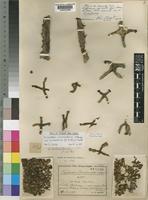
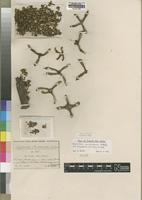
Euphorbia reinhardtii

2 Images see all

Euphorbia candelabrum Tremaut ex Kotschy var. bilocularis (N.E.Br.) S.Carter [family EUPHORBIACEAE]
Isotype of Euphorbia reinhardtii Volkens [family EUPHORBIACEAE]
Previous
Next

Name

Identification
Isotype of Euphorbia reinhardtii Volkens [family EUPHORBIACEAE ] Euphorbia candelabrum (N.E.Br.) S.Carter [family EUPHORBIACEAE ] (stored under name); Verified by Carter,S.,
Related name
  • Euphorbia candelabrum
  • Euphorbia bilocularis
  • Euphorbia reinhardtii

Flora

Entry for EUPHORBIA Reinhardtii Volkens [family EUPHORBIACEAE]
Herbarium
Royal Botanic Gardens, Kew (K)
Collection
Flora of Tropical Africa
Resource Type
Reference Sources
Entry From
Flora of Tropical Africa, Vol 6, Part 1, page 441, (1913) Author: (By J. G. Baker, with additions by C. H. Wright.)
Names
EUPHORBIA Reinhardtii Volkens [family EUPHORBIACEAE], in Notizbl. Königl. Bot. Gart. Berlin, ii. 263. —Pax in Engl. Jahrb. xxxiv. 75, partly; Berger, Sukk. Euphorb. 66.
Information
A tree 40–50 ft. high, with a trunk 12–15 in. thick, branching about 10 ft. from the ground into a dense obconic flat-topped crown of succulent spiny leafless branches, glabrous. Branches constricted into segments 8–12 in. long, with the terminal or flowering segments broadest at the base, tapering upwards or conical in general outline, 3–5- (usually 4-) angled, with the central solid part 1 1/4–1 2/3 in. square and the angles wing-like and 1–1 1/3 in. broad. Spines up to 5 lin. long, stout and about 1/8 in. thick at the base, in pairs 3/4–1 1/3 in. apart, diverging, those on the flowering segments gradually smaller and often disappearing. Flowering-eyes placed a little above the spine-pairs. Involucres 4–9 in a cluster (really composed of 2–3 subsessile or sessile cymes), sessile or very shortly pedunculate, about 1/4 in. in diam. and about as deep, fleshy, tubular-campanulate, slightly constricted at the middle, with 5 glands and 5 fringed lobes; glands distant, about 1/8 in. in their greater diam., transversely elliptic, entire, with the inner margin incurved. Capsule as large as a cherry, depressed-globose, not 3-angled or lobed, red; styles bifid at the apex.
Distribution
German East Africa Mozamb. Dist. Usambara, Holst, 8821, partly, ex Volkens.
Notes
I have not seen the type of this species, and as no details are given concerning the toothing of the stem-angles, spine-shields, accurate position of flowering-eyes, calyx, &c., I am unable to place it in the key, but it seems allied to E. intercedens .

Related Materials

  • Terms and Conditions
  • Privacy Policy
  • Cookie Policy
  • Cookie Settings
  • Accessibility
  • Help
  • Contact Us
  • Facebook
  • Twitter
ITHAKA

JSTOR is part of ITHAKA, a not-for-profit organization helping the academic community use digital technologies to preserve the scholarly record and to advance research and teaching in sustainable ways.

©2000-2026 ITHAKA. All Rights Reserved. JSTOR®, the JSTOR logo, JPASS®, Aluka®, and ITHAKA® are registered trademarks of ITHAKA.

╳