JSTOR Global Plants Home
  • Home
  • Browse
  • About
  • Access
  • Account
    • Saved Items
    • Profile
  • Log in

Global Plants

Skip to Main Content
  • JSTOR Global Plants Home
  • Global Plants

    • Browse
    • About
    • Access
    • Account
      • Saved Items
      • Profile
Log in
  • Browse
  • About
  • Access
  • Account
    • Saved Items
    • Profile
Advanced Search

Compilation
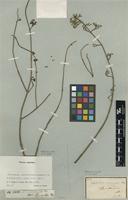
Euphorbia racemosa

9 Images see all

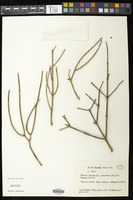
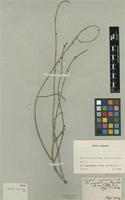
Type of Euphorbia racemosa E.Mey. ex Boiss. [family EUPHORBIACEAE]
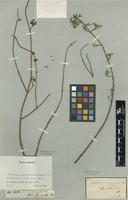
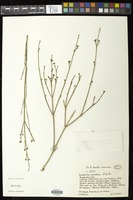
Euphorbia racemosa Tausch & Rchb. [family EUPHORBIACEAE]
Type of Euphorbia racemosa E.Mey. ex Boiss. [family EUPHORBIACEAE]
Euphorbia racemosa Tausch & Rchb. [family EUPHORBIACEAE]
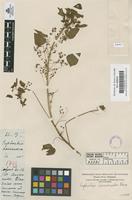
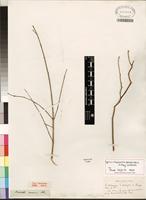
Filed as Euphorbia dioscoreoides Boiss. [family EUPHORBIACEAE]
Euphorbia racemosa Tausch & Rchb. [family EUPHORBIACEAE]
Isosyntype of Euphorbia racemosa E. Mey. ex Boiss. [family EUPHORBIACEAE]
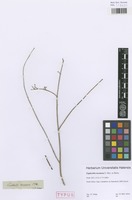
Syntype of Euphorbia racemosa E. Mey. ex Boiss. [family EUPHORBIACEAE]
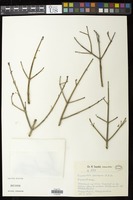
Type of Euphorbia racemosa E.Mey. ex Boiss. [family EUPHORBIACEAE]
Previous
Next

Name

Identification
Euphorbia dioscoreoides Boiss. [family EUPHORBIACEAE ] (stored under name); Verified by Not on Sheet, Euphorbia racemosa Not on Sheet [family EUPHORBIACEAE ] Verified by Not on Sheet,
Related name
  • Euphorbia rhombifolia
  • Euphorbia racemosa
  • Euphorbia dioscoreoides

Flora

Entry for EUPHORBIA rhombifolia Boiss. [family EUPHORBIACEAE]
Herbarium
Royal Botanic Gardens, Kew (K)
Collection
Flora Capensis
Resource Type
Reference Sources
Entry From
Flora Capensis, Vol 5, Part 2, page 216, (1925) Author: (By N. E. BROWN, J. HUTCHINSON and D. PRAIN.)
Names
EUPHORBIA rhombifolia Boiss. [family EUPHORBIACEAE], Cent. Euphorb. 19;—Boiss. in DC. Prodr. xv. ii. 75, and Ic. Euphorb. 16, t. 46.
EUPHORBIA racemosa E. Meyer [family EUPHORBIACEAE], in Drège, Zwei Pfl. Documente, 184, ex Boiss. in DC. Prodr. xv. ii. 75.
Information
plant unisexual; stems probably growing in bush-like clumps, 1–2 ft. high, succulent, spineless, leafless, 1 1/2–2 lin. thick at the base, simple or with 1–5 distant pairs of slender branches 5–18 in. long, bearing 6–12 distant pairs of peduncles (or, in the varieties, cymes) in a racemose manner, glabrous; leaves rudimentary and soon deciduous, opposite, 1/2–1 lin. long, occasionally oblong, but usually spathulate, with a short broad petiole and an ovate, cordate-ovate or transversely elliptic blade, obtuse or acute, mostly recurved, usually slightly puberulous on the upper side at the base, otherwise glabrous; peduncles opposite, the pairs 1/2–3 in. apart, usually 1–6 lin. long, but occasionally longer, each bearing only 1 involucre (rarely 2–3), glabrous; bracts under the involucres like the leaves in size and form, soon deciduous; involucre sessile, unisexual, 1 1/4–2 lin. in diam., cup-shaped, glabrous outside, with 5 glands and 5 subquadrate fringe-toothed lobes; glands 1/2–1 lin. in their greater diam., transversely elliptic or elliptic-oblong, entire, usually larger in the male than in the female involucre; ovary erect, with a conspicuous disc-like calyx at its base, glabrous, exserted on a pedicel not exceeding the involucre; styles 1/2– 2/3 lin. long, very shortly united at the base, with spreading bifid arms. null
Distribution
CENTRAL REGION Graaff Reinet Div.; mountains near Graaff Reinet, Bolus, 191! Aberdeen Div.; Hamerkuil, in the Camdeboo, Drège, 690! Beaufort West Div.; Nieuwveld, Drège, 8118, partly! Var. β: Graaff Reinet Div.; Sneeuwberg Range, Wyley! Var. γ: Prince Albert Div.; Gamka River, Burke! Sand River Mountains, Marloth, 4394; Somerset Div.; Bosch Berg, MacOwan! Aberdeen Div.; in the Camdeboo, Dunn in Herb. Bolus, 6259!COAST REGION Uitenhage Div.; Uitenhage, Hutton! Fort Beaufort Div.; Kunap River, Baur, 1046! Queenstown Div.; mountains near Imbarne River, mingled with var. β, Cooper, 318! Finchams Nek, Galpin, 1598! Queenstown, Rogers, 4050! Var. γ: Humansdorp Div.; Kabeljaauw, near Humansdorp, Burtt-Davy, 12044! Uitenhage Div.; Coegakammas Kloof, Zeyher, 863! Ecklon & Zeyher, Euphorb. 24 partly! Redhouse, Mrs. Paterson, 722! Port Elizabeth Div.; near Port Elizabeth, Kemsley, 289! Drège, 5! Albany Div.; Bushmans River Poort, Galpin, 2975! King Williamstown Div.; near King Williamstown, Flanagan, 1754! Var. δ: Bathurst Div.; near Port Alfred, Galpin, 2959! Komgha Div.; among rocks along the Chichaba River, Flanagan, 838! Div.? near Biesjesfontein, MacOwan, 1612!EASTERN REGION Natal; Mooi River Thorns, beyond Greytown, Wood, 4336! and without precise locality, Gerrard, 1170! Var. δ: Natal; Mooi River Valley, Sutherland!SOUTH AFRICA without locality, Drège, 8217!
Notes
Specimens (Gilfillan in Herb. Galpin, 6070), collected on a ridge at Zwart Krans Caves, Krugersdorp, in the Transvaal, have the smaller habit and general appearance of E. rhombifolia, but the leaves are persistent and more fleshy, like those of E. rectirama. Possibly it may prove to be distinct, but requires to be compared with living plants of both species. This is either a very variable plant or more than one species is here included under this name, but from the material seen I have been unable to obtain characters that are of specific value. The four forms above characterised are distinct in appearance, but grade into each other in such a manner that any specific difference they may possess vanishes in the dried material, and if specifically different they must be characterised from living plants. The different forms occur in the same geographical area. I am quite unable to distinguish E. rhombifolia and E. racemosa. The former was founded upon Drège, 8217, and a young immature growth figured for it, but the distributed specimens of Drège, 8217, that I have seen, consist of weak branches corresponding to those of Boissier's figure and flowering branches corresponding to the type of E. racemosa in E. Meyer's Herbarium, and Gerrard's 1170 collected in Natal are partly exactly as in the figure of E. rhombifolia, partly as in E. racemosa. As no description of E. racemosa was published until 1862, when Boissier first described it in De Candolle's Prodromus, I take the earlier published name of E. rhombifolia for this plant, although certainly not so applicable. Boissier has described the peduncles of E. racemosa as bearing a cyme of 5–7 involucres, but this is quite inaccurate as to the type of E. racemosa in E. Meyer's Herbarium, in which the peduncles bear only 1–3 involucres, and in none of the specimens that I have seen, which are conspecific with that type, are more than 3 involucres borne upon any peduncle, usually there is only one. In the original description (not in DC. Prodr.) Boissier quotes “ Ecklon & Zeyher nos. 23, 83” as belonging to this species, but this specimen is E. arceuthobioides, Boiss., and the quotation really refers to one specimen only, of which the number is 23, the added number 83 is merely the locality number and not the number of a separate specimen (see Linnæa, xix. 583 and xx. 258). Arthrothamnus cymosus, Klotzsch & Garcke (Ecklon & Zeyher, 24 partly), is wrongly referred to E. decussata, E. Meyer, by Boissier in DC. Prodr. xv. ii. 75. E. rhombifolia is readily distinguished from its nearest allies by its quickly deciduous bracts.

Related Materials

  • Terms and Conditions
  • Privacy Policy
  • Cookie Policy
  • Cookie Settings
  • Accessibility
  • Help
  • Contact Us
  • Facebook
  • Twitter
ITHAKA

JSTOR is part of ITHAKA, a not-for-profit organization helping the academic community use digital technologies to preserve the scholarly record and to advance research and teaching in sustainable ways.

©2000-2026 ITHAKA. All Rights Reserved. JSTOR®, the JSTOR logo, JPASS®, Aluka®, and ITHAKA® are registered trademarks of ITHAKA.

╳