JSTOR Global Plants Home
  • Home
  • Browse
  • About
  • Access
  • Account
    • Saved Items
    • Profile
  • Log in

Global Plants

Skip to Main Content
  • JSTOR Global Plants Home
  • Global Plants

    • Browse
    • About
    • Access
    • Account
      • Saved Items
      • Profile
Log in
  • Browse
  • About
  • Access
  • Account
    • Saved Items
    • Profile
Advanced Search

Compilation
Euphorbia pungens

9 Images see all

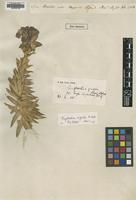
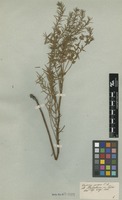
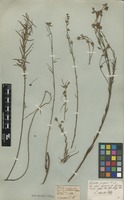
Type of Euphorbia pungens Banks & Sol. [family EUPHORBIACEAE]
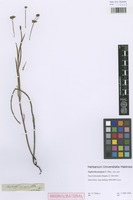
Original material of Euphorbia pungens E. Mey. [family EUPHORBIACEAE]
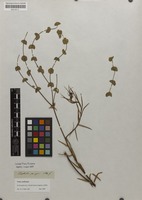
Filed as Euphorbia striata Thunb. [family EUPHORBIACEAE]
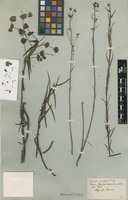
Syntype of Tithymalus capensis Klotzsch & Garcke [family EUPHORBIACEAE]
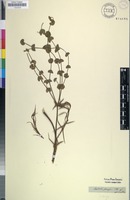
Filed as Euphorbia striata Thunb. [family EUPHORBIACEAE]
Type? of Euphorbia pungens E.Mey. [family EUPHORBIACEAE]
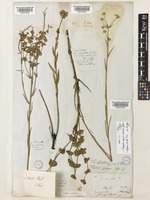
Filed as Euphorbia striata Thunb. [family EUPHORBIACEAE]
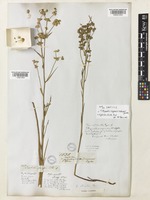
Syntype of Tithymalus capensis Klotzsch & Garcke [family EUPHORBIACEAE]
Filed as Euphorbia striata Thunb. [family EUPHORBIACEAE]
Previous
Next

Name

Identification
Euphorbia pungens Banks & Sol. [family EUPHORBIACEAE ] Euphorbia rigida M.Bieb. [family EUPHORBIACEAE ] (stored under name); Verified by Mohammed (Mohan) Salar Khan,
Related name
  • Euphorbia pungens
  • Euphorbia rigida

Flora

Entry for EUPHORBIA striata Thunb. [family EUPHORBIACEAE]
Herbarium
Royal Botanic Gardens, Kew (K)
Collection
Flora Capensis
Resource Type
Reference Sources
Entry From
Flora Capensis, Vol 5, Part 2, page 216, (1925) Author: (By N. E. BROWN, J. HUTCHINSON and D. PRAIN.)
Names
EUPHORBIA striata Thunb. [family EUPHORBIACEAE], Prodr. 86, and Fl. Cap. ed. Schult. 406
EUPHORBIA pungens E. Meyer [family EUPHORBIACEAE], in Drège, Zwei Pfl. Documente, 184, ex Boiss. in DC. Prodr. xv. ii. 170, not of Lam.
Tithymalus capensis Klotzsch & Garcke [family ], in Abhandl. Akad. Berlin, 1860, 98.
Information
stems several, annually produced from a perennial rootstock, erect, 8–22 in. high, herbaceous, simple or branching into a panicle at the inflorescence, striate, glabrous; leaves alternate, usually laxly scattered, sometimes few, more rarely closely placed, erect or ascending, rarely spreading or deflexed, sessile or subsessile, coriaceous, 1/2–2 in. long, 1/2–3 lin. broad, linear, linear-lanceolate or ovate-lanceolate, very acute and somewhat pungent at the apex, slightly narrowed or rounded at the base, flat or with incurved (never revolute) margins, those of the whorl at the base of the umbel often broadly ovate or rhomboid-ovate, acute or long-pointed, glabrous on both sides; umbel 3–5-rayed, 1–4 in. in diam., with or without axillary rays below it or sometimes the umbel is wanting and all the rays are axillary and alternate, forming a panicle; rays 1/3–3 1/2 in. long, or when barren or proliferous often much longer, glabrous; bracts 2–4 lin. long, 3–7 lin. broad, half-circular, rhomboid-reniform or rhomboid-ovate, obtuse or acute, apiculate, glabrous; involucre subsessile or pedunculate, 1 1/2–2 1/2 lin. in diam., cup-shaped, glabrous outside, with 4 glands and 5 oblong or oblong-ovate ciliate lobes; glands 3/4–1 1/4 lin. in their greater diam., more or less crescent-shaped or transversely oblong, with a point or short horn at each end, rarely entire; capsule 1 3/4–2 1/4 lin. in diam., tricoccous, glabrous, exserted 1/3–1 1/4 lin. beyond the involucre on a curved pedicel; styles 1/4– 1/2 lin. long, free to the base, radiately spreading, bifid at the apex; seeds 1 1/4 lin. long, oblong or ellipsoid-oblong, with a small caruncle at one end and a depressed ring at the other, smooth, slate-grey or blackish. null
Distribution
CENTRAL REGION Somerset Div.; Somerset East, Bowker!COAST REGION Cape Div.; at the foot of Lion Mountain, Schlechter, 79! Bathurst Div.; between Port Alfred and Kaffir Drift, Burchell, 3841! Uitenhage Div.; near Uitenhage, Burchell, 4255! Schlechter, 2525! Coega, Rogers, 2115! Albany Div.; various localities, Burchell, 3633! Burtt-Davy, 11562! MacOwan, 327! 328! Burke! Miss Daly, 607! 838! Miss Sole, 389! Queenstown Div.; various localities, Drège, 3562! Galpin, 1574! 2613! King Williamstown Div.; near Peelton, Cooper, 109! East London Div.; East London, Wood, 3353! Cambridge, Miss Wormald, 77! Komgha Div.; near Komgha, Flanagan, 236! Eastern Frontier, MacOwan, 328! Hutton! Var γ: Albany Div.; near Grahamstown, MacOwan, 19! Trapps Valley, Miss Daly, 669! Bedford Div.; near Bedford, Miss Nicol, 13! Rietfontein, between Kasuga River and Port Alfred, Burchell, 3960! King Williamstown Div.; Frankfort, Sim, 1450! British Kaffraria, Cooper, 123!EASTERN REGION Transkei; Krielis Country, Bowker, 245! Kentani district, Miss Pegler, 1393! 1798! Tembuland; Bazeia, Baur, 239! Griqualand East; near Kokstad, Tyson, 1094! and in MacOwan & Bolus, Herb. Norm. Austr.-Afr., 452! Natal; various localities, Sanderson! Wood, 518! 4780! 7459! Miss Franks in Herb. Wood, 12196! Wilms, 2256! Schlechter, 3164! 3373! Rogers, 1133! Var. β: Natal; various localities, Krauss, 441! Sanderson! Gerrard, 764! 1169! Wood, 195! 518! 6522! 8682! Rudatis, 441! Schlechter, 3048! 3164! Var. γ: Transkei; Krielis Country, Bowker!KALAHARI REGION Orange River Colony; Harrismith, Sankey, 233! Bethlehem, Richardson! Basutoland; Leribe, Dieterlen, 351! Transvaal; various localities, Burke! Zeyher, 1538! Ecklon & Zeyher, Euphorb. 10! Rehmann, 4551! Wilms, 1333! 1333a! Burtt-Davy, 1995! 5046! 5493! 9057! Miss Nation, 12! Miss Leendertz, 362! 892! 977! 1702! 2305! Rademacher, 7300! Rogers, 396! 1202! Miss Haagner! Tennant, 6921! 6942!SOUTH AFRICA without locality, Thunberg! Drège, 4623!
Notes
The varieties cuspidata and brachyphylla are distinct from the type in appearance and may possibly prove to be distinct species, but there seem to be some intermediate forms, which require to be studied in the living state. The variety brachyphylla has the appearance of being a hybrid between E. striata and E. sclerophylla and only occurs in the general region where both species grow.

Related Materials

  • Terms and Conditions
  • Privacy Policy
  • Cookie Policy
  • Cookie Settings
  • Accessibility
  • Help
  • Contact Us
  • Facebook
  • Twitter
ITHAKA

JSTOR is part of ITHAKA, a not-for-profit organization helping the academic community use digital technologies to preserve the scholarly record and to advance research and teaching in sustainable ways.

©2000-2026 ITHAKA. All Rights Reserved. JSTOR®, the JSTOR logo, JPASS®, Aluka®, and ITHAKA® are registered trademarks of ITHAKA.

╳