JSTOR Global Plants Home
  • Home
  • Browse
  • About
  • Access
  • Account
    • Saved Items
    • Profile
  • Log in

Global Plants

Skip to Main Content
  • JSTOR Global Plants Home
  • Global Plants

    • Browse
    • About
    • Access
    • Account
      • Saved Items
      • Profile
Log in
  • Browse
  • About
  • Access
  • Account
    • Saved Items
    • Profile
Advanced Search

Compilation
Euphorbia passa

3 Images see all

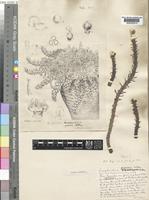
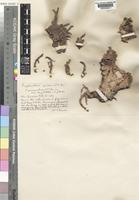
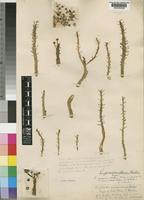
Type of Euphorbia passa N.E.Br. [family EUPHORBIACEAE]
Previous
Next

Name

Identification
Euphorbia woodii N.E.Br. [family EUPHORBIACEAE ] Euphorbia procumbens N.E.Br. [family EUPHORBIACEAE ] Verified by Brown, N.E., Euphorbia passa N.E.Br. [family EUPHORBIACEAE ] (stored under name); Verified by Brown, N.E.,
Related name
  • Euphorbia woodii
  • Euphorbia procumbens
  • Euphorbia passa

Flora

Entry for EUPHORBIA passa N. E. Br. [family EUPHORBIACEAE]
Herbarium
Royal Botanic Gardens, Kew (K)
Collection
Flora Capensis
Resource Type
Reference Sources
Entry From
Flora Capensis, Vol 5, Part 2, page 216, (1925) Author: (By N. E. BROWN, J. HUTCHINSON and D. PRAIN.)
Names
EUPHORBIA passa N. E. Br. [family EUPHORBIACEAE]
EUPHORBIA pugniformis Baker [family EUPHORBIACEAE], in Saund. Ref. Bot. iii. t. 161, not of Boiss.
EUPHORBIA procumbens N. E. Br. [family EUPHORBIACEAE], in Bot. Mag. t. 8082, and of Berger, Sukk. Euphorb. 118, excl. all syns. except the above, not of Miller.
Information
dwarf, succulent, spineless; main body of the plant globose, obconic or subcylindric, 2–4 in. thick, producing at the top numerous radiately spreading branches around the circumference of a truncate or slightly depressed tuberculate central area; branches 1–8 (or under cultivation sometimes becoming 6–14) in. long, 4–6 lin. thick, cylindric, tuberculate, bright green; tubercles rhomboid, 4–6-angled, 1 1/2–3 lin. long, 1 1/2–2 lin. broad and 1/2– 3/4 lin. prominent; leaves 1 1/2–4 lin. long, narrowly linear, acute, concave above, convex beneath, green; involucres on peduncles 1–6 lin. long, solitary in the axils of the tubercles of the central area of the main stem, and at the tips of some of the branches, often very numerous, 3 1/2–4 lin. in diam, cup-shaped, glabrous, with 5 glands and 5 broadly rounded or transversely oblong fringed lobes; glands horizontally spreading, 1 lin. in their greater diam., transversely oblong or elliptic-oblong, entire to slightly crenulate on the outer margin, yellow, under cultivation often changing to orange or to bright red; ovary acutely 3-angled, pubescent with rather long hairs, subsessile or very shortly pedicellate, included in the involucre; styles united in a column 2/3 lin. long, with very broad cuneate or obcordate recurved-spreading stigmas, notched at the tips, glabrous. null
Distribution
EASTERN REGION Natal; Scottsburg, Pole Evans! Umzumbi, 50–150 ft., Wood! and without precise locality, Cooper!
Notes
Described from a living plant and specimens preserved in fluid. The history of this plant is somewhat interesting. It was introduced into cultivation by Mr. T. Cooper in 1862, and from a plant cultivated by himself the figure in Refugium Botanicum, t. 161, was made, and not (as Mr. Cooper himself informed me) from a plant in the collection of Mr. Wilson Saunders as there stated. Some time after, Mr. Cooper sold this plant to Mr. Justus Corderoy, and 36 years later Mr. Corderoy's plant was figured in the Botanical Magazine at t. 8082, so that both figures were actually made from the same individual at a long interval. The plant subsequently passed into the possession of Kew. At the time I wrote the account in the Botanical Magazine I was not aware of all this, and took the identification as given in Refugium Botanicum to be correct, without investigation, but used for the Botanical Magazine the older name E. procumbens, Mill., quoted as a synonym by Mr. Baker. As Mr. Cooper did not recollect where he collected the plant, it was supposed that he might have got it somewhere in Cape Colony, where he was about 1860 and, therefore, it might be Miller's plant. But Dr. J. Medley Wood has recently sent to Kew a drawing, photographs and branches in fluid of plants collected near Scottsburg and at Umzumbi, in Natal, which are in every way absolutely identical with the plant introduced by Mr. Cooper, who probably got the plant from near the same locality, as he was in Durban, Natal, in 1862. In Miller's time, however, Natal was an unexplored land, and the plant he described could not have come from that country, and cannot be the same species, for these plants are mostly very local in their range. The same remark also applies to the plant figured by Burmann upon which the name E. pugniformis was established by Boissier, which also differs from the Natal plant in having whitish-green flowers and very different styles. Dr. Wood states that a living plant found near Scottsburg or the Umkomaas River and taken to Pretoria and there planted on the rockery near the Botanical Laboratory in Aug., 1913, had by April, 1914, completely changed its appearance. When first planted at Pretoria it was quite normal, and a drawing of it was then made, which shows the plant to have had between 30 and 40 branches, varying from 1–3 in. long, arranged in about 3 series. When Dr. Wood visited Pretoria eight months later, the plant then bore 140 branches in many series, of which the inner were 4–6 and the outer 9–14 1/2 in. long. This luxuriant growth being doubtless due to change of soil, climate and elevation.

Related Materials

  • Terms and Conditions
  • Privacy Policy
  • Cookie Policy
  • Cookie Settings
  • Accessibility
  • Help
  • Contact Us
  • Facebook
  • Twitter
ITHAKA

JSTOR is part of ITHAKA, a not-for-profit organization helping the academic community use digital technologies to preserve the scholarly record and to advance research and teaching in sustainable ways.

©2000-2026 ITHAKA. All Rights Reserved. JSTOR®, the JSTOR logo, JPASS®, Aluka®, and ITHAKA® are registered trademarks of ITHAKA.

╳